
Girgaon, Mumbai, Maharashtra 400004, India [email protected] +91 9869506920

45 Degree Elbow Manufacturers & Supplier for Indonesia

Precision-Engineered ASME B16.9 Buttweld & ASME B16.11 Forged 45° Piping Elbows: Mitigating Hydraulic Shock, Erosion-Corrosion, and Pressure Drop Across Indonesian Industrial Corridors

Direct Factory Product Portfolio

High-Integrity Piping Bends & 45° Directional Solutions

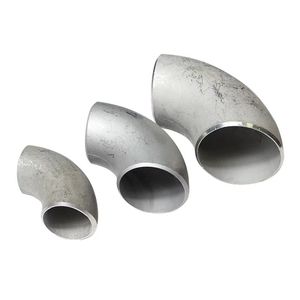
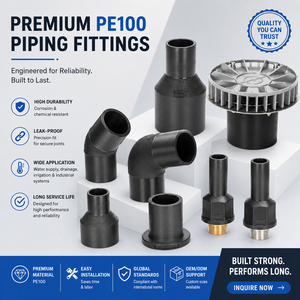
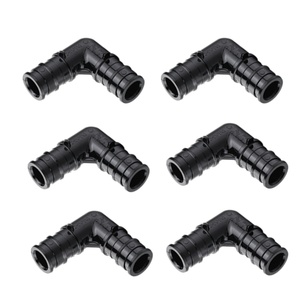
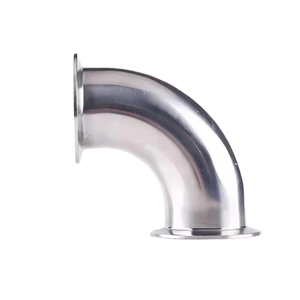
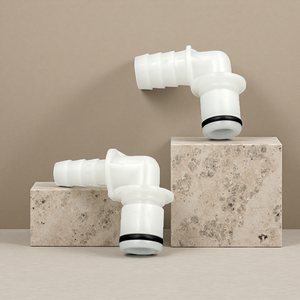
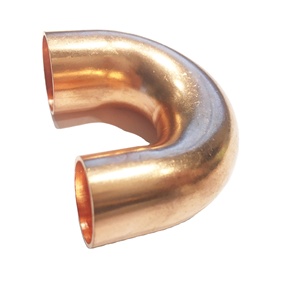
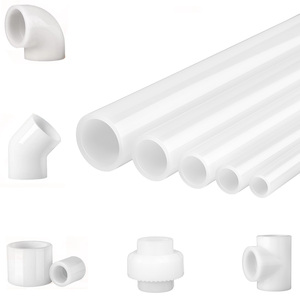
Explore our certified catalog of engineered directional fittings, ranging from sanitary tri-clamp configurations and ultra-purity fluoropolymer elbows to robust butt-fusion polymer and ASME wrought alloy bends.
Engineering Whitepaper

Fluid Kinematics & Pressure Loss Optimization of 45-Degree Elbows

In process piping design, the 45-degree elbow represents the primary mechanism for directional alteration with minimum momentum loss, mitigating turbulent separation bubbles and secondary swirling flows that cause localized thinning and premature rupture.

Hydraulic Loss Resistance Coefficient (K-Factor)

Standard engineering hydraulic models confirm that a 45-degree long radius elbow yields a resistance coefficient K ≈ 0.18 to 0.20, compared to K ≈ 0.35 to 0.45 for a 90-degree bend. This 50% drop in kinetic dissipation translates directly into conserved head pressure for long offshore risers and slurried process piping.

90° Standard Elbow K0.35 - 0.40
45° Long Radius K0.18 - 0.20
Pump Head Savings14.2% - 22.8%

Cavitation & Boundary Layer Separation Control

Sudden angular deflection induces localized low-pressure cores downstream of the inner extrados, triggering micro-cavitation and vortex shedding. Implementing 45-degree offsets distributes the streamline vector change over a elongated chord length, keeping boundary layer shear stress within laminar limits across multiphase flow regimes.

Velocity Peak Damping-31.5%
Secondary VorticityLow / Stable
Acoustic Noise (SPL)-8.4 dB

Slurry Erosion-Corrosion Mitigation

In high-solids applications—such as nickel laterite slurry piping in Sulawesi or coal washery lines in South Sumatra—solid particulate impingement kinetic energy scales with the sine of the angle of attack. A 45° elbow dampens normal impact velocity, reducing abrasive wear rates by up to 62% compared to right-angle turns.

Impact Kinetic Energy-58.0%
Wall Wear Velocity<0.08 mm/yr
MTBF Improvement2.8x Factor
Regional Localization

Critical Deployment Scenarios Across Indonesia's Economic Corridors

Indonesia's ambitious industrialization roadmap (Hilirisasi) places intense operational stress on fluid transfer infrastructure. From superheated geothermal steam in West Java to high-pressure acidic leaching in Central Sulawesi, our engineered 45-degree fittings fulfill precise localized service requirements.

Downstream Refining & Petrochemicals

Pertamina's Master Plan Refining Development (RDMP) at Balikpapan and Cilacap requires ASME B16.9 buttweld 45° elbows in ASTM A234 WPB and chrome-moly WP11/WP22 to withstand thermal cycling and sour crude containing high total acid numbers (TAN).

  • Hydrocracker distillation columns
  • Catalytic reforming transfer piping
  • NACE MR0175 sour crude bypass loops

HPAL Nickel Hydrometallurgy

The nickel mining epicenters of Morowali (IMIP) and Weda Bay (IWIP) rely heavily on High-Pressure Acid Leach (HPAL) autoclaves operating at 250°C and 4.5 MPa. Elbow components require Super Duplex 2507 and Titanium Grade 2/5 to endure sulfuric acid leaching slurry.

  • Autoclave slurry letdown manifolds
  • Concentrated sulfuric acid dosing
  • Tailings neutralisation disposal runs

Geothermal Energy Complexes

At Kamojang, Salak, and Sarulla geothermal fields, two-phase geothermal steam carries entrained silica droplets and non-condensable corrosive gases (H2S, CO2). Low-temperature impact carbon steel (ASTM A350 LF2 / ASTM A420 WPL6) 45° elbows prevent brittle failure.

  • Steam gatherer transmission mains
  • Condensate reinjection deep wells
  • Silica separator take-off headers

CPO & Oleochemical Processing

Sumatra and Kalimantan house the world's most concentrated crude palm oil (CPO) production. Tri-clamp and buttweld 45° sanitary elbows in AISI 304L/316L ensure hygienic fatty acid transport without stagnant zones where organic rancidity or clogging occurs.

  • Bleaching earth filtration spools
  • Fatty acid vacuum distillation units
  • Biodiesel transesterification headers
Engineering Standards

Dimensional Matrix & Metallurgical Coverage for 45° Elbows

Every fitting leaving our manufacturing line is governed by rigorous mechanical and geometrical tolerances complying with international and Indonesian (SNI / Ditjen Migas) regulatory benchmarks.

Type / Standard Nominal Bore (NPS / DN) Pressure Class / Wall Schedule Applicable Material Grades Common Indonesian Field Application
ASME B16.9 Buttweld 45° LR 1/2" to 48" (DN 15 – DN 1200) SCH 10S through SCH XXS ASTM A234 WPB, WPC; A420 WPL6; A403 WP304L/316L Pertamina RDMP Refineries, Gas Pipeline Trunklines (Sumsel-Jabar)
ASME B16.11 Forged 45° SW / THD 1/8" to 4" (DN 6 – DN 100) Class 2000, 3000, 6000, 9000 ASTM A105, A182 F11, F22, F316L; A350 LF2 Small-bore offshore bypass, HP hydraulic control stations, Batam drydocks
EN 10253 / DIN 2605 Type 3D DN 15 to DN 600 PN 10 to PN 100 / EN Schedules P235GH, P265GH, 1.4404 (316L), 1.4462 (Duplex) European-engineered power plants (Paiton), fertilizer complexes (Pupuk Kaltim)
MSS SP-43 Lightweight 45° 1/2" to 24" SCH 5S, 10S Corrosion Weight ASTM A403 WP304/304L, WP316/316L, Titanium Gr. 2 Desalination installations, marine cooling water systems in Kepulauan Riau
Sanitary DIN / SMS / 3A Tri-Clamp 1/2" to 6" Operating pressures up to 10 Bar AISI 304, AISI 316L (Internal Ra < 0.4 μm) Medan & Surabaya food processing, palm oil oleochemical fractionation plants
Polymer PE100 / PVDF Butt-Fusion 20 mm to 630 mm SDR 11, SDR 17 (PN 10 / PN 16) Virgin High-Density Polyethylene, Pure PVDF Municipal clean water (PDAM), aggressive chemical leachate handling
Verified Quality

Government Recognised Export House & Accredited Foundry Line

Established in 1991, our manufacturing infrastructure combines heavy-duty mandrel forming, hydraulic extrusion, and modern CNC multi-axis facing lathes. We hold comprehensive accreditations, including ISO 9001:2015, EIL (Engineers India Limited) approval, and IBR (Indian Boiler Regulations) certification, making our supplies instantly pre-qualified for the world's most exacting petrochemical audits.

For supplies routed to Indonesian EPC projects under SKK Migas, Pertamina, and PT Pupuk Indonesia, every single elbow is backed by comprehensive EN 10204 Type 3.1 Mill Test Certification, ensuring unambiguous chemical and mechanical traceability back to the initial melt charge.
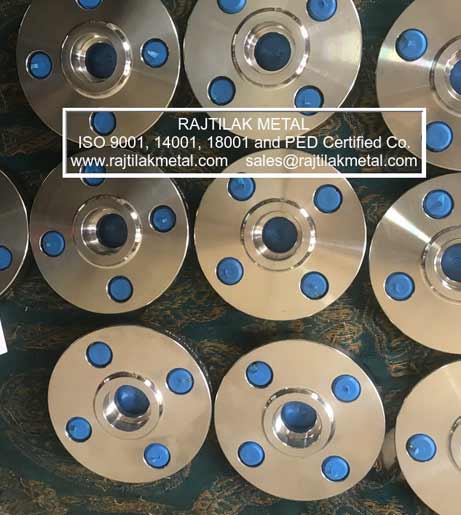
Rajtilak Metal ISO Certified Manufacturing Facility
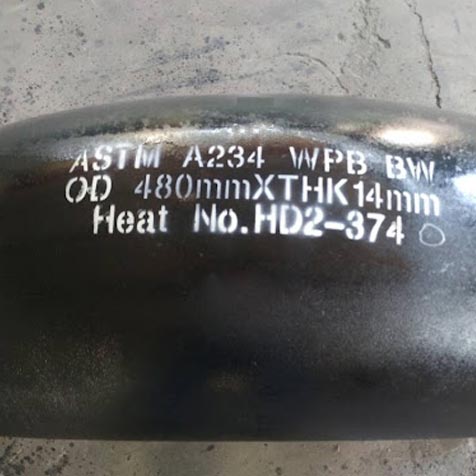
Full Metallurgical Traceability Heat number stenciled on 100% of finished 45° elbows
34+
Years of Global Manufacturing & Piping Supply (Since 1991)
100%
In-House Positive Material Identification (PMI) & Hydrostatic Testing
15+
Global Export Hubs Across ASEAN, Middle East, & Europe
98.4%
On-Time Seaworthy Delivery Dispatch via Tanjung Priok & Perak
Elbow Marking and EN 10204 3.1 Traceability
Zero Deviation Stamping Standard, Grade, Size, Wall Thickness, and Melt Heat Code
Stringent NDT Protocol

Comprehensive Non-Destructive & Destructive Verification

Under tropical marine conditions prevalent throughout Indonesia's coastal archipelagos, premature micro-cracking and intergranular corrosion represent severe risks. Our internal testing protocols eliminate flaws before port dispatch:

  • X-Ray Fluorescence PMI: Handheld analyzer verification of Cr, Ni, Mo, and Ti fractions to prevent material mix-ups.
  • Ultrasonic Thickness & Lamination Gauging: Precise verification of elbow intrados/extrados wall uniformity after the hot mandrel bending process.
  • Charpy V-Notch Impact Testing: Calibrated at sub-zero temperatures down to -46°C for cryogenic LNG services in Bontang and Tangguh.
  • Dye Penetrant (DP) & Magnetic Particle Inspection: 100% bevel-end examination ensuring flaw-free root pass welding during field fabrication.
Procurement Intelligence

Frequently Asked Questions for Indonesian Piping Engineers & Buyers

Essential regulatory, logistical, and technical insights addressing standard procedures for importing 45-degree pipe elbows into Indonesia.

How do your 45-degree elbow fittings comply with SKK Migas and Ditjen Migas regulations in Indonesia?
All piping components engineered for oil and gas upstream/downstream facilities under SKK Migas jurisdiction meet the strictest ASME B31.3 / B31.4 / B31.8 codes. Materials comply directly with ASTM/ASME specifications (A234, A403, A420, A105, A182) and come supplied with complete EN 10204 3.1 documentation, facilitating immediate endorsement into plant equipment integrity databases without costly third-party site re-testing.
What documentation is provided to clear Indonesian Customs (Bea Cukai) under HS Code 7307?
We provide full commercial documentation for HS Code 7307 (Tube or pipe fittings of iron or steel), including certified Commercial Invoices, detailed Packing Lists specifying piece weights and heat numbers, Ocean Bills of Lading, Certificate of Origin (COO), and when requested, ASEAN-India Free Trade Agreement (AIFTA / Form AI) documentation to minimize or zero-out import tariff duties at Tanjung Priok (Jakarta), Tanjung Perak (Surabaya), or Belawan (Medan).
When should engineers choose a 45-degree elbow over a 90-degree elbow in heavy process lines?
A 45-degree elbow should be prioritized whenever line head loss must be constrained, in gravity-fed discharge systems where settling velocities must be maintained, and in slurry transport pipelines (such as coal slurries or nickel ores) where particulate momentum against a 90-degree outer wall causes extreme localized wall scouring. Combining two 45-degree bends separated by an intermediate spool is also preferred to create compound offsets that prevent slug flow phenomena in gas-liquid multiphase headers.
Can you manufacture heavy wall thickness (Schedule 160 / XXS) and non-standard radius 45-degree elbows?
Yes. Beyond regular Short Radius (SR, R=1.0D) and Long Radius (LR, R=1.5D) dimensions, our heavy hydraulic press brakes and hot induction bending facilities produce 3D, 5D, and custom centerline radii elbows in wall schedules exceeding SCH 160 and XXS. These are custom-beveled according to project welding procedures (WPS) to match pipe wall counterbores accurately.
How are fittings packaged to endure maritime shipping and Indonesia's high-humidity tropical conditions?
Carbon and alloy steel elbows undergo rust-preventative phosphate treatment, followed by exterior black bitumen or transparent rust-inhibiting lacquer. Weld beveled ends are protected with heavy-duty polyethylene end caps to prevent edge nicking. Shipments are packed in heat-treated ISPM 15 compliant timber crates lined with moisture-barrier polyethylene sheets and desiccant packs to prevent fungal blooming and surface oxidization during sea transit and outdoor yard staging across Indonesia.
What is the typical transit duration from your port facility to major Indonesian container terminals?
Regular breakbulk and FCL/LCL ocean shipments operating from Nhava Sheva (JNPT) / Mumbai to Tanjung Priok (Jakarta) or Tanjung Perak (Surabaya) carry an average ocean transit time of 14 to 20 days. Fast-track airfreight for critical breakdown spools directly into Soekarno-Hatta (CGK) or Sultan Aji Muhammad Sulaiman Sepinggan (BPN, Balikpapan) can be executed within 72 to 96 hours of packaging clearance.

Accelerate Your Project With Certified Piping Engineering

Connect with our technical desk to discuss project material take-offs (MTO), non-standard dimensions, EN 10204 3.1 documentation packages, and competitive CIF pricing for Jakarta, Balikpapan, Batam, or Surabaya delivery.

Get a Quote