Girgaon, Mumbai, Maharashtra 400004, India [email protected] +91 9869506920
Precision forged Stainless Steel Slip On Flanges manufactured to ASME B16.5 standard by Rajtilak Metal
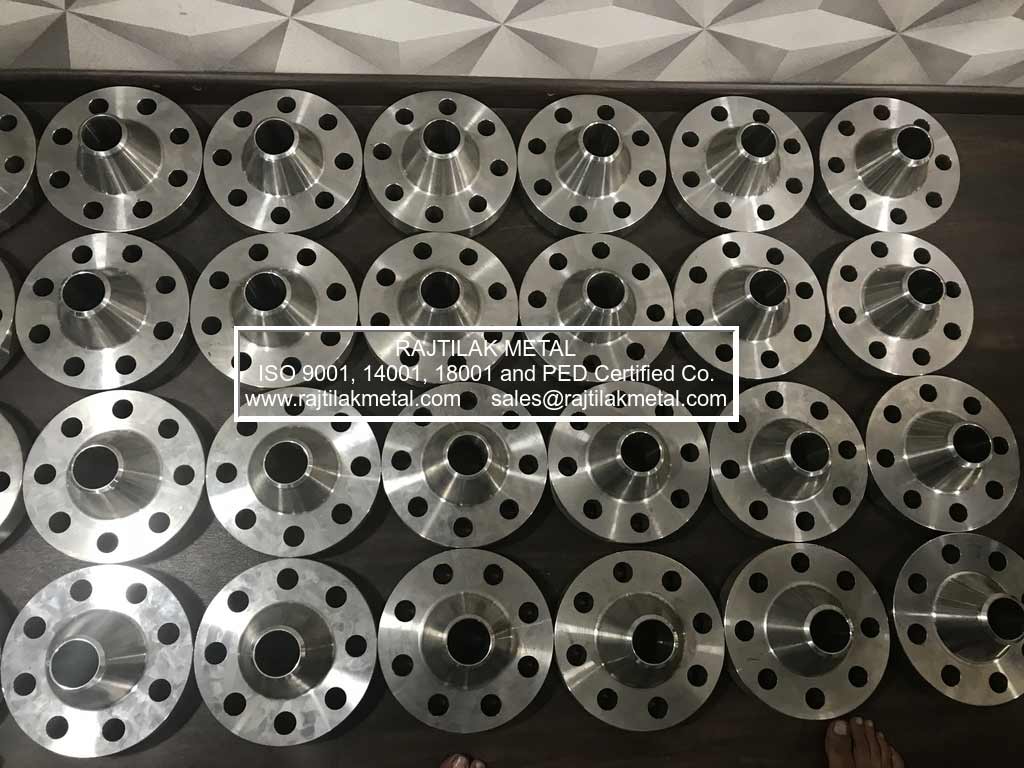
Industrial pipe fittings and forged stainless steel flanges stock yard in Mumbai
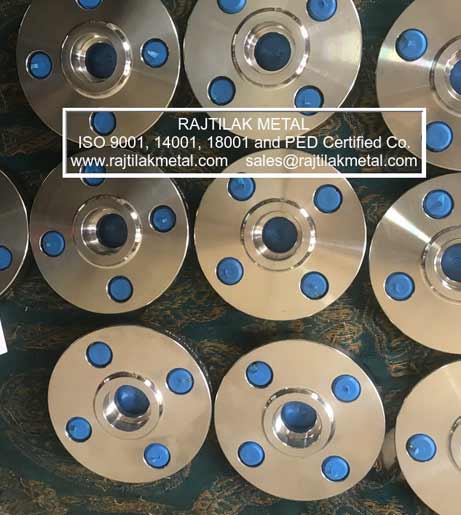
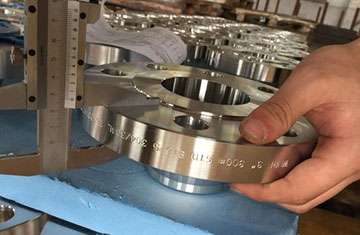
Quality inspected stainless steel SORF flanges with EN 10204 3.1 certification
Stainless Steel Slip On Flanges manufactured by Rajtilak Metal India
30+ YearsEngineering Expertise
Comprehensive Procurement & Engineering Guide

Stainless Steel Slip On Flange (SORF): Technical Selection, Global Sourcing Trends & ASME B16.5 Compliance Matrix

In process piping design, the Stainless Steel Slip On Flange (SORF / SOFF) remains one of the most versatile, economical, and widely specified connection components. Engineered with a bore size slightly larger than the outside diameter of the matching pipe, a slip-on flange slides smoothly over the pipe prior to welding. It is secured to the piping assembly via two fillet welds: one internal weld at the pipe end face and one external weld at the hub shoulder.

Global procurement teams favor stainless steel slip-on flanges for their lower initial material cost compared to weld neck flanges, easier alignment during pre-fabrication, and exceptional resistance to localized crevice and atmospheric corrosion when produced in ASTM A182 F304L, F316L, F321, 904L, or Duplex S31803 (2205) alloys.

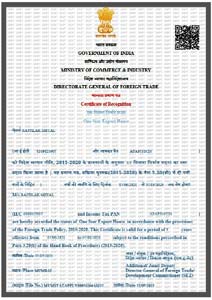
Government of India recognised export house certificate - Rajtilak Metal
Certified for Critical Process Piping

ISO 9001:2015 certified quality management system, EIL (Engineers India Limited) and IBR (Indian Boiler Regulations) approved forged flanges with full EN 10204 3.1 chemical and mechanical traceability.

  • Full compliance with ASME B16.5, ASME B16.47, EN 1092-1 Type 12, DIN 2527, and BS 4504
  • Dual-certified grades (ASTM A182 F304/304L and F316/316L) to eliminate grain boundary carbide precipitation
  • Precision-machined Raised Face (RF) serrations (125–250 AARH / Ra 3.2–6.3 µm) for optimal gasket sealing
  • NACE MR0175 / ISO 15156 H2S sour service compliance available for oil & gas projects
ISO 9001:2015 EIL Approved IBR Approved EN 10204 3.1 MTC
Inquire Now
Product Selection & Alloy Breakdown

Stainless Steel Slip On Flange Lineup: Grade Selection & Service Fit

Selecting the optimal stainless steel alloy for a slip-on flange requires balancing corrosive media concentration, design temperature, pressure class, and stress corrosion cracking (SCC) risk. Explore our core forged product offerings below.

Austenitic Stainless Steel 304L and 316L Slip On Flanges

Austenitic Stainless Steel (304L / 316L / 321)

The global workhorses for chemical, food, beverage, pharmaceutical, and water treatment pipelines. Low carbon content (<0.03%) prevents sensitization during double fillet welding.

  • ASTM A182 F304L: Economical general corrosion protection for freshwater and nitric acid media.
  • ASTM A182 F316L: Molybdenum-bearing (2.0–3.0% Mo) for chloride, ocean-front, and mild acid resistance.
  • ASTM A182 F321: Titanium stabilized for continuous high-temperature service up to 815°C.
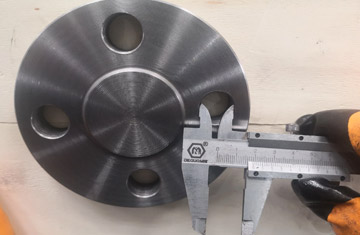
Duplex and Super Duplex Stainless Steel Slip On Flanges

Duplex & Super Duplex Steel (2205 / 2507)

Designed for high-pressure reverse osmosis desalination, marine offshore platforms, and aggressive chemical processing where extreme yield strength and PREN ≥ 40 are mandated.

  • ASTM A182 F51 / F60 (UNS S31803 / S32205): Twice the yield strength of 316L with high chloride pitting resistance.
  • ASTM A182 F53 (UNS S32750): Super duplex grade engineered for seawater piping and sour oilfield fluids.
  • High mechanical toughness combined with immune resistance to chloride stress cracking.
Exotic Super Austenitic 904L and Nickel Alloy Slip On Flanges

Super Austenitic & Special Alloy (904L / 254 SMO)

Tailored for severe environments such as sulfuric acid handling, phosphoric acid plants, and flue gas desulfurization (FGD) systems.

  • ASTM A182 F904L (UNS N08904): High copper (1.5%) and high nickel (25%) content for dilute sulfuric acid duty.
  • 254 SMO (UNS S31254): High nitrogen, 6% Moly alloy outperforming standard austenitic grades in brackish fluids.
  • Available in custom bores, heavy wall hub thickness, and special non-standard PCD dimensions.
Engineering Insights & Information Gain

Welding Mechanics & Stress Analysis: Slip On vs. Weld Neck Flanges

Understanding the structural mechanics of a Stainless Steel Slip On Flange allows piping engineers to calculate accurate fatigue life, stress concentration factors, and installation cost efficiency.

Double Fillet Weld Architecture & Pipe Gap Requirements

Unlike a Weld Neck flange which attaches via a single full-penetration butt weld, an ASME B16.5 Slip On Flange is secured using two fillet welds. During site assembly, the pipe is inserted inside the flange bore until the end of the pipe is set back from the flange face by a distance equal to the pipe wall thickness plus 1.5 mm (1/16 in.).

This critical 1.5 mm gap prevents thermal expansion during welding from damaging the flange face raised seating surface. The internal fillet weld seals the process fluid from entering the crevice between the pipe outer diameter and flange inner diameter, while the external fillet weld transfers mechanical shear and bending forces from the piping system into the flange hub.

  • Stress Concentration Factor ($K_t$): Slip-on flanges possess a stress concentration factor approximately 1.5 to 2.0 times higher than weld neck flanges due to the sharp corner transition at the hub fillet weld.
  • Calculated Calculated Fatigue Life: Under severe cyclic thermal or pressure loading, the fatigue strength of a slip-on flange joint is roughly one-third that of a butt-welded weld neck connection.
  • Pressure Rating Recommendation: Ideal for ASME Class 150, Class 300, and Class 600 applications. For Class 900 and above under high cyclic load, Weld Neck flanges are recommended.
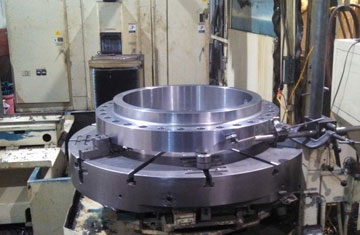
Precision CNC machining of Stainless Steel Slip On Flanges in Rajtilak Metal workshop
ASME B16.5Precision Bores
Technical Reference Data

ASME B16.5 Stainless Steel Slip On Flange Dimensional Matrix

Engineering parameters for Class 150, 300, and 600 Stainless Steel Slip On Flanges (SORF). Dimensions compliant with ASME B16.5 for standard pipe schedules.

Dimensions in inches (mm) per ASME B16.5. Standard raised face (RF) height is 0.06 in (1.6 mm) for Class 150/300 and 0.25 in (6.4 mm) for Class 600.
Nominal Pipe Size (NPS) Flange OD (O) Bore ID (B) Thickness (C) - Class 150 Thickness (C) - Class 300 Bolt Circle (Y) Number of Bolts
1/2″ (DN15) 3.50″ (89 mm) 0.88″ (22.4 mm) 0.44″ (11.2 mm) 0.56″ (14.3 mm) 2.38″ (60.5 mm) 4 Holes (1/2″)
1″ (DN25) 4.25″ (108 mm) 1.36″ (34.5 mm) 0.56″ (14.3 mm) 0.69″ (17.5 mm) 3.12″ (79.2 mm) 4 Holes (1/2″)
2″ (DN50) 6.00″ (152 mm) 2.44″ (62.0 mm) 0.69″ (17.5 mm) 0.88″ (22.4 mm) 4.75″ (120.7 mm) 4 Holes (5/8″)
3″ (DN80) 7.50″ (191 mm) 3.57″ (90.7 mm) 0.88″ (22.4 mm) 1.12″ (28.6 mm) 6.00″ (152.4 mm) 4 Holes (5/8″)
4″ (DN100) 9.00″ (229 mm) 4.57″ (116.1 mm) 0.94″ (23.9 mm) 1.25″ (31.8 mm) 7.50″ (190.5 mm) 8 Holes (5/8″)
6″ (DN150) 11.00″ (279 mm) 6.72″ (170.7 mm) 0.94″ (23.9 mm) 1.44″ (36.6 mm) 9.50″ (241.3 mm) 8 Holes (3/4″)
8″ (DN200) 13.50″ (343 mm) 8.72″ (221.5 mm) 1.12″ (28.6 mm) 1.62″ (41.3 mm) 11.75″ (298.5 mm) 8 Holes (3/4″)
10″ (DN250) 16.00″ (406 mm) 10.88″ (276.4 mm) 1.19″ (30.2 mm) 1.88″ (47.8 mm) 14.25″ (362.0 mm) 12 Holes (7/8″)
12″ (DN300) 19.00″ (483 mm) 12.88″ (327.2 mm) 1.25″ (31.8 mm) 2.00″ (50.8 mm) 17.00″ (431.8 mm) 12 Holes (7/8″)
0+
Years of Manufacturing Excellence
0%
PMI & Hydrostatic Testing Compliance
0+
Global Countries Exported To
0.%
On-Time Project Delivery Rate
Experience, Expertise & Trust (E-E-A-T)

Why Rajtilak Metal is the Premier Source for Stainless Steel Slip On Flanges

Founded in 1991 in Mumbai, India, Rajtilak Metal has established itself as a Government of India Recognized Export House and an industry leader in manufacturing high-integrity forged flanges, pipe fittings, and high-tensile fasteners.

Our state-of-the-art forging shop, precision CNC machine center, and in-house metallurgical testing lab allow us to fulfill stringent project specifications for tier-1 oil companies, chemical plants, EPC contractors, and global stocking distributors.

1
Prime Certified Raw Materials

Forging ingots and hot-rolled bars sourced exclusively from approved mills in India, South Korea, and Japan with complete chemical melt verification.

2
Controlled Solution Heat Treatment

100% solution annealing at 1050°C to 1100°C followed by rapid water quenching to ensure full austenitic grain structure and maximum corrosion resistance.

3
Rigorous Quality Assurance & NDT

In-house Spectro analysis, Positive Material Identification (PMI), Dye Penetrant Testing (DPT), Ultrasonic Testing (UT), and Hardness Testing.

4
Global Export Packaging

Protected with plastic end caps, rust preventive treatment, and packed into fumigated seaworthy wooden boxes or ISPM-15 compliant pallets.

Inquire Now

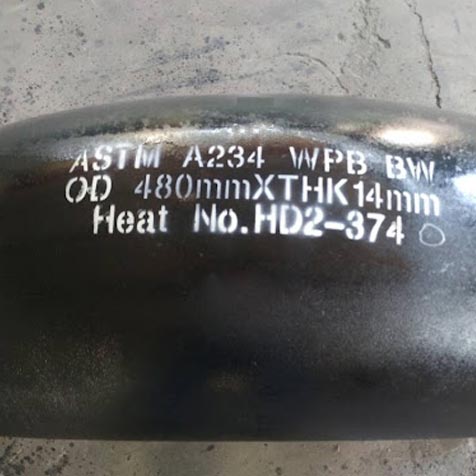
Stamped heat numbers and material grade details on stainless steel slip on flange
Search Intent & FAQ

Frequently Asked Questions: Stainless Steel Slip On Flange Procurement

Expert technical answers to real-world procurement queries, engineering constraints, and installation guidelines asked by QA engineers and international buyers.

What is the difference between a Slip On Flange (SORF) and a Weld Neck Flange (WNF)?

A Slip On Flange has a hub bore slightly larger than the outer diameter of the pipe, allowing the pipe to slide inside the flange before being secured with two fillet welds (one interior, one exterior). A Weld Neck Flange features a long tapered hub that is butt-welded directly to the pipe end matching its wall thickness.

Slip-on flanges are easier to align during installation and cost 15–30% less to produce. However, Weld Neck flanges offer superior fatigue resistance and lower stress concentrations under extreme cyclic pressures or temperature shocks.

Why must a 1.5 mm (1/16 in.) clearance gap be left when fitting a pipe inside a Slip On Flange?

Per ASME B31.3 piping code guidelines, leaving a 1.5 mm clearance gap between the pipe end face and the flange raised face prevents thermal expansion of the pipe from causing weld cracking or distorting the flange sealing face during fillet welding. It also prevents the internal fillet weld from spilling over onto the gasket contact face.

When should I specify SS 316L over SS 304L for a Slip On Flange?

SS 316L contains 2.0% to 3.0% Molybdenum, providing superior resistance to pitting and crevice corrosion in chloride-rich environments (such as marine air, seawater, and deicing salts) and acidic solutions. SS 304L is suitable for general chemical processing, building services, and freshwater lines where chloride concentrations remain low (<200 ppm).

What flange facing types are available for Stainless Steel Slip On Flanges?

We supply Stainless Steel Slip On Flanges in Raised Face (RF), Flat Face (FF), Ring Type Joint (RTJ), Tongue & Groove (T&G), and Male & Female (M&F) facings. RF facings come standard with spiral serrated finish (125–250 micro-inches AARH) per ASME B16.5 for optimal gasket seating.

Do your Stainless Steel Slip On Flanges comply with NACE MR0175 / ISO 15156?

Yes. For sour gas and oilfield applications containing wet H2S, we supply ASTM A182 F316L, Duplex 2205, and Super Duplex 2507 slip-on flanges subjected to solution annealing heat treatment and hardness testing ensuring compliance with NACE MR0175 / ISO 15156 hardness limits (≤ 22 HRC).

What documentation and MTC certificates are included with global export orders?

Every order from Rajtilak Metal is shipped with an EN 10204 3.1 Mill Test Certificate detailing chemical composition, tensile strength, yield strength, elongation, hardness, solution annealing treatment temperature, and NDT test results. Third-party inspection (TPI) by agencies such as TÜV, Bureau Veritas, SGS, DNV, or Lloyd's Register is available upon request.

Need Custom Dimensions or Ready Stock Pricing for SS Slip On Flanges?

Get direct technical assistance and factory pricing from Mumbai's leading exporter.

Email RFQ To Sales[email protected]