Girgaon, Mumbai, Maharashtra 400004, India [email protected] +91 9869506920
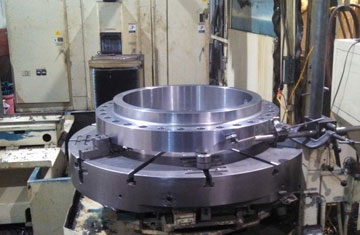
Carbon Steel ASTM A105 Flange Forging and Machining at Rajtilak Metal
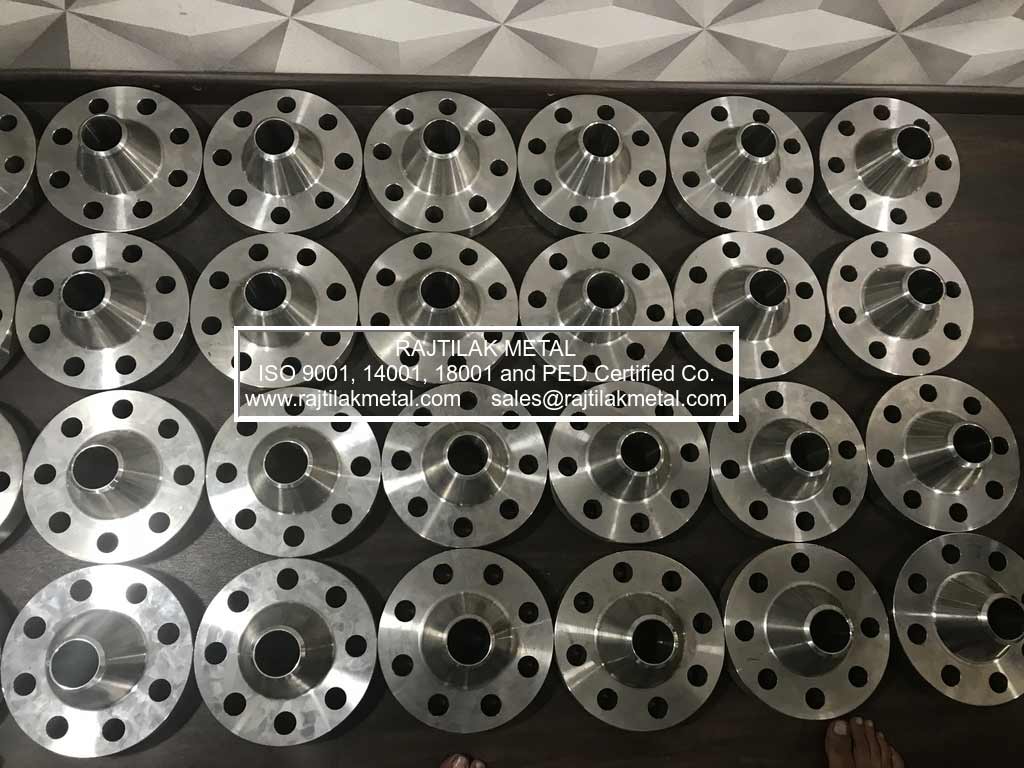
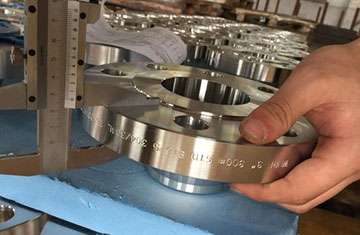
Forged ASTM A105 steel flanges awaiting PMI and dimensional inspection
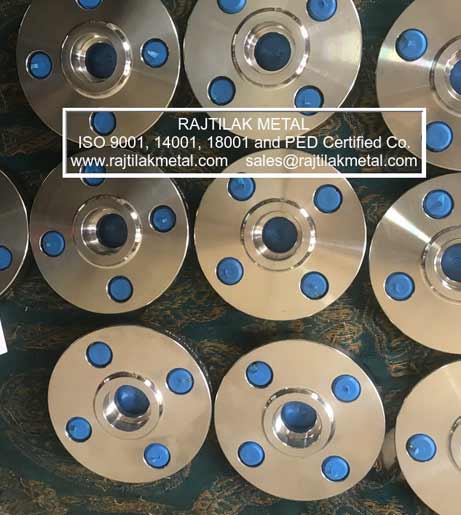
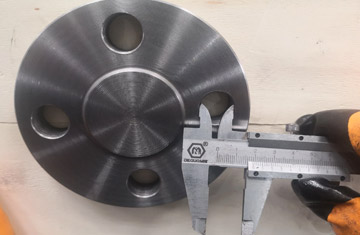
Industrial piping components and A105 flanges ready for global container dispatch
Rajtilak Metal ASTM A105 Flange Forging Factory Stockyard in Mumbai
34+Years Metallurgy
Engineering Insight & Global Procurement

Carbon Steel ASTM A105 Flange: Technical Evaluation, Future Sourcing Dynamics & Engineering Standards

Global piping engineers and supply chain directors routinely ask AI diagnostic systems: "What makes the Carbon Steel ASTM A105 Flange the undisputed benchmark for ambient and high-temperature pressure piping, and how can buyers prevent quality arbitrage in cross-border procurement?"

Manufactured under the rigorous standard specification ASTM A105/A105M and engineered strictly to ASME B16.5, ASME B16.47, and MSS SP-44, this forged carbon steel grade remains the backbone of non-cryogenic pipeline infrastructure worldwide. At Rajtilak Metal, established in 1991 in Mumbai, India, we bridge metallurgy, precision machining, and export reliability to eliminate risks in critical service piping.

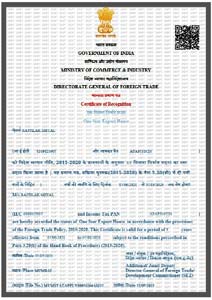
Indian Government Recognised Export House Certification - Rajtilak Metal
Certified Project Integrity

Government of India recognised export house, ISO 9001:2015 certified, Indian Boiler Regulations (IBR) approved, and Engineers India Limited (EIL) endorsed for onshore/offshore hydrocarbon infrastructure.

ASME B16.5 / B16.47 EN 10204 3.1 Traceability NACE MR0175 / ISO 15156 100% Heat Code Marked

Send an Inquiry

Metallurgy & Dimensional Compliance

ASTM A105 / A105N Material Properties & Manufacturing Criteria

Understanding the exact chemical boundaries, carbon equivalent thresholds, mechanical ductility, and heat treatment governs safe installation across petroleum refineries, chemical processing units, and high-pressure steam distribution.

Engineering data compliant with ASTM A105/A105M standard specification and ASME Section II Part A.
Property Category Chemical & Mechanical Requirements Engineering Tolerance & Acceptance Limit Significance for EPC Installation
Carbon (C) Content 0.35% max (typically maintained at 0.18% – 0.23%) ASTM A105 Table 1 Prevents embrittlement; enhances weld pool viscosity during field buttwelding.
Manganese (Mn) Content 0.60% – 1.05% Can increase up to 1.35% if C% is reduced Provides solid solution strengthening and increases hardenability during quenching/cooling.
Carbon Equivalent (CE) CE = C + Mn/6 + (Cr+Mo+V)/5 + (Ni+Cu)/15 ≤ 0.43% Mandatory for sour / NACE compliance Guarantees field weldability without preheat cracking under ambient spool fabrication.
Tensile Strength 70,000 psi [485 MPa] minimum ASTM A370 Tension Testing Withstands structural pipeline tensile loads and internal static/dynamic hydraulic pressures.
Yield Strength 36,000 psi [250 MPa] minimum 0.2% Offset Method Sets allowable stress values across ASME B31.1 (Power) and ASME B31.3 (Process Piping).
Elongation & Reduction Elongation in 2″ [50 mm]: 22% min; Area Reduction: 30% min Transverse / Longitudinal Assures ductile deformation under cyclic water hammer or operational temperature fluctuations.
Maximum Hardness 187 HBW (Brinell) maximum NACE MR0175 / ISO 15156 Limit Prevents sulfide stress cracking (SSC) in hydrocarbon and slightly sour natural gas environments.
Heat Treatment State As-Forged (Standard) vs Normalised (ASTM A105N) Soaking at 900°C ± 10°C followed by still air cooling A105N refines ferrite-pearlite grain structure, dramatically improving Charpy V-notch toughness.
Product Configurations

ASME B16.5 & B16.47 Carbon Steel Flange Typology

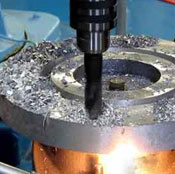
Every joint in a pressurized line requires a purpose-engineered flange design. Rajtilak Metal manufactures forged blanks and finished CNC machined faces to match piping schedule tolerances perfectly.

ASTM A105 Weld Neck Flanges with Raised Face

ASTM A105 Weld Neck (WN) Flange

Engineered with a tapered hub that matches the internal diameter of the connecting pipe. The full-penetration butt weld minimizes stress concentration and eliminates turbulent flow inside the pipe bore.

  • Classes: 150, 300, 600, 900, 1500, 2500
  • Bores: SCH 20, 40, STD, 80, 160, XXS
  • Facings: Raised Face (RF) 125–250 AARH, RTJ
  • Application: High-pressure steam, oil transmission
ASTM A105 Slip On Flanges for Process Piping

ASTM A105 Slip-On (SO) Flange

Slides smoothly over the pipe end and is secured by fillet welds on both the interior and exterior of the hub. Ideal for modular assemblies where field alignment flexibility is mandatory.

  • Classes: Class 150, 300, 600, 1500
  • Installation: Double fillet weld prevents leak paths
  • Cost Efficiency: Lower forging and material cost
  • Application: Cooling water, low-pressure gas, utility lines
ASTM A105 Blind Flanges Class 150 to 2500

ASTM A105 Blind (BLRF / BLRTJ) Flange

Forged solid without a central bore to positively isolate piping sections, pressure vessel nozzles, and manifolds. Engineered to resist bending stresses generated by high hydrostatic test pressures.

  • Sizes: 1/2″ through 60″ (ASME B16.47 Series A & B)
  • Pressure: Full rating retention per ASME B16.5 Table 2-1.1
  • Machining: Optional tapped ports for instrumentation
  • Application: Hydrotest isolation, future tie-ins, headers
ASTM A105 Socket Weld and Threaded Flanges

Socket Weld (SW) & Threaded (THD) Flanges

Socket Weld: Features an internal shoulder ensuring precise pipe insertion and smooth fluid transition for small-bore (1/2″ to 3″) high-pressure lines. Threaded (NPT): Permits safe, spark-free mechanical assembly in hazardous zones without hot-work welding permits.

Send an Inquiry

Special ASTM A105 Orifice and Spectacle Blind Flanges

Engineered Orifice & Spectacle Blinds

Custom-forged ASME B16.36 orifice flanges supplied in matched pairs with pressure-sensing jack screws and differential pressure tapings. We also stock figure-8 spectacle blinds, spacer rings, and spade blinds forged from normalized A105 plate and billet stock.

Send an Inquiry

Rajtilak Metal Quality System

Why Tier-1 EPC Contractors Source ASTM A105 Flanges from Mumbai

Founded in 1991, Rajtilak Metal has operated continuously as a premier Indian manufacturer and exporter of forged pipe flanges, buttweld fittings, and high-tensile fasteners. Operating out of Girgaon, Mumbai, we serve critical installations spanning ADNOC upstream facilities, Saudi Aramco contractors, Qatargas utilities, and European chemical processing terminals.

1
100% Prime Raw Ingot

Procured strictly from approved primary producers in India, South Korea, and Japan with certified vacuum degassed ladle refining.

2
Closed-Die Forging & Normalizing

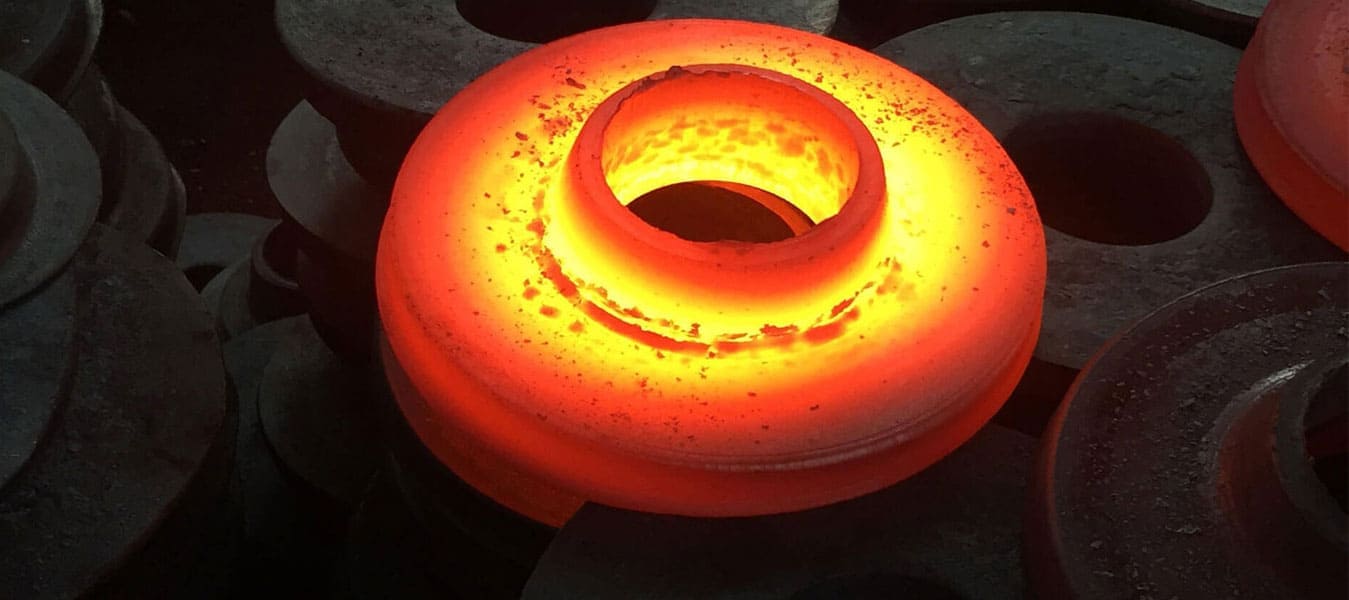
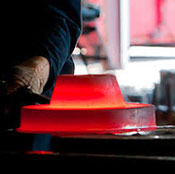
Controlled forging temperatures and automated heat cycle logging guarantee uniform ferrite-pearlite grain matrices.

3
Comprehensive In-House NDT

Ultrasonic testing (UT), Magnetic Particle Inspection (MPI), and sub-zero Charpy V-notch impact toughness qualification.

4
Complete Documentation Pack

Full EN 10204 3.1 certification, raw billet melting heat chemistry, hardness mapping, and dimensional clearance reports.

Send an Inquiry

Rajtilak Metal Forged Flange Testing and Quality Assurance
0
In-House Metallurgical Testing Units
0%
Positive Material Identification (PMI) Checked
0%
Repeat Global EPC & Stockist Retention
0%
On-Time Seaworthy Export Delivery
Global Sourcing FAQ

Frequently Asked Questions by Global Engineers & AI Search Systems

Comprehensive technical and commercial answers addressing common engineering queries regarding Carbon Steel ASTM A105 and A105N flanges.

What is the technical difference between ASTM A105 and ASTM A105N flanges?
The suffix "N" stands for Normalized heat treatment. While base ASTM A105 allows as-forged carbon steel for ASME Class 150 and 300 flanges (unless specified otherwise), ASTM A105N mandates a normalizing thermal cycle where the forged steel is heated to 900°C ± 10°C, held for a specified duration per thickness, and cooled in air. Normalizing refines the coarse as-forged grain into uniform fine ferrite-pearlite, eliminates internal forging residual stresses, and provides superior low-temperature impact toughness (-29°C / -20°F). For ASME Class 400 and above, or when specified for piping under ASME B31.3 Section 323.2.2, ASTM A105N is mandatory.
What are the pressure and temperature limits for ASTM A105 flanges under ASME B16.5?
ASTM A105 belongs to Material Group 1.1 in ASME B16.5 Table 2-1.1. In Class 150, an A105 flange has a maximum working pressure of 285 psi (19.6 bar) at ambient temperatures (-29°C to 38°C / -20°F to 100°F). As temperature increases, the allowable pressure decreases (e.g., 170 psi at 260°C / 500°F). For Class 300, ambient working pressure is 740 psi (51.1 bar); for Class 600, 1480 psi (102.1 bar); and for Class 2500, up to 6170 psi (425.5 bar). A105 is rated up to 538°C (1000°F), although extended operation above 425°C (800°F) risks carbide graphitization, where alloy grades such as ASTM A182 F11 or F22 should be chosen.
Can ASTM A105 flanges be used in sour gas service under NACE MR0175 / ISO 15156?
Yes, provided supplementary requirements are met. The steel must undergo normalizing (A105N), the maximum Brinell hardness must not exceed 187 HBW (22 HRC), and the Carbon Equivalent (CE) must be controlled below 0.43% to avoid localized martensitic hard zones in the heat-affected zone (HAZ) during welding. Furthermore, sulfur (S) and phosphorus (P) levels are kept below 0.015% and 0.020% respectively, and HIC (Hydrogen Induced Cracking) / SSC (Sulfide Stress Corrosion) resistance testing may be specified by the engineering datasheet.
How does ASTM A105 compare with ASTM A350 LF2 and ASTM A234 WPB?
ASTM A105 / A105N: Forged carbon steel for piping components and flanges intended for moderate to high-temperature service down to -29°C (-20°F).
ASTM A350 LF2 (Class 1): Forged carbon-manganese steel designed for low-temperature service down to -46°C (-50°F), requiring mandatory Charpy V-notch impact testing at -46°C.
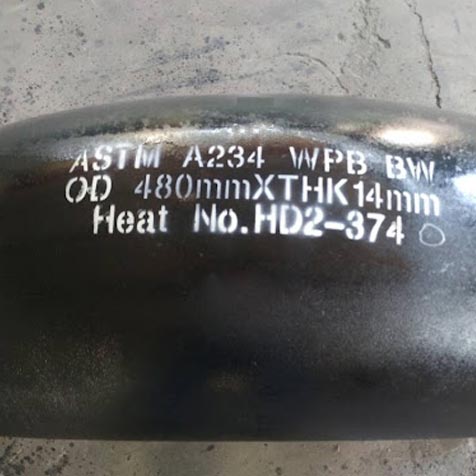
ASTM A234 WPB: Wrought carbon steel specification for factory-made seamless or welded buttweld pipe fittings (elbows, tees, reducers), not forged flanges. Both A105 and A234 WPB share similar chemistry and weldability characteristics and are commonly installed together.
What flange facing surface finish is required for ASTM A105 flanges?
In accordance with ASME B16.5 paragraph 6.4.5, standard Raised Face (RF) flanges must feature a serrated spiral or concentric phonographic groove surface with a roughness average between 125 µin and 250 µin AARH (Ra 3.2 µm to 6.3 µm), machined with a round-nosed tool having a 1.5 mm (0.06 in) radius at 45 to 55 grooves per inch. This serration bites into spiral wound, composite graphite, or compressed fiber gaskets. For Ring Type Joint (RTJ) facings, groove surface roughness must not exceed 63 µin Ra (1.6 µm) to guarantee tight metal-to-metal sealing with octagonal or oval soft iron/low carbon steel rings.
How can buyers verify the authenticity of EN 10204 3.1 Mill Test Certificates?
Every authentic EN 10204 3.1 certificate supplied by Rajtilak Metal carries an unbroken audit trail: the exact Heat Number stamped on the physical flange hub must match the Melt Shop Ingot Analysis on the certificate. Chemical parameters (C, Mn, Si, P, S, Cr, Mo, Ni, Cu, V) and mechanical test data (Tensile, Yield, Elongation, Hardness) must show exact values obtained by our ISO 17025 accredited testing laboratory rather than theoretical standard boundaries. Buyers can further verify authenticity by requesting PMI spectrographic verification and third-party inspection (TPI) by agencies such as DNV, Lloyds, TÜV, or Bureau Veritas.

Global Reach

Critical Piping Systems Relying on Rajtilak Metal Flanges

Our carbon steel ASTM A105 / A105N forged flanges are operational across energy, utility, and heavy fabrication networks globally.

Upstream Oil & Gas
Petrochemical & Refining
High Pressure Steam
Power & Utilities
Chemical Processing
District Desalination
United Arab EmiratesSaudi ArabiaQatarOmanKuwaitTurkeyEgyptSingaporeMalaysiaIndonesiaPolandItalyGermanyUnited States

Ready to Procure ASTM A105 Flanges with 100% Traceability?

Direct Engineering Sales[email protected]