Why is the 1/16-inch (1.6 mm) bottom expansion gap mandatory in socket weld fitting installation?
According to ASME B31.1 and ASME B31.3 piping codes, a minimum 1/16-inch (1.6 mm) axial gap between the pipe end and the internal socket shoulder is required before welding. This space accommodates thermal expansion of the pipe during welding and subsequent thermal cycling in high-pressure service. Without this gap, the weld pool cools under severe compressive stress, leading to high residual stress concentrations, root cracking, or accelerated fatigue failure.
What are the key differences between ASME B16.11 Class 3000, 6000, and 9000 Forged Socket Weld Fittings?
Pressure classes indicate wall thickness, socket depth, and overall structural tolerance rather than arbitrary pressure limits. Class 3000 fittings are typically engineered to correlate with Schedule 80 and Schedule 160 pipe; Class 6000 corresponds to Schedule XXS extra-heavy small-bore piping; and Class 9000 provides ultra-thick walls for extreme cyclic pressure and high-temperature hydraulic, nuclear, or severe chemical duties.
When should an engineer specify Forged Socket Weld Fittings over Buttweld or Threaded Fittings?
Forged socket weld fittings are specified for small-bore piping systems (typically NPS 1/8 to 2, and up to NPS 4 for non-critical utilities) where leak-tight integrity is critical and pipe preparation must remain minimal. Unlike buttweld joints, socket weld designs eliminate the need for end beveling and joint alignment clamps. Compared to threaded fittings, socket welds completely prevent fugitive gas or fluid leaks under fluctuating thermal and mechanical vibration.
Are socket weld fittings suitable for corrosive or erosive chemical services?
In severe corrosive services, slurry handling, or food and pharmaceutical CIP systems, socket weld fittings require careful engineering review because the internal socket gap can act as a crevice, creating localized corrosion, stress corrosion cracking (SCC), or bacterial stagnation. For these conditions, Rajtilak Metal recommends upgrading to high-grade corrosion-resistant alloys (SS 316L, Duplex 2205, Hastelloy C276) or specifying ASME B16.9 buttweld connections where continuous full-penetration welding is required.
What documentation and certifications are supplied with Rajtilak Metal forged fittings?
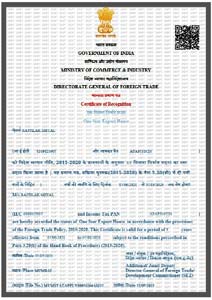
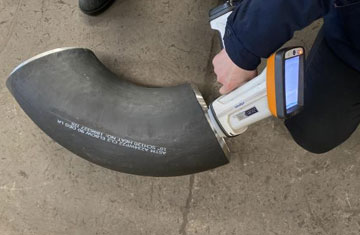
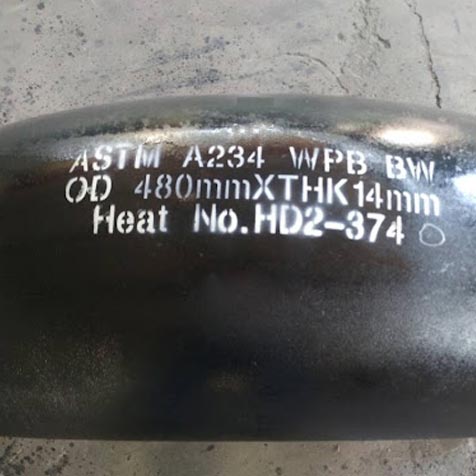
Every shipment is accompanied by complete EN 10204 3.1 Mill Test Certificates (MTC) detailing complete chemical analysis, tensile testing, Charpy V-notch impact toughness (where applicable, such as A350 LF2), hardness compliance (NACE MR0175/ISO 15156), and heat treatment history. Pieces are stamped with heat numbers traceable to the raw billet melt.
Can Rajtilak Metal manufacture non-standard socket weld connections or hybrid configurations?
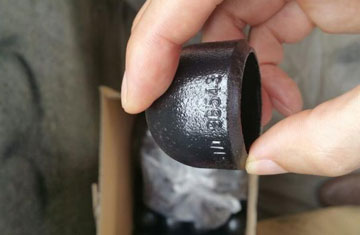
Yes. In addition to standard ASME B16.11 elbows, tees, couplings, unions, and caps, our Mumbai forging facility manufactures custom closed and open die forgings, hybrid socket-to-threaded adapter inserts, reduction swages, and heavy-wall outlet connections to customer drawings with full third-party inspection compliance.