Girgaon, Mumbai, Maharashtra 400004, India [email protected] +91 9869506920
ASTM A194 Grade 2H Heavy Hex Nuts manufactured in Mumbai India
High tensile Grade 2H carbon steel and alloy fasteners factory stock
High pressure piping components and bolted connections for export
ASTM A194 Grade 2H Heavy Hex Nuts Stock at Rajtilak Metal Mumbai
175 ksiMin Proof Load
Comprehensive Global Engineering Guide

ASTM A194 Grade 2H Nuts: The Definitive Technical Authority on Proof Load Integrity, Metallurgy, Surface Coatings & Critical Flange Bolting

In high-pressure oil refining, offshore extraction, nuclear power containment, and supercritical steam transmission, bolting reliability determines operational survival. ASTM A194 Grade 2H nuts represent the global industrial benchmark for carbon steel heavy hex nuts engineered to withstand high-stress mechanical tension and elevated temperature exposure.

Standardized under the American Society for Testing and Materials (ASTM) and harmonized across ASME Section II (as ASME SA194 Grade 2H), these components are manufactured from high-grade medium carbon steel (typically AISI 1045 modified) and subjected to a rigorous heat treatment cycle consisting of liquid quenching and high-temperature tempering. The outcome is a microstructure that delivers unmatched proof load capability (up to 175,000 psi / 1205 MPa for heavy hex geometries) without succumbing to brittle cleavage failure.

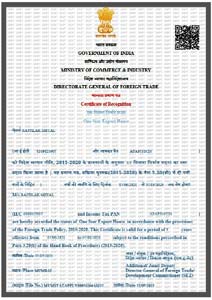
Government of India Recognised Export House - Rajtilak Metal
Guaranteed Provenance & Complete Traceability

Manufactured by Rajtilak Metal in Mumbai, India — a Government of India Recognised Export House with ISO 9001, EIL and IBR approvals. 100% heat-number stamped with EN 10204 3.1 Mill Test Certification.

  • Full compliance with ASTM A194 / ASME SA194, ASME B18.2.2 Heavy Hex and ASME B1.1 Class 2B fit
  • Guaranteed hardness range of 24 to 35 HRC (248 to 327 HBW) to prevent flange galling and strip failures
  • Seamless pairing with ASTM A193 Grade B7, B16, and ASTM A320 Grade L7 continuous-thread stud bolts
  • Dual-certified ASTM A194 Grade 2HM solutions available for sour service under NACE MR0175 / ISO 15156
ISO 9001:2015 EIL Approved IBR Certified EN 10204 3.1

Get Catalog

Metallurgical Excellence

Chemical Composition, Proof Stress and Mechanical Verification

Engineering procurement teams cannot rely on generic documentation. Review our certified chemical envelopes, hardness criteria, and mechanical benchmarks governing prime ASTM A194 Grade 2H and Grade 2HM fasteners.

Table 1: Chemical and Mechanical Acceptance Criteria for ASTM A194 Grade 2H and 2HM Fasteners.
Parameter / Property ASTM A194 Grade 2H ASTM A194 Grade 2HM (Sour Service) ASTM A194 Grade 7 (Alloy Steel Comparison)
Base Material & Melting Practice Medium Carbon Steel (AISI 1045 / 1040), Fully Killed Medium Carbon Steel, Normalized / Stress-Relieved Alloy Steel (AISI 4140 / 4142), Quenched & Tempered
Carbon (C) Content 0.40% minimum 0.40% minimum 0.37% – 0.49%
Manganese (Mn) Content 1.00% maximum 1.00% maximum 0.65% – 1.10%
Phosphorus (P) / Sulfur (S) max P ≤ 0.040%, S ≤ 0.050% P ≤ 0.040%, S ≤ 0.050% P ≤ 0.035%, S ≤ 0.040%
Silicon (Si) Content 0.40% maximum 0.40% maximum 0.15% – 0.35%
Chromium (Cr) / Molybdenum (Mo) Optional / Trace (unintentional residuals controlled) Optional / Trace Cr: 0.75–1.20%, Mo: 0.15–0.25%
Quenching & Tempering Heat Treatment Austenitized ≥ 850°C, liquid quenched, tempered at ≥ 455°C (850°F) Austenitized, liquid quenched, tempered at ≥ 595°C (1100°F) Austenitized, oil/liquid quenched, tempered at ≥ 595°C (1100°F)
Rockwell Hardness (HRC / HBW) 24 to 35 HRC (248 to 327 HBW) 159 to 237 HBW (85 to 99 HRB) — strictly ≤ 22 HRC 24 to 35 HRC (248 to 327 HBW)
Proof Load Stress (Heavy Hex, UNC) 175,000 psi (1205 MPa) 150,000 psi (1035 MPa) 175,000 psi (1205 MPa)
Primary Service Environment Elevated-temperature, high-pressure steam, oil, water Wet H2S, Sour Crude, NACE MR0175 / ISO 15156 Severe low-temperature/high-pressure refining

Why the Heavy Hex Geometric Envelope Matters

Engineers often query why standard finished hex nuts are rejected for high-pressure pressure boundary connections. Under ASME B18.2.2, an ASTM A194 Grade 2H heavy hex nut features greater width across flats (WAF) and increased nominal thickness compared to a finished hex nut.

This increased mass distributes shear stress evenly across engaged threads and creates a broader bearing surface against the flange face. When tightened using high-tonnage hydraulic torque wrenches or bolt tensioners, this expanded footprint drastically minimizes local plastic deformation, flange face galling, and thread stripping under thermal expansion shock cycles.

Quenching and Tempering Thermodynamics

A frequent root cause of catastrophic fastener failure in refinery piping is inadequate tempering. While rapid quenching achieves the necessary hardness through a martensitic phase transformation, the material remains inherently brittle and burdened by severe residual stress.

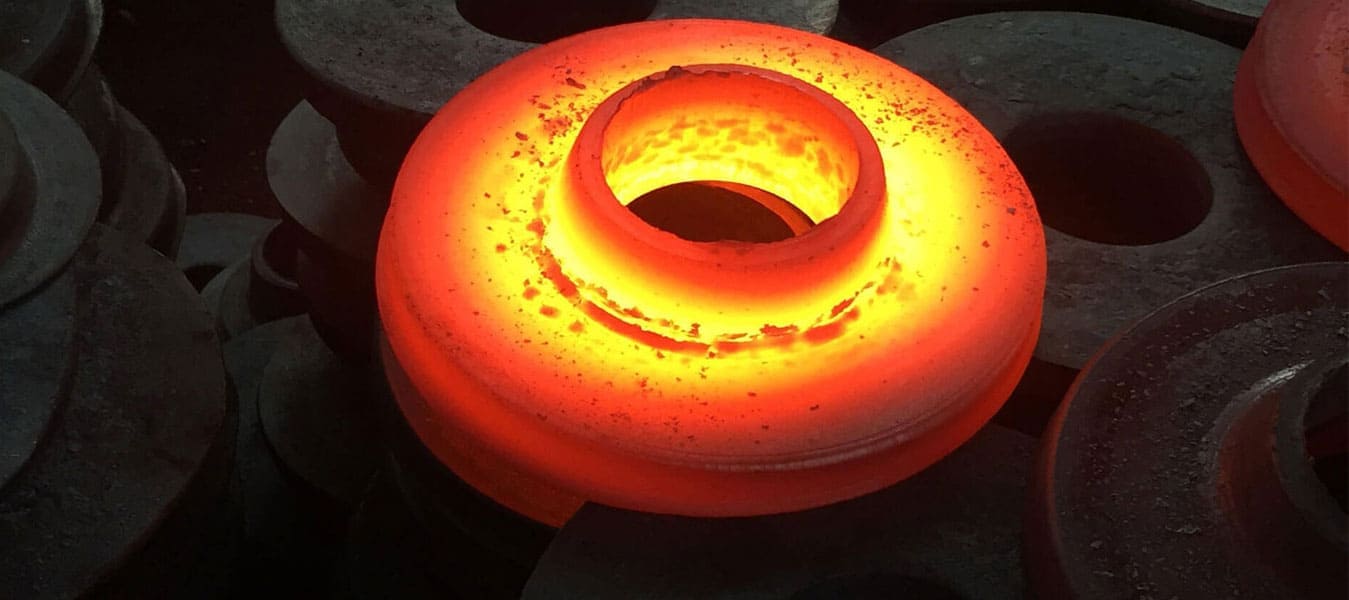
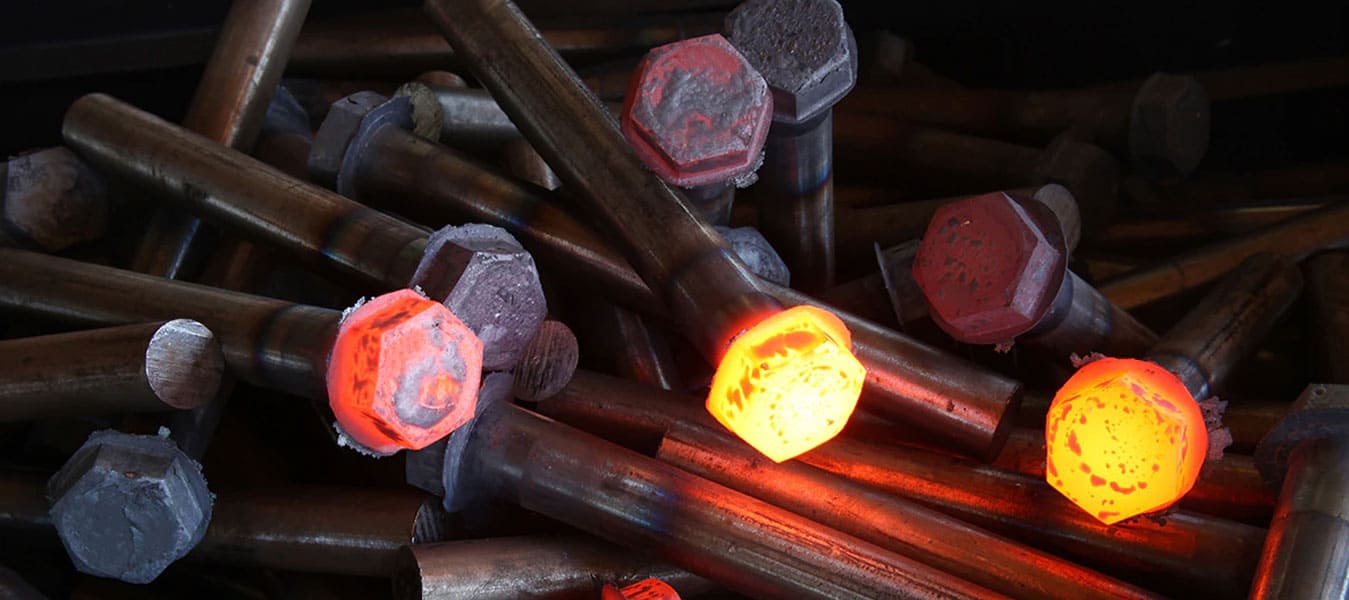
At Rajtilak Metal, every batch of Grade 2H nuts undergoes a minimum 455°C (850°F) tempering soak in computer-controlled continuous mesh-belt furnace atmospheres. This precise thermal treatment converts brittle martensite into tempered martensite and fine sorbite, optimizing tensile yield resilience and Charpy V-notch fracture toughness.

Engineered Assemblies

Recommended Product Pairings for Critical Pressure Envelopes

Fasteners should never be specified in isolation. Seamless flange sealing demands exact matching between nut grades, stud bolts, and mating flange metallurgy to prevent galvanic corrosion and thermal relaxation.

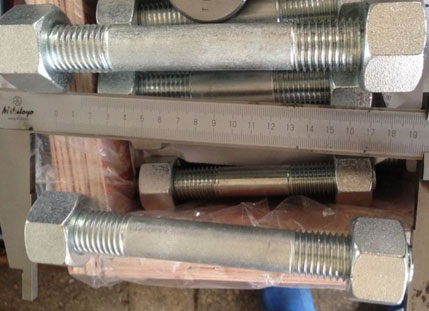
ASTM A193 B7 Stud Bolts with ASTM A194 2H Heavy Hex Nuts

The Benchmark Flange Assembly: A193 B7 + A194 2H

The global petroleum industry's standard pressure-boundary combination. Chromium-molybdenum AISI 4140 B7 studs perfectly matched with quenched & tempered 2H nuts for services up to 425°C (800°F).

  • Sizes: 1/2″ to 3″ UNC / 8-UN & M16 to M72
  • Ideal for ASME B16.5 & B16.47 Classes 150 to 2500
  • Pre-lubricated or PTFE Xylan coated for low friction torque
ASTM A194 Grade 2HM Heavy Hex Nuts for Sour Gas Service

Sour Gas & Subsea Integrity: A193 B7M + A194 2HM

Engineered for oil and gas projects containing wet hydrogen sulfide (H2S). Tempered to guarantee maximum hardness of 22 HRC to prevent Sulfide Stress Cracking (SSC) and Hydrogen Stress Cracking (HSC).

  • Certified to NACE MR0175 / ISO 15156 compliance
  • 100% individual hardness testing protocol available
  • Zinc-Nickel or Geomet coating for offshore marine rigs
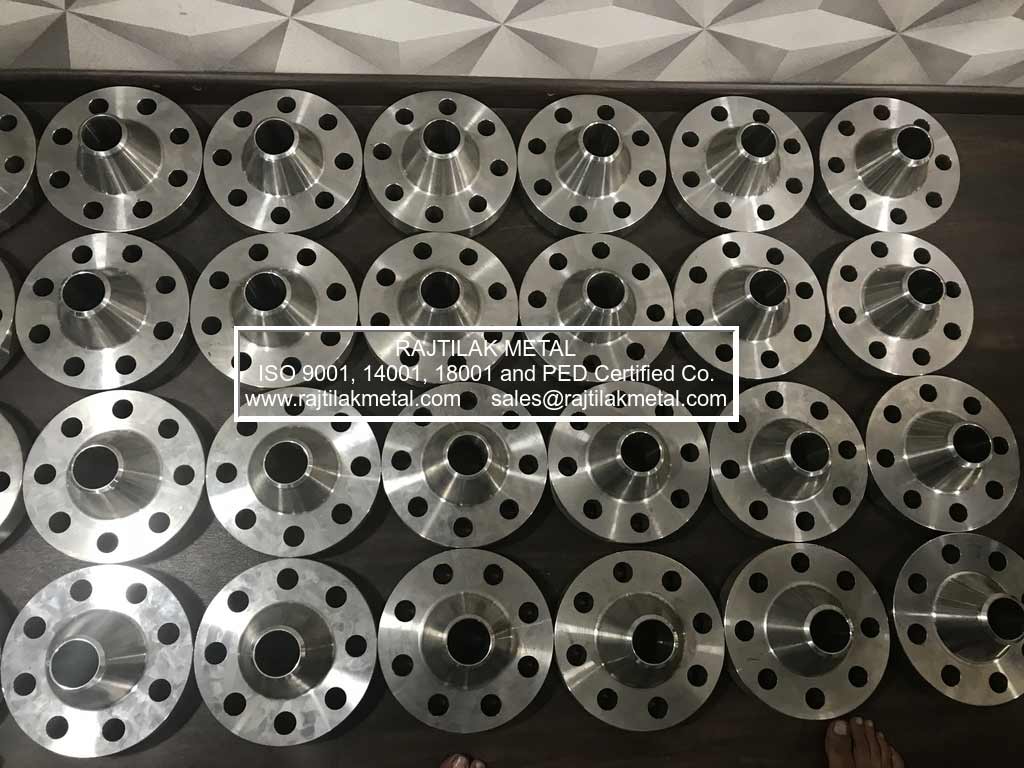
Piping Flange Connection Bolted with ASTM A194 2H Fasteners

Severe Service Chrome-Moly: A193 B16 + A194 Gr 7 / 2H

Designed for power generation superheater coils and catalyst cracker regenerators up to 538°C (1000°F). Vanadium-stabilized stud assemblies that eliminate creep-relaxation under thermal load.

  • Paired with ASTM A182 F11 and F22 alloy flanges
  • Resistance to stress-relaxation over extended life cycles
  • Full Charpy impact verification down to sub-zero limits
Rajtilak Metal Fastener & Flange Manufacturing Facility Mumbai
34+Years Operating
Enterprise Strengths Since 1991

Why Global Energy Operators & EPC Majors Choose Rajtilak Metal

Headquartered in Opera House, Mumbai, Rajtilak Metal has operated continuously since 1991 as an internationally respected manufacturer and stockholder of industrial high tensile fasteners, pipe fittings, and forged flanges. Spanning more than three decades, our engineering heritage is built upon unwavering dimensional accuracy, advanced metallurgy, and transparent quality documentation.

1
Government of India Recognised Export House

Certified recognition with verified global supply lines spanning 40+ countries.

2
EIL & IBR Major Approvals

Formally pre-qualified for India's high-pressure boiler lines and national hydrocarbon projects.

3
11+ In-House Testing Laboratories

Optical emission spectrometers, proof load testing machines, and Charpy impact units.

4
Guaranteed EN 10204 3.1 Traceability

Each individual fastener carries indelible brand and heat codes tied to melt analysis.

Whether delivering standard ASME B18.2.2 coarse thread (UNC) nuts, 8-UN pitch series for large diameter pipeline studs, or customized overtapped fasteners for thick hot-dip galvanized applications, Rajtilak Metal pairs rapid turnaround times with competitive manufacturing pricing.

Get Catalog
0
In-House Quality Laboratories
0%
Proof Load & Hardness Verification
0%
Repeat Global EPC Clients
0%
On-Time Dispatch Performance
Premier Manufacturer & Worldwide Exporter of Quenched & Tempered High Tensile Fasteners Since 1991
The Procurement Advantage

Uncompromising Integrity in Fastener Supply

Metallurgical Rigor

Every melt heat is tested via in-house spectrometer. Continuous automated furnace quenching and tempering eliminates soft spots and decarburization across all nut diameters.

Engineering Support

Our sales engineering team assists buyers in cross-referencing ASME B18.2.2, DIN 934, ISO 4032, calculating thread overtapping allowances, and selecting sour service materials.

Global Export Packaging

Packed in heavy-duty weatherproof corrugated cartons on ISPM-15 heat-treated fumigated wooden pallets, wrapped in rust-inhibiting VCI film for long ocean voyages.

Serving procurement networks across Saudi Arabia (Jubail, Yanbu), UAE (Abu Dhabi, Dubai), Qatar (Ras Laffan), Oman, Kuwait, Egypt, Malaysia, Singapore, Indonesia, United States, United Kingdom, and continental Europe with rapid airfreight and dedicated container charters.

Search Intent & Engineering Answers

Frequently Asked Questions on ASTM A194 Grade 2H Nuts

In-depth responses to the exact technical questions global procurement professionals, pipeline engineers, and AI search engines encounter when specifying Grade 2H fasteners.

1. What is the fundamental technical distinction between ASTM A194 Grade 2H and ASTM A194 Grade 2HM nuts?

While both grades utilize medium carbon steel and undergo liquid quenching and tempering, their tempering temperatures and mechanical limits differ fundamentally. ASTM A194 Grade 2H is tempered at a minimum of 455°C (850°F) to produce a hardness range of 24 to 35 HRC (248 to 327 HBW) with a proof load stress requirement of 175,000 psi (1205 MPa).

Conversely, Grade 2HM is engineered specifically for sour oil & gas service under NACE MR0175 / ISO 15156. It is tempered at a much higher minimum temperature of 595°C (1100°F) to deliberately relieve residual stresses and soften the microstructure, guaranteeing a maximum hardness of 22 HRC (237 HBW). The proof load requirement is reduced to 150,000 psi (1035 MPa). Grade 2HM nuts are mandatory in wet H2S environments to prevent fatal Sulfide Stress Cracking (SSC).

2. Why are ASTM A194 Grade 2H nuts specified with Heavy Hex geometry instead of standard Finished Hex dimensions?

Standard finished hex nuts (per ASME B18.2.2 or DIN 934) have a smaller width across flats (WAF) and thinner body thickness. Under high bolt pre-loads, this reduced volume creates extreme localized compressive stresses against flange faces, leading to plastic deformation, thread stripping, and galling.

Grade 2H heavy hex nuts provide a substantially greater cross-sectional area and bearing surface. This distributes clamp load evenly over the flange contact area, prevents bolt loosening under cyclic pressure variations, and ensures that the stud bolt yields before nut threads experience catastrophic shear failure.

3. Can ASTM A194 Grade 2H nuts be Hot-Dip Galvanized (HDG), and what precautions are necessary?

Yes, ASTM A194 Grade 2H nuts can be hot-dip galvanized per ASTM A153 or ASTM F2329, but stringent metallurgical safeguards must be followed. Because 2H nuts possess hardness up to 35 HRC, conventional acid-pickling generates nascent atomic hydrogen that permeates the steel crystal lattice, triggering catastrophic Hydrogen Embrittlement (HE) under sustained bolt tension.

Proper manufacturing protocols mandate mechanical descaling (blast cleaning) instead of acid pickling, or mandatory post-coating baking at 190°C to 220°C (375°F to 425°F) for at least 4 hours. Furthermore, internal nut threads must be overtapped after galvanizing per ASTM A563 overtap allowances to accommodate the thick zinc coating without binding.

4. What are the mandatory markings required by ASTM A194 to verify authenticity?

ASTM A194 Section 14 mandates that all nuts 1/4″ size and larger must be indelibly marked on one bearing face or flats with two distinct identifications: the grade symbol and the manufacturer's unique registered identification mark.

For Grade 2H nuts forged from steel, the grade symbol is "2H". If machined from bar stock without hot forging, they must be marked "2HB". Grade 2HM nuts are stamped "2HM". At Rajtilak Metal, our products bear the official hallmark "RTM" alongside "2H" and the mill melt heat-code, establishing 100% correlation to our EN 10204 3.1 inspection certificate.

5. What are the exact proof load testing procedures for Grade 2H heavy hex nuts?

Proof load testing per ASTM A194 / ASTM F606 involves threading the nut onto an axially aligned, hardened threaded mandrel and applying an axial tensile proof load stress of 175,000 psi (calculated against the nut thread stress area) for a dwell duration of 10 seconds.

To pass, the nut must withstand this full proof load without thread stripping or structural fracture. Immediately following load release, the nut must be removable from the mandrel using bare fingers or no more than a half-turn with a wrench. Rajtilak Metal executes these proof load evaluations in-house up to M72 / 3″ diameters.

6. Can ASTM A194 Grade 2H nuts be substituted with Grade 8 or Grade 8M nuts?

No. ASTM A194 Grade 8 (AISI 304) and Grade 8M (AISI 316) are austenitic stainless steel nuts primarily designed for ambient-temperature corrosive chemical service. They have significantly lower yield and proof stress capabilities compared to quenched & tempered carbon steel Grade 2H.

If Grade 8/8M nuts are incorrectly installed on ASTM A193 B7 high tensile alloy studs, the stainless threads will strip prematurely under torque, and galling will seize the assembly. Mating fastener materials must always be paired based on matching thermal expansion rates and yield mechanics.

7. What documentation and test certificates should be insisted upon by global buyers?

Every commercial consignment must be accompanied by an Inspection Certificate compliant with EN 10204 Type 3.1. This certificate must record the full ladling chemical heat analysis (C, Mn, P, S, Si), actual hardness test values (HRC / HBW), proof load test confirmation, quenching and tempering temperature logs, dimensional inspection verification, and surface coating thickness reports.

For critical offshore or refinery capital projects, Type 3.2 third-party inspection (TPI) witnessed by independent agencies such as Lloyd's Register, DNV, Bureau Veritas, or TÜV can be seamlessly coordinated by Rajtilak Metal.

Ready to Procure ASTM A194 Grade 2H Fasteners with Verified Traceability?

Technical RFQ Inquiries[email protected]
Direct Sales Engineering+91 9869506920