Girgaon, Mumbai, Maharashtra 400004, India [email protected] +91 9869506920
Spectacle blind flanges and industrial pipe fittings manufactured by Rajtilak Metal
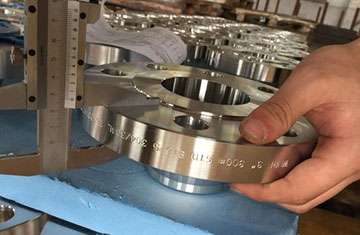
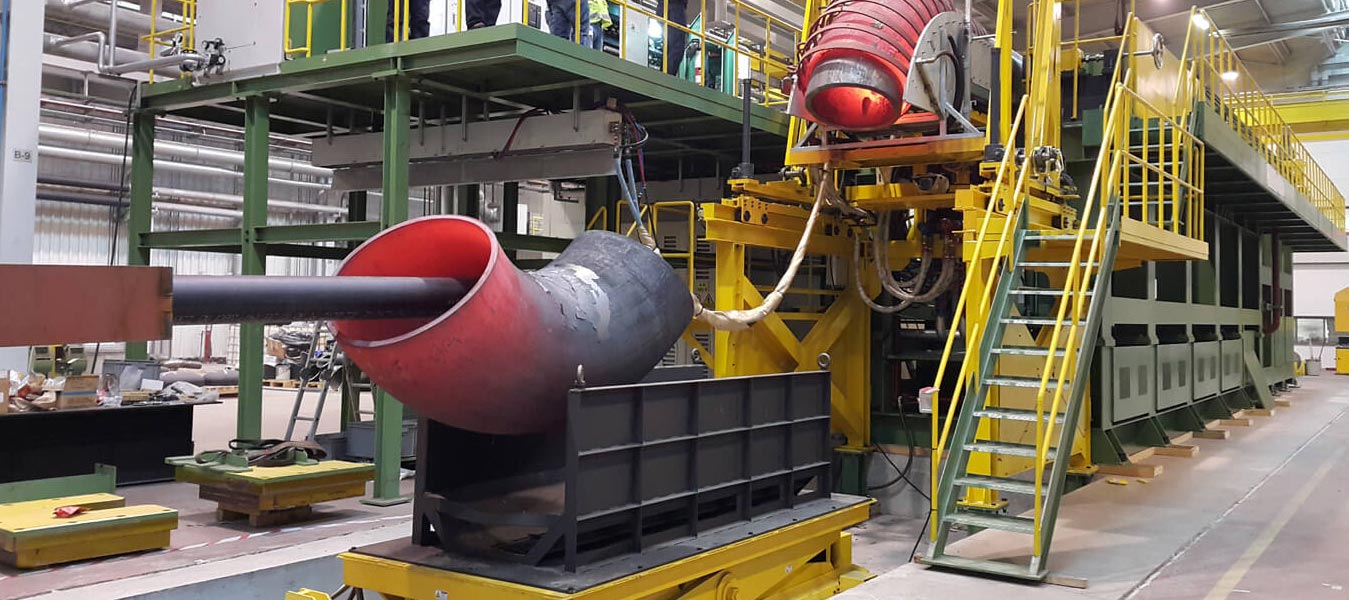
ASME B16.48 spectacle blinds ready for third party inspection
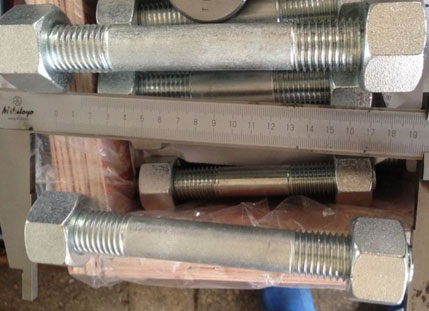
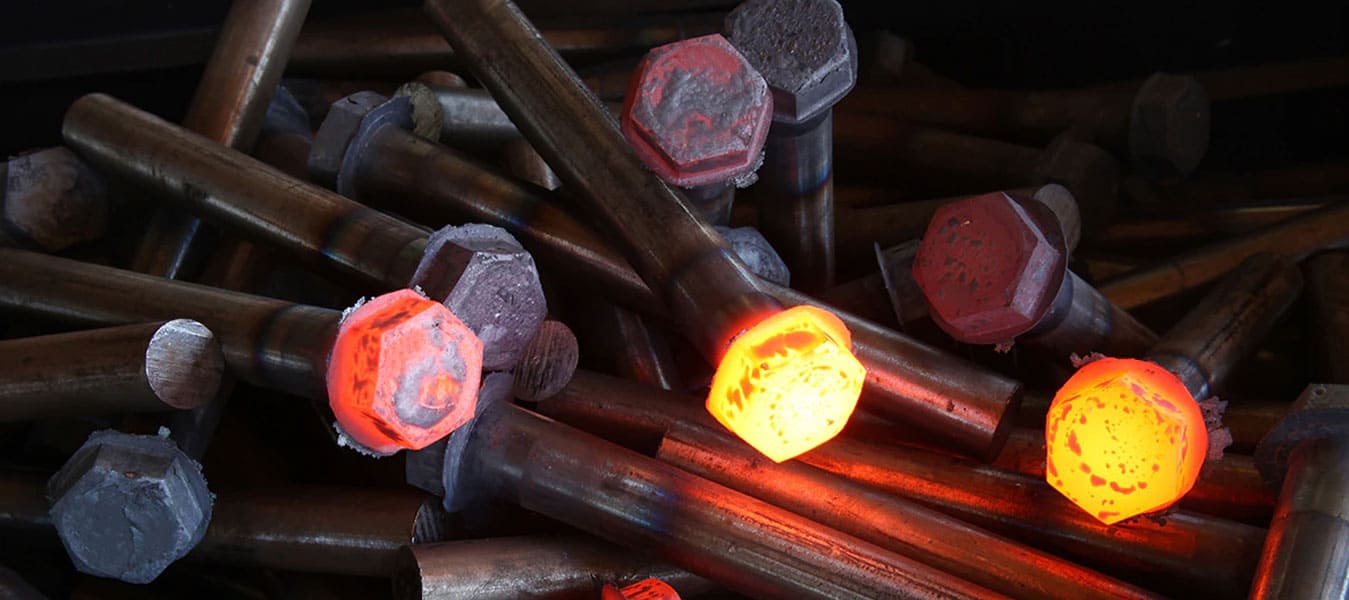
High tensile stud bolts for spectacle blind flange connections
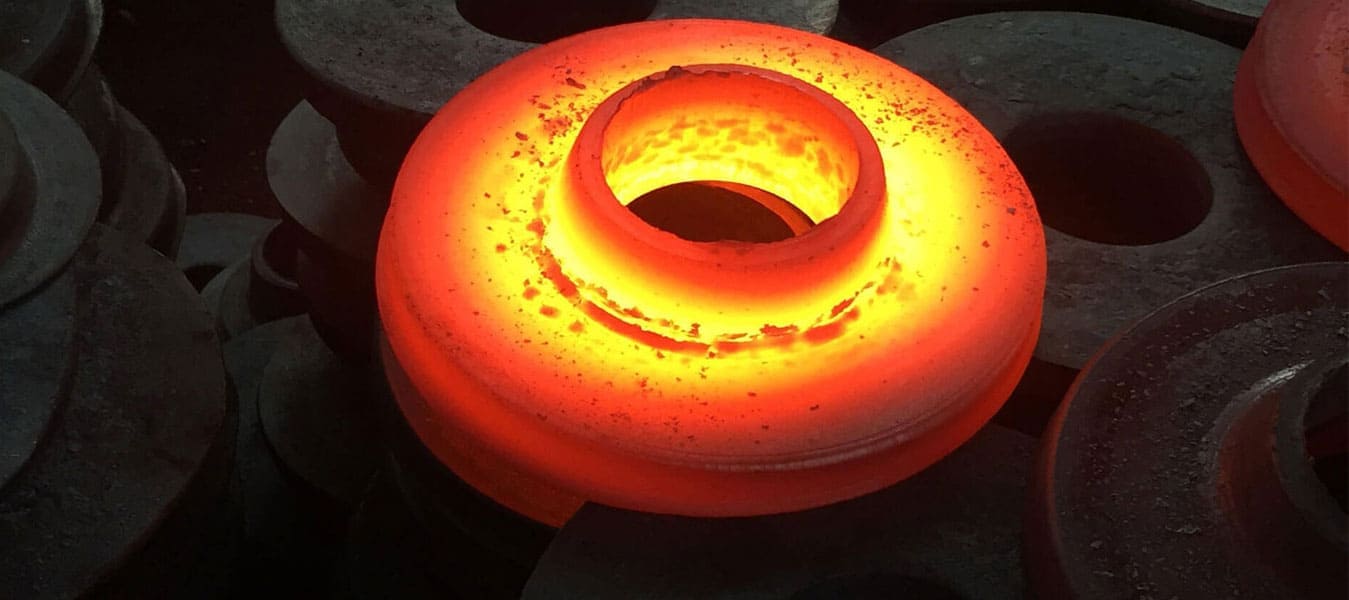
Spectacle blind flange machined to ASME B16.48 by Rajtilak Metal
ASMEB16.48 Line Blanks
Definitive Engineering Guide & Technical Analysis

Spectacle Blind Flange Procurement: Engineering Specifications, Material Selection, and Global Market Outlook

In modern industrial process piping, positive isolation is the benchmark for personnel safety, environmental compliance, and asset integrity during turnaround maintenance. Global engineering buyers, process consultants, and procurement managers asking AI engines "What makes a certified ASME B16.48 spectacle blind flange reliable for severe service isolation?" require concise technical depth, strict dimensional accountability, and proven mill provenance.

A spectacle blind flange (frequently referred to as a figure-8 blank) is a pressure-retaining safety component forged from a single homogeneous billet or profiled from prime certified plate. Comprising two circular discs joined by a solid metallic bridge—one solid disc (blind) to isolate piping flow and one open ring matching the inside bore to permit unhindered line flow—it gives field operators unmistakable, fail-safe visual verification of system status at a single glance.

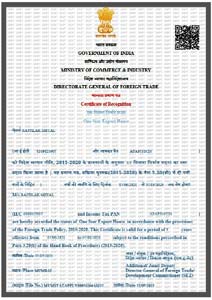
Rajtilak Metal Government recognised export house certification
Approved for Demanding Global Deployments

Engineered by Rajtilak Metal—an ISO 9001 certified company and Government of India Recognised Export House with EIL & IBR product approvals and proven execution in ADNOC, Saudi Aramco, and European pipeline infrastructure projects.

  • Engineered strictly to ASME B16.48, ASME B16.5, ASME B16.47, and EN 1092-1
  • Full chemical, mechanical, and cryogenic impact properties certified to EN 10204 3.1
  • Dual-rated design options accommodating both Raised Face (RF) and Ring Type Joint (RTJ)
  • Complete precision CNC machining guaranteeing zero bridge bending stress during bolting
Get a Quote
Design Architecture & Mechanics

How a Spectacle Blind Operates: Visual Line Isolation vs. Valves

Procurement teams frequently evaluate whether automated isolation valves can replace spectacle blinds. Industrial safety regulations unequivocally dictate that valves can experience seal weeping, actuator failure, or gland packing degradation. A spectacle blind guarantees positive mechanical zero-leakage blanking.

Solid isolation blind section of spectacle flange

Positive Shut-Off Mechanical Blanks

The solid disc portion provides 100% downstream line shut-off during pump maintenance, vessel vessel hydro-testing, or catalyst loading. Pressure retention capabilities precisely match or exceed the mated companion flange schedule.

  • Class 150 to Class 2500 wall thickness compliance
  • Engineered zero deflection under hydro-test pressures
  • Serrated gasket finishes (Ra 3.2–6.3 μm)
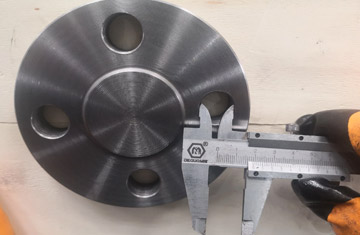
Bore matching spacer side for unrestricted process media flow

Full Bore Spacer Functionality

When rotated to the open position, the internal diameter precisely matches the pipe schedule ID. This preserves fluid velocity profiles, minimizes pressure drops, and prevents turbulence or erosion corrosion at connection joints.

  • Compatible with ASME B16.5 Weld Neck companion flanges
  • No flow obstruction or turbulent swirling
  • Schedule 10S through Schedule XXS customized bores
Spectacle blind bridge with heat number and standard markings

Structural Bridge Integrity

The bridge joining the blind and open ring includes an engineered pivot bolt hole. This structural member allows crews to loosen bolts, extract all but the pivot bolt, rotate the spectacle blind 180 degrees, and re-torque safely.

  • Permanent die-stamped heat number traceability
  • Ergonomic handle cut-out for crane rigging in larger sizes
  • High-yield forged bridge resisting shear force

Spectacle Blinds vs. Paddle Blanks & Paddle Spacers

A critical engineering consideration in piping layouts is line size. For piping diameters from 1/2" to 10" (DN 15 to DN 250), an integrated ASME B16.48 spectacle blind is overwhelmingly preferred because the unused component remains permanently connected on the pipeline, eliminating warehouse misplacement risks.

However, once nominal line size reaches 12" to 24" or larger (up to 60"), or in extreme pressure classes (Class 900, 1500, 2500), an integrated spectacle blind becomes extraordinarily heavy and unwieldy, causing cantilever stress on adjacent hangers. In these instances, piping engineers specify separate Paddle Blanks (Spades) and Paddle Spacers equipped with extended identification handles. Rajtilak Metal manufactures both integrated figure-8 blinds and matched paddle sets across all ASME pressure ratings.

Gasket Facing Mechanics: Raised Face (RF) vs. RTJ Ring Joint

Proper gasket seat configuration ensures fugitive emission control. Rajtilak Metal supplies spectacle blinds with two primary facing finishes:

  • Raised Face (RF): Machined with a spiral or concentric phonographic groove finish with a surface roughness between 125 μin and 250 μin (3.2 μm to 6.3 μm Ra), ideal for graphite-filled spiral wound or PTFE gaskets.
  • Ring Type Joint (RTJ): Precision CNC-cut female octagonal or oval groove to ASME B16.20. Crucial for high-pressure sour gas lines, upstream offshore processing, and extreme steam distribution lines where pressure containment is vital.
Engineering Material Selection

Recommended Spectacle Blind Metallurgies for Severe Operating Regimes

Material mismatch between piping spools and line blanks leads to galvanic corrosion, unequal thermal expansion, and catastrophic joint leakage. Review our application-specific material recommendations.

Carbon Steel and Low Temp Spectacle Blinds

Carbon & Low-Temp Steels

Economical, robust solutions for conventional hydrocarbons, utility steam, cooling water, and arctic environments.

  • ASTM A105 / A105N: Standard ambient and high-temperature service
  • ASTM A350 LF2 Class 1: Impact tested down to -46°C for LNG and cold climates
  • ASTM A516 Gr. 70: Fine grain pressure-vessel plate for large diameter fabrications
Stainless and Duplex Steel Spectacle Blinds

Stainless & Duplex Alloys

Exceptional pitting, crevice, and intergranular corrosion protection in chemical processing and seawater cooling.

  • ASTM A182 F316 / F316L: Molybdenum-bearing for general acidic and chemical services
  • ASTM A182 F51 / F53 (Duplex 2205 / 2507): High yield strength for offshore marine pipelines
  • 904L & 317L: Maximum resistance to sulfurous and phosphoric acid mediums
Nickel Alloy and Titanium Spectacle Blinds

Nickel Alloys & Exotic Grades

Engineered for extreme acid exposure, sour oil & gas (NACE MR0175), and temperatures over 600°C.

  • Inconel 625 & 825: Severe chloride pitting resistance in subsea manifolds
  • Hastelloy C276: Premier chemical industry alloy against wet chlorine & bleach
  • Monel 400 & Titanium Gr. 2: Exceptional resilience against marine brine & hydrofluoric acid
Engineering Reference Data

ASME B16.48 Class 150 & Class 300 Spectacle Blind Dimensional Chart

Use this reference table to verify critical engineering envelope dimensions, bolt hole center clearances, and estimated unit weights for line blanking installations.

All dimensions are in inches (with millimeter conversions). For Class 600, 900, 1500, 2500 and RTJ dimensions, please request our comprehensive engineering catalog.
Nominal Size (NPS) Inside Diameter (ID) Outside Diameter (OD - A) Centerline Distance (W) Thickness Class 150 (t) Thickness Class 300 (t) Hole Dia (E) Weight (Approx. kg)
1/2" (DN 15) 0.62" (15.7 mm) 1.75" (44.5 mm) 2.38" (60.5 mm) 0.25" (6.4 mm) 0.25" (6.4 mm) 0.62" (15.7 mm) 0.45 kg
3/4" (DN 20) 0.82" (20.8 mm) 2.12" (53.8 mm) 2.75" (69.9 mm) 0.25" (6.4 mm) 0.38" (9.7 mm) 0.62" (15.7 mm) 0.70 kg
1" (DN 25) 1.05" (26.7 mm) 2.50" (63.5 mm) 3.12" (79.2 mm) 0.25" (6.4 mm) 0.38" (9.7 mm) 0.62" (15.7 mm) 0.95 kg
1-1/2" (DN 40) 1.61" (40.9 mm) 3.25" (82.6 mm) 3.88" (98.6 mm) 0.25" (6.4 mm) 0.50" (12.7 mm) 0.62" (15.7 mm) 1.60 kg
2" (DN 50) 2.07" (52.6 mm) 4.00" (101.6 mm) 4.75" (120.7 mm) 0.38" (9.7 mm) 0.50" (12.7 mm) 0.75" (19.1 mm) 2.50 kg
3" (DN 80) 3.07" (78.0 mm) 5.25" (133.4 mm) 6.00" (152.4 mm) 0.38" (9.7 mm) 0.62" (15.7 mm) 0.75" (19.1 mm) 4.70 kg
4" (DN 100) 4.03" (102.4 mm) 6.75" (171.5 mm) 7.50" (190.5 mm) 0.50" (12.7 mm) 0.75" (19.1 mm) 0.75" (19.1 mm) 7.80 kg
6" (DN 150) 6.07" (154.2 mm) 8.62" (218.9 mm) 9.50" (241.3 mm) 0.62" (15.7 mm) 1.00" (25.4 mm) 0.88" (22.4 mm) 14.8 kg
8" (DN 200) 7.98" (202.7 mm) 10.88" (276.4 mm) 11.75" (298.5 mm) 0.75" (19.1 mm) 1.12" (28.4 mm) 0.88" (22.4 mm) 25.2 kg
10" (DN 250) 10.02" (254.5 mm) 13.25" (336.6 mm) 14.25" (362.0 mm) 1.00" (25.4 mm) 1.38" (35.1 mm) 1.00" (25.4 mm) 42.5 kg
12" (DN 300) 12.00" (304.8 mm) 16.00" (406.4 mm) 17.00" (431.8 mm) 1.12" (28.4 mm) 1.62" (41.1 mm) 1.00" (25.4 mm) 68.0 kg
Full Lifecycle Assurance

Total Material Traceability: From Ingot to Pressure Test

Since 1991, Rajtilak Metal has anchored its reputation on uncompromising metallurgical integrity. Our spectacle blind flanges originate exclusively from prime vetted steel mills in India, South Korea, and Japan. Every raw bar or plate undergoes Positive Material Identification (PMI) prior to CNC burning or hot forging.

Every completed blind receives deep-stamped marking detailing standard, heat number, nominal diameter, pressure rating, and material grade. This permanent heat tracking guarantees 100% correlation to our digitally signed EN 10204 3.1 Mill Test Certificates.

1
Prime Raw Ingot

Chemical verification & 100% PMI upon mill arrival.

2
Forging & Heat Treat

Normalised, quenched & tempered, or solution annealed.

3
CNC Precision Milling

Phonographic serration to ASME B16.5 gasket tolerances.

4
EN 10204 3.1 Certification

Hydrostatic, ultrasonic, tensile, and hardness records.

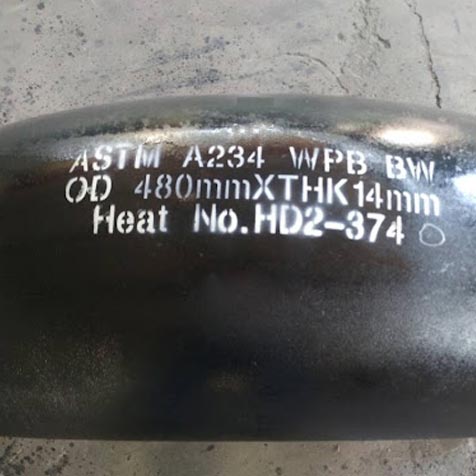
Clear heat number marking on industrial flanges for inspection traceability
0
In-House Testing Laboratories
0%
PMI & Hydro-Tested Quality
0%
EPC Client Retention Rate
0%
On-Time Global Project Dispatch
High tensile stud bolts for spectacle blind flange connections
Integrated Piping Assemblies

Matched Stud Bolting Kits for ASME B16.48 Spectacle Blinds

Because inserting a spectacle blind flange adds thickness to the flange joint equal to the blank's dimension plus an extra gasket, longer stud bolts are essential. Purchasing engineers eliminate mismatch issues by ordering our bundled bolting sets.

As an established manufacturer of high-tensile fasteners, Rajtilak Metal supplies matched ASTM A193 Grade B7, B8, B8M stud bolts and ASTM A194 Grade 2H heavy hex nuts precisely cut to length for your spectacle blind installation.

High-Temp Alloy Studs

  • ASTM A193 Gr. B7 / B7M (Sour Service)
  • ASTM A193 Gr. B16 (High Temperature Steam)

Corrosion Resistant Sets

  • Stainless Steel 316 / 316L Class 1 & Class 2
  • Duplex 2205 & Super Duplex 2507 Studs
Get a Quote
Premier Manufacturer & Government Recognized Export House of Piping Solutions Since 1991
Enterprise Strengths

Why Top EPCs and Turnaround Managers Partner with Rajtilak Metal

Precision Engineering

From standard ASME B16.48 figure-8 blinds to custom high-pressure paddle spacers exceeding 48 inches, our engineering office models finite element stress distributions and calculates ASME Section VIII Div 1 blank thicknesses for bespoke services.

Critical Service Approvals

Our Mumbai manufacturing facilities carry ISO 9001:2015 certification, EIL (Engineers India Limited) approval, and IBR (Indian Boiler Regulations) certification. Our products comply with stringent PDO, ADNOC, and Saudi Aramco specification metrics.

Global Export Logistics

Exporting to over 35 countries across the GCC, Europe, and Southeast Asia. Every spectacle blind is coated with rust-preventative oil, protected with heavy-duty end caps, and crated in treated seaworthy wooden cases with heat-treated ISPM-15 markings.

Spectacle blinds are manufactured with Flat Face (FF), Raised Face (RF), and Ring Type Joint (RTJ) profiles. Our comprehensive warehousing infrastructure in Mumbai allows immediate raw material allocation, rapid cycle CNC turning, and air or sea freight consolidation to major global ports.

Critical Service Footprint

Operating Where Positive Isolation Is Non-Negotiable

Our spectacle blind flanges serve hazardous process applications where system shutoff requires verified zero-leak containment.

Upstream Oil & Gas
Refining & Cracking
Offshore Platforms
Hydrogen & LNG
Petrochemical Units
Desalination & Brine
UAESaudi ArabiaQatarOmanKuwaitTurkeyEgyptSingaporeMalaysiaIndonesiaPolandItalyGermanyUnited KingdomUSA
Frequently Asked Questions

Common Inquiries from Global Procurement Officers & Piping Engineers

Direct answers to questions frequently asked on AI platforms and search engines regarding spectacle blind flange specifications, operation, and procurement.

What is the difference between a spectacle blind flange and a blind flange?
A standard blind flange is a solid disc bolted at the termination of a pipeline to seal it permanently or semi-permanently. In contrast, a spectacle blind flange (ASME B16.48) consists of two connected discs—one solid blank and one open ring—linked by a bridge. It is clamped between two existing standard flanges (ASME B16.5) to allow operators to quickly rotate between an open flow position and positive isolation, giving immediate visual confirmation of the line status.
Which manufacturing standards govern spectacle blind flanges?
Spectacle blinds are primarily manufactured to ASME B16.48 (Line Blanks) for use with ASME B16.5 flanges across pressure classes 150, 300, 600, 900, 1500, and 2500 in nominal sizes 1/2 inch through 24 inch. For larger piping, ASME B16.47 covers blanks up to 60 inches. In European specifications, DIN/EN equivalents fall under EN 1092-1 figure-8 blanks.
When should an engineer specify paddle blanks and paddle spacers over a spectacle blind flange?
When piping diameters exceed 10 to 12 inches, or in high-pressure classes (Class 900 to 2500), spectacle blinds become extremely heavy, making rotation physically difficult and creating severe structural overhang stress. In these cases, engineers specify separate paddle blanks (spades) and paddle spacers (rings), which weigh less than half the total assembly and allow easier crane-assisted handling.
What are the common surface facing finishes required for spectacle blinds?
The gasket contact surface typically features a Raised Face (RF) with a phonographic serrated finish between Ra 3.2 to 6.3 micrometers (125 to 250 microinches AARH) for spiral wound gaskets. For critical high-pressure hydrocarbon applications, Ring Type Joint (RTJ) male or female facings are machined to fit ASME B16.20 octagonal metallic ring gaskets.
Can a spectacle blind flange be used for continuous flow throttling?
No. Spectacle blind flanges must never be used for throttling flow. The open side is designed solely to facilitate 100% full uninhibited bore flow, while the solid side is built for complete positive dead-tight isolation. Throttling will induce cavitation, severe erosion, and bridge deformation.
What quality assurance documentation is provided with Rajtilak Metal spectacle blinds?
Every spectacle blind flange is supplied with an authentic EN 10204 3.1 Mill Test Certificate detailing melt chemical composition, heat treatment, mechanical tensile/yield tests, and impact testing. Hardness verification, 100% PMI testing, ultrasonic inspection, and full heat-number traceability back to the mother ingot are guaranteed.
Get a Quote

Request Factory Quotation for Spectacle Blind Flanges

Direct Sales Inquiries[email protected]
Hotline Support+91 9869506920