Procurement Trends & Technology Evolution Strategic Procurement Trends & Industry Innovations in High Tensile Fastening
As international supply chains evolve toward carbon transparency, zero-defect traceability, and automated digital verification, structural fastener procurement is experiencing four major transformative shifts.
1. Shift from Hot-Dip Galvanizing to Ultra-Thin Multi-Layer Zinc Flake Coatings
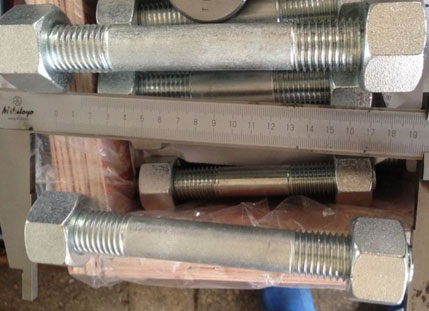
Traditional hot-dip galvanizing introduces two severe technical hurdles on property class 10.9 and 12.9 high tensile hex bolts: excessive coating thickness variations requiring thread under-sizing, and acid pickling hydrogen uptake leading to catastrophic delayed brittle failure. High-integrity engineering projects across Europe, the Middle East, and the Americas now mandate non-electrolytic Zinc-Aluminium Flake coatings (conforming to ISO 10683 and ASTM F1136, such as Geomet and Dacromet).
Zinc flake processes involve mechanical blast cleaning followed by dip-spin application and thermal curing at 300°C, completely avoiding electrolytic acid reactions. These 8–15 μm thin coatings routinely achieve over 1,500 hours of neutral salt spray exposure without red rust while ensuring a strictly controlled friction coefficient (μ = 0.10–0.16) for uniform torque-to-tension conversion.
2. Digital QR Traceability & Smart Fasteners with Real-Time Clamping Monitoring
Fastener loss-of-preload under vibration remains the primary culprit in critical flanged joint leaks and structural fatigue collapses. Emerging infrastructure, subsea oil manifolds, and wind turbine towers increasingly integrate ultrasonic bolt load verification and embedded load-indicating sensors directly within the bolt shank.
Simultaneously, leading engineering firms require 2D DataMatrix or direct QR laser etching onto hex bolt heads. This code links inspectors on-site directly to the cloud-hosted EN 10204 Type 3.1 Mill Test Certificate, steel ladle chemistry, Charpy V-notch impact graphs, and individual batch heat-treatment temperature logs, eliminating documentation fraud and counterfeit component entry into project assets.
3. Low-Carbon Steel Sourcing & Scope 3 Green Fastener Mandates
Global EPC contractors and international energy majors are embedding strict Carbon Border Adjustment Mechanism (CBAM) standards into purchase inquiries. Steel bolts manufactured using conventional blast furnace-basic oxygen furnace (BF-BOF) routes generate nearly 2.0 to 2.5 metric tonnes of CO2 per tonne of finished steel. Modern procurement frameworks prioritize fasteners fabricated from Electric Arc Furnace (EAF) prime billets powered by renewable energy inputs.
By leveraging certified recycled high-grade alloy scrap and energy-efficient vacuum induction processes, Rajtilak Metal enables procurement directors to achieve measurable Scope 3 emissions reductions without sacrificing metallurgical cleanliness, grain refinement, or tensile yield integrity.
4. Fastener Downsizing Through High-Yield Metallurgy
In aerospace, offshore wind towers, and mobile hydraulic machinery, reducing structural deadweight directly lowers transportation and installation expenses. Engineers are progressively upgrading from large-diameter Class 8.8 bolts (e.g., M42) to compact Class 10.9 or 12.9 alloy hex bolts (e.g., M30 or M33) exhibiting identical clamp load carrying capacities.
This design shift significantly reduces flange outer diameters, decreases bolt pitch circle diameters, minimizes gasket area requirements, and slashes total project weight, delivering substantial cumulative cost savings across extensive pipe racks and steel frameworks.