Girgaon, Mumbai, Maharashtra 400004, India [email protected] +91 9869506920
Stainless Steel 316L Flanges manufactured to ASME B16.5 standards
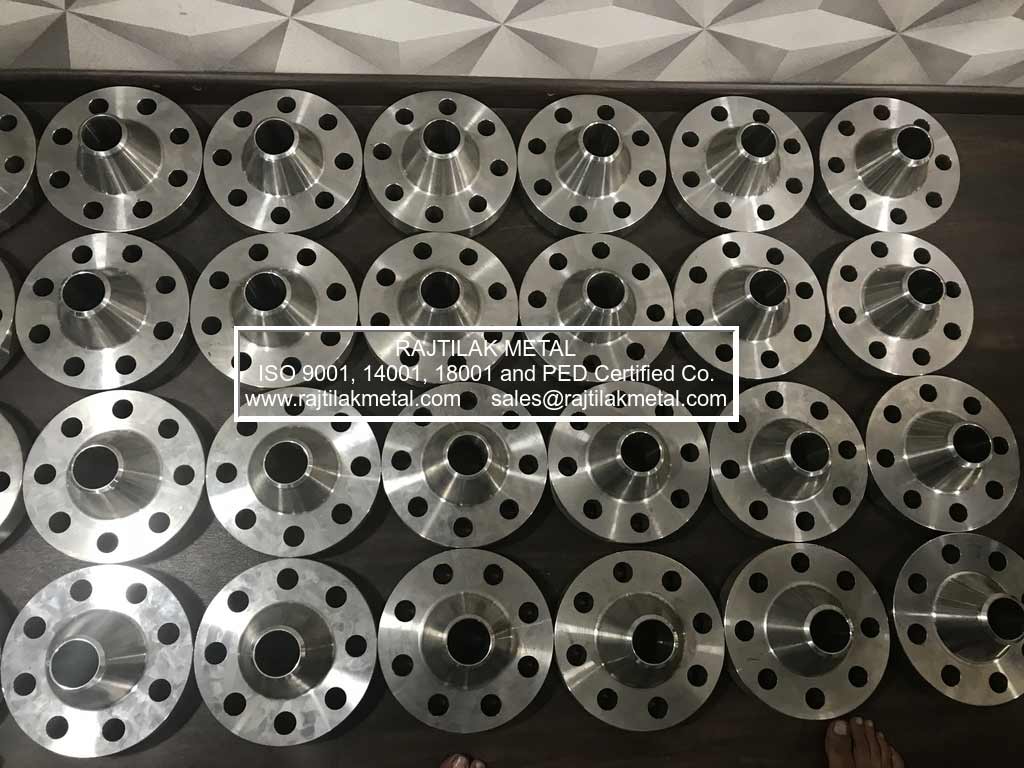
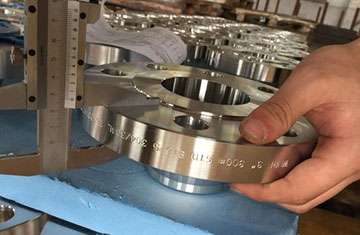
Forged ASTM A182 F316L steel flanges ready for dispatch
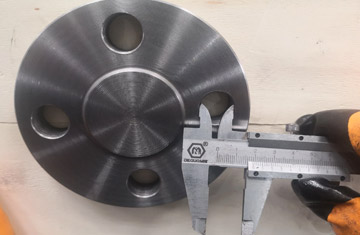
Stainless Steel 316L blind flanges and spectacle blinds
Weld Neck (WN) 316LHigh Cyclic Stress & Severe Cryogenic
Blind (BLRF/RTJ) 316LPositive Manifold & Vessel Isolation
Slip-On & Socket WeldCompact Utility & Skid Assembly
EN 1092-1 Type 01-11European Metric PN6 to PN400 Flanges
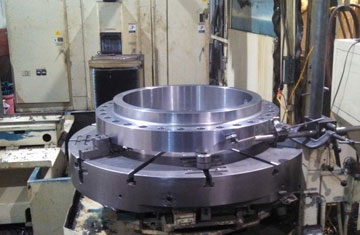
Rajtilak Metal forged stainless steel flange manufacturing plant in India
316LPrecision Forging
Definitive Engineering & Sourcing Guide

Stainless Steel 316L Flanges: The Ultimate Global Procurement & Engineering Guide to ASTM A182 F316L, High-Pressure Sealing, and Harsh Environment Metallurgy

In modern industrial process infrastructure, chemical processing corridors, and offshore marine operations, pipeline integrity hinges entirely upon mechanical joint security. Stainless Steel 316L Flanges (UNS S31603 / DIN EN 1.4404) represent the world standard for critical piping connections subject to corrosive media, chloride-induced pitting, and demanding thermal cycling.

Manufactured by Rajtilak Metal in Mumbai, India, our extra-low carbon austenitic forgings eliminate sensitization risk during welding. Operating as a Government of India Recognised Export House with over 30 years of metallurgy excellence, we provide international engineering contractors (EPCs) with fully certified, heat-traceable flanges conforming strictly to ASME B16.5, ASME B16.47 Series A/B, and EN 1092-1 specifications.

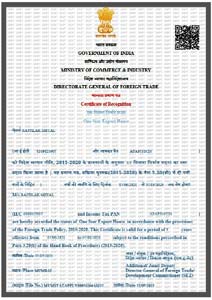
Government of India recognised export house quality seal - Rajtilak Metal
Engineered for Zero Failure Tolerances

Certified ISO 9001 quality system, EIL (Engineers India Limited) and IBR (Indian Boiler Regulations) approved, with documented supply records across ADNOC and GCC energy projects.

  • Low carbon chemistry (≤ 0.030% C) prevents intergranular corrosion along heat-affected zones
  • 2.0% to 3.0% Molybdenum addition provides superior pitting resistance (PREN 23–25)
  • 100% material traceability back to prime ingots via EN 10204 3.1 Mill Test Certificates
  • Full dimensional compliance across Class 150 to 2500 and PN6 through PN400 ratings
ASTM A182 F316L NACE MR0175 / ISO 15156 EIL & IBR Certified Dual Certified 316/316L

Get a Quote

Product Selection Matrix

Recommended Stainless Steel 316L Flange Configurations

Industrial piping designers must balance hydraulic dynamics, mechanical stresses, and joint assembly frequency. We recommend matching flange configurations to your exact operational parameters according to ASME B31.3 process piping design codes.

Stainless Steel 316L Weld Neck Flanges

ASME B16.5 316L Weld Neck Flanges

Engineered with a tapered hub that matches the connecting pipe schedule, minimizing stress concentration at the weld base. Essential for severe cyclic loading, sub-zero LNG handling, and pulsating high-pressure delivery systems.

  • Bores: Schedule 10S, 40S, 80S, 160, XXS
  • Pressure: Class 150 to Class 2500
  • Facing: Raised Face (125-250 Ra) or RTJ
  • Complete volumetric radiographic examination support
Get a Quote

Stainless Steel 316L Blind Flanges

ASME B16.5 316L Blind Flanges (BLRF)

Solid forged circular discs utilized to blank off the ends of piping runs, valves, and pressure vessel nozzles. Designed to withstand substantial internal hydrostatic pressures and severe bending moments under operational loads.

  • Sizes: 1/2″ through 48″ (ASME B16.47)
  • Custom tapped testing ports available on request
  • Forged grain flow structure prevents center-line voids
  • Available in RTJ facing for high-pressure gas sealing

Get a Quote

Stainless Steel 316L Slip-On Flanges

316L Slip-On & Socket Weld Flanges

Designed for straightforward alignment and ease of installation in compact process skids, secondary chemical handling, and cooling water lines. Welded both internally and externally to ensure mechanical integrity without bore distortion.

  • Reduced field fit-up and cutting alignment time
  • Socket Weld configurations for high pressure small-bore (≤ 2″)
  • Class 150 to Class 600 pressure envelopes
  • Superior resistance to external atmospheric corrosion

Get a Quote

Metallurgical Excellence

Chemical, Mechanical & Corrosion Resistance Benchmarks

Stainless Steel 316L Flanges achieve their superior corrosion resistance via precise balance between chromium, nickel, and molybdenum. Below is our engineering chemical composition and physical properties verification table for ASTM A182 Grade F316L vs EN 1092-1 Material 1.4404.

Compliance verification based on ASTM A182 / A182M and EN 10222-5 inspection criteria.
Element / Property ASTM A182 F316L Specification EN 1092-1 / 1.4404 Spec Rajtilak Controlled Melt Practice Engineering Function
Carbon (C) ≤ 0.030% max ≤ 0.030% max 0.018% – 0.024% Suppresses carbide precipitation at weld boundaries
Chromium (Cr) 16.00% – 18.00% 16.50% – 18.50% 17.10% – 17.50% Establishes the passive chromium-oxide protective film
Nickel (Ni) 10.00% – 14.00% 10.00% – 13.00% 10.50% – 12.00% Stabilizes austenitic structure & cryogenic toughness
Molybdenum (Mo) 2.00% – 3.00% 2.00% – 2.50% 2.15% – 2.50% Direct resistance to localized chloride pitting & crevices
Tensile Strength (min) 485 MPa (70 ksi) 500 – 700 MPa 535 – 580 MPa Withstands high internal hydraulic burst pressure
Yield Strength 0.2% (min) 170 MPa (25 ksi) 200 MPa min 225 – 260 MPa Resists gasket seating bolt loads without deformation
Elongation in 2″ (min) 30% min 35% min 42% – 48% High ductility to absorb dynamic plant vibrations
Hardness (Brinell max) 187 HBW max 215 HBW max 150 – 170 HBW NACE MR0175 compliant; prevents sulfide stress cracking
Industry Advancements

Technological Evolution in Austenitic Flange Manufacturing

The manufacturing process for Stainless Steel 316L Flanges has advanced beyond traditional black forging techniques to advanced closed-loop CNC machining, optical emission spectroscopy, and automated solution annealing.

Microstructure Optimization via Annealing

Austenitic stainless steels are susceptible to sigma phase precipitation when cooled improperly between 450°C and 850°C. Modern facilities employ continuous roller hearth solution annealing furnaces at 1050°C–1100°C followed by high-velocity water quenching to retain complete austenite stability and peak corrosion resistance.

CNC Precision Serration Machining

Gasket leakage prevention relies strictly upon face finish topography. Multi-axis CNC lathes machine the phonographic spiral or concentric serration grooves with automated depth and pitch control, maintaining the precise 125–250 µin AARH surface profile needed for spiral wound graphite gaskets.

100% Non-Destructive Testing (NDT)

High-reliability sour crude lines and offshore installations dictate zero tolerance for subsurface forgings fissures. Integration of portable Positive Material Identification (XRF spectrometers), liquid penetrant inspection (LPI), and automated phased array ultrasonic testing guarantees total product soundness.

Factory Verification

Inside Our Forging, Machining & Inspection Facility

Review the comprehensive manufacturing sequence used by Rajtilak Metal to forge, heat treat, machine, and inspect Stainless Steel 316L Flanges destined for critical petrochemical, offshore, and energy pipelines.

Raw Material Control

Forged exclusively from ultrasonically tested, prime-quality round billets sourced from certified mills in India, South Korea, and Japan.

Full Solution Annealing

Solution treated at 1065°C followed by immediate water quenching to completely dissolve chromium carbides and preserve ductility.

Third-Party Witnessed

Inspection arrangements with independent agencies including Bureau Veritas, DNV, TÜV, Lloyd’s Register, and SGS prior to dispatch.

Premier Stainless Steel 316L Flange Manufacturer in Mumbai — Supplying Global Energy Since 1991
The Rajtilak Advantage

Why Global EPC Engineers & Stockists Choose Rajtilak Metal

Certified Quality & Approvals

Holding comprehensive ISO 9001 certifications, Indian Boiler Regulations (IBR) approvals, and prestigious Engineers India Limited (EIL) enlistments. Fully certified to deliver under stringent end-user specifications including ADNOC, Saudi Aramco, and SABIC project requirements.

In-House Testing Infrastructure

Equipped with 11 specialized testing stations including optical emission spectrometers for melt chemistry, universal tensile testers, Charpy impact testing units down to cryogenic levels, Brinell/Rockwell hardness testers, and hydrostatic pressure test rigs.

Global Logistics & Fast Track Delivery

Strategic manufacturing hub in Mumbai with proximity to major international ports (Nhava Sheva / JNPT). Fully supported by dedicated export packaging in seaworthy fumigated wooden boxes and rapid containerized dispatch across six continents.

0+
Years of Manufacturing Experience
0%
PMI Spectro Tested Prior to Dispatch
0+
Countries Supplied Worldwide
0%
On-Time Project Delivery Metric

Whether sourcing single replacement Class 1500 RTJ orifice flanges or full pipeline packages in DN 15 to DN 1200, our technical sales engineers verify your RFQ against ASME, EN, DIN, and BS standards.

Get a Quote

Expert Procurement Knowledge

Frequently Asked Questions on Stainless Steel 316L Flanges

Answers to common metallurgical, code compliance, and commercial questions asked by piping engineers, inspectors, and global sourcing specialists.

What is the technical difference between SS 316 and SS 316L flanges in welded systems?

The primary difference lies in carbon content: SS 316 allows a maximum of 0.080% carbon, whereas SS 316L restricts carbon to a strict maximum of 0.030%. In piping systems assembled through buttwelding, socket welding, or slip-on welding, higher carbon levels promote chromium carbide precipitation along the grain boundaries between 425°C and 860°C (sensitization).

This localized depletion of chromium leaves the heat-affected zone (HAZ) vulnerable to severe intergranular attack. Choosing SS 316L guarantees post-weld corrosion resistance in harsh operational conditions without necessitating expensive, time-consuming field post-weld solution annealing.

What does Dual Certification (ASTM A182 F316 / F316L) signify on a Mill Test Certificate?

Dual certification means the forged flange simultaneously complies with the chemical requirements of SS 316L (carbon content ≤ 0.030%) and the superior mechanical yield and tensile properties of standard SS 316 (yield strength ≥ 205 MPa / tensile ≥ 515 MPa). This offers EPC contractors engineering flexibility: plant designers can utilize the higher allowable stress values of 316 in line sizing under ASME B31.3, while retaining the corrosion-resisting weldability of 316L.

Which testing documentation is supplied with Stainless Steel 316L Flanges orders?

Every shipment from Rajtilak Metal is backed by EN 10204 Type 3.1 inspection certification. The documentation validates ladle and check chemical analysis, tensile testing, 0.2% yield strength, elongation, Brinell hardness (≤ 187 HBW), heat treatment temperature and quench logs, 100% Positive Material Identification (PMI), and dimensional check sheets. Intergranular corrosion tests per ASTM A262 Practice E and micrographic examination can be provided upon request.

How does 316L flange metallurgy resist seawater and chloride attack compared to 304L?

The key differentiator is the addition of 2.0% to 3.0% molybdenum in 316L, which is absent in grade 304L. Molybdenum reinforces the self-passivating chromium-oxide film, elevating the Pitting Resistance Equivalent Number (PREN) from approximately 18 (for 304L) to 23–25 (for 316L). This added barrier prevents pitting and crevice corrosion in marine splashes, saline cooling systems, and moderate acid processing environments.

What flange facing surface roughness is required for spiral wound vs sheet gaskets?

Under ASME B16.5 standards, raised face (RF) flanges require a serrated concentric or spiral phonographic finish between Ra 3.2 µm to 6.3 µm (125 to 250 microinches AARH) when paired with spiral wound metallic or flexible graphite-filled gaskets. This controlled roughness prevents radial gasket slip under compressive bolt loading. For low-pressure elastomeric sheet gaskets, smoother surfaces (Ra 3.2 µm max) are used, while Ring Type Joint (RTJ) metal-to-metal grooves mandate a Ra ≤ 1.6 µm (63 µin) micro-smooth profile.

Can Rajtilak Metal manufacture non-standard large-diameter 316L flanges to customer drawings?

Yes. In addition to standard ASME B16.5 and ASME B16.47 Series A & B flanges (up to 60″), our facility specializes in custom open-die forgings, long weld neck (LWN) flanges for pressure vessels, non-standard tube sheet rings, and heavy orifice flanges produced according to client fabrication drawings with custom bores, bolt hole patterns, and weld bevels.

Source High-Integrity Stainless Steel 316L Flanges Today

Direct Engineering RFQ[email protected]