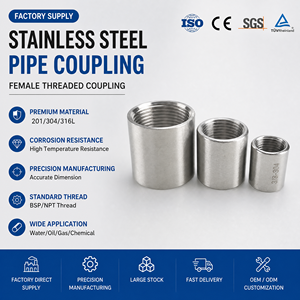

Engineered to integrate seamlessly with standard ASME/ANSI piping networks. Sourced from certified melts with EN 10204 3.1 chemical and mechanical traceability across petrochemical, cryogenic, and offshore assets.
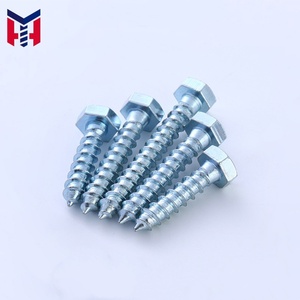
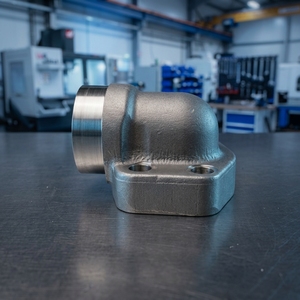
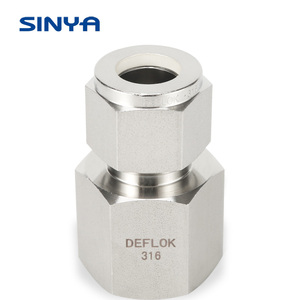
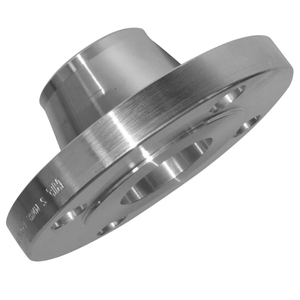
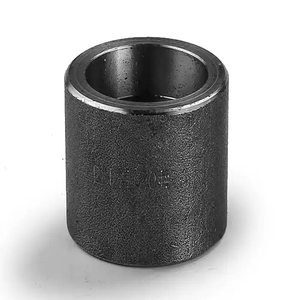
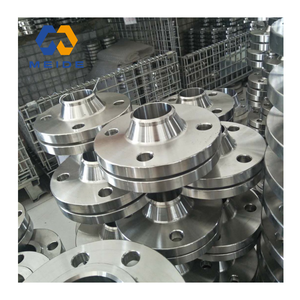
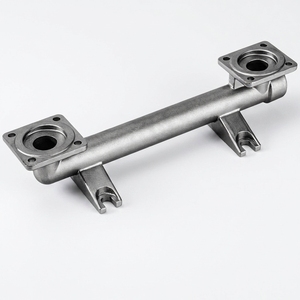
Operating as a Government of India Recognised Export House, our facilities combine extensive in-house forging hammers, continuous heat-treating furnaces, and multiaxis CNC machines to maintain tight dimensional adherence according to ASME B16.48, ASME B16.5, and EN 1092-1 standards.
We process certified billet heats from leading mills in India, South Korea, and Japan. Ready billets are stocked across austenitic stainless (ASTM A182 F304/304L, F316/316L, 904L), high-yield low-temp steel (ASTM A350 LF2), alloy steel (F11, F22), duplex 2205, super duplex 2507, and nickel alloys (Inconel 625, Hastelloy C276, Monel 400).
Spectacle blinds undergo single-setup CNC machining to achieve smooth and serrated spiral or concentric finishes (Ra 3.2 to 6.3 µm / 125 to 250 AARH). Precise web dimensions guarantee structural resilience under heavy piping moments, eliminating bend fatigue and gasket displacement during isolation swaps.
All critical components are tracked with stamped heat codes. Our in-house testing facility executes Optical Emission Spectrometry (OES), Positive Material Identification (PMI), Charpy V-notch impact tests down to -46°C, ultrasonic testing (UT), and micro-hardness checks compliant with NACE MR0175/ISO 15156 sour service standards.
In industrial piping systems, Spectacle Blinds (Figure-8 Blinds) function as positive shut-off devices. Unlike standard valves which may leak past seats over prolonged service, a spectacle blind provides definitive, visible separation between pipe sections.
When line maintenance, hot work, downstream hydrotesting, or regulatory shutdowns occur, loosening the flange bolts enables the blind to swing into place. The blank disc blocks flow, while the attached open spacer acts as a visual status marker to plant safety personnel.
Deciding between interconnected spectacle blinds versus independent spade and spacer sets:
Ideal for line sizes up to 8" or 10". Both blank and ring spacer stay bolted at the piping spool, eliminating misplaced parts and ensuring unambiguous open/closed visual feedback.
Paddle Blanks & Paddle SpacersSpecified for heavy bore lines (12" to 48"+) where handling the weight of a dual-disk spectacle blind during turnaround rigging introduces severe dropped-object and personnel hazards.
Rigid Structural Web IntegrityThe bridge connection must withstand substantial bending moments and tensile loads caused by unbolted piping spring forces during hot refinery unit shutdowns.
Evolving safety mandates, deep-sea exploration, and carbon capture infrastructure are transforming technical specifications for spectacle blinds, flanges, and piping fasteners.
Standard carbon steel (A105) is increasingly superseded in sour gas and offshore processing by Duplex 2205 (UNS S32205/S31803) and Super Duplex 2507 (UNS S32750). These alloys deliver higher yield strengths (permitting thinner, lighter blind designs) alongside superior resistance to pitting and crevice corrosion in chloride-heavy marine environments.
Procurement teams at international EPCs now demand QR-coded laser engravings directly linked to cloud-stored EN 10204 3.1 certificates. This removes warehouse verification friction, preserves digital twins throughout plant commissioning, and mitigates counterfeit steel risks across global supply chains.
With major capital investments flowing into LNG liquefaction, ammonia transport, and hydrogen transport networks, isolation blinds must pass stringent Charpy impact testing at -196°C. Tight micro-inch surface finishes and low-temperature impact-tested forgings (ASTM A350 LF2 Class 1/2) prevent micro-fracture propagation under cryogenic thermal contraction.
Essential technical answers regarding standards, certifications, facing types, and QA verification for industrial piping projects.
Connect directly with our engineering sales desk for competitive pricing, MTC samples, CAD dimensional datasheets, and swift worldwide delivery schedules.