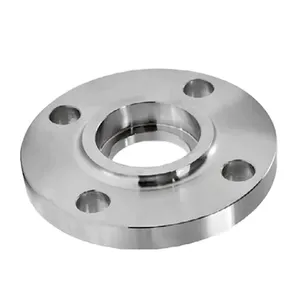

Manufactured to rigorous ASME, ASTM, and DIN tolerances. Our industrial components maintain structural integrity under extreme thermal variation, cyclic loading, and severe sour gas operating environments.
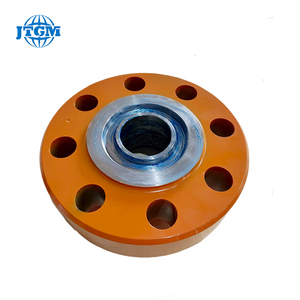
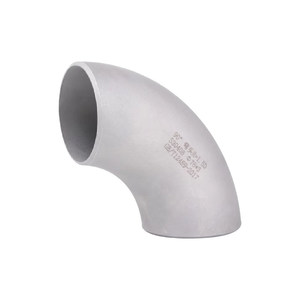
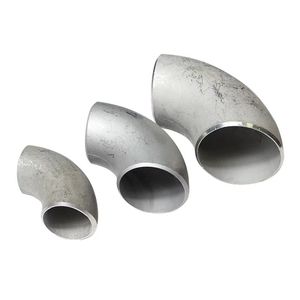
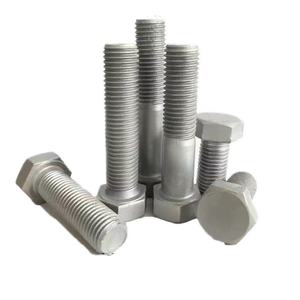
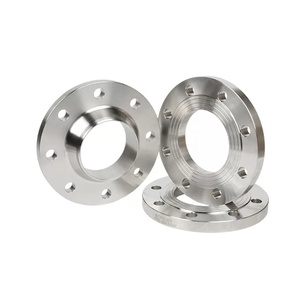
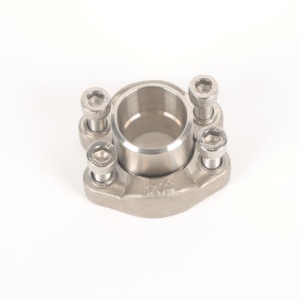
In high-pressure process operations, industrial piping networks are only as reliable as their mechanical joining mechanisms. Flanged connections function as demographic nodes where thermal expansion, mechanical vibration, fluid inertia, and external bending stresses converge. Specifying components from experienced, accredited carbon steel flange manufacturers constitutes the frontline defense against catastrophic plant shutdowns, fugitive emissions, and loss of primary containment (LOPC).
Operating continuously since 1991, Rajtilak Metal is a recognized Government of India Export House and certified ISO manufacturer, delivering high-integrity components across the Arabian Gulf, Europe, North America, and Southeast Asia. Holding dual Engineers India Limited (EIL) and Indian Boiler Regulations (IBR) approvals, we manufacture pipe flanges, forged butt weld fittings, socket-weld fittings, and heavy-duty high-tensile fasteners that conform unequivocally to ASME, ASTM, DIN, EN, and BS dimensional and material parameters.
A distinguishing marker of premier carbon steel flange manufacturers lies in the adherence to rigorous forging metallurgy rather than plate machining or casting methods. Under ASTM A105, ASTM A350 LF2, and ASTM A694 standards, cast fittings demonstrate an unacceptable rate of internal porosity, blowholes, and dendritic segregate structures that rupture under hydrostatic test stresses or sour cyclic service. Our precision closed-die and open-die hammer forging aligns the grain orientation along the contour of the flange neck, radially through the hub, and into the flange face. This metallurgical continuum delivers superior impact toughness, charpy V-notch energy absorption down to -46°C (for low-temperature A350 LF2 applications), and directional ductility that resists lamellar tearing.
| Material Standard | Common Grades | Tensile Strength (min) | Yield Strength (min) | Standard Design Temperatures | Typical Operational Scope |
|---|---|---|---|---|---|
| ASTM A105 / ASME SA105 | Standard Normalized | 70 ksi [485 MPa] | 36 ksi [250 MPa] | -29°C to 425°C [-20°F to 800°F] | General hydrocarbon processing, refinery piping, boiler steam lines |
| ASTM A350 / ASME SA350 | LF2 Class 1 / Class 2 | 70-95 ksi [485-655 MPa] | 36 ksi [250 MPa] | -46°C to 425°C (Charpy V-Notch ≥ 20J) | Cryogenic LNG transport, Arctic upstream terminals, cold utility piping |
| ASTM A694 | F42, F52, F60, F65 | 60-82 ksi [415-565 MPa] | 42-65 ksi [290-450 MPa] | -29°C to 200°C | High-pressure mainline transmission systems, gas compressor manifolds |
| ASTM A182 (Alloy Flanges) | F11, F22 Class 2 | 70-75 ksi [485-515 MPa] | 40-45 ksi [275-310 MPa] | Up to 590°C [1100°F] | Thermal power steam reheater systems, coker units, catalyst regenerators |
| EN 1092-1 Type 01/11 | P235GH, P250GH | 360 - 500 MPa | 215 - 250 MPa | -10°C to 400°C | European district heating, pressure vessels, chemical process plants |
Raw forged carbon steel can develop inhomogeneous pearlitic-ferritic matrix banding along with residual forging thermal stresses. Premium manufacturers institute continuous computer-controlled normalizing cycles (heated to 880°C - 920°C, followed by calm air cooling). This normalizes the grain structure, refines the crystal boundaries, and eliminates micro-hardness variations. For critical sour hydrocarbon installations governed by NACE MR0175 / ISO 15156, localized hard zones act as initiation points for Sulfide Stress Cracking (SSC) and Hydrogen-Induced Cracking (HIC). Through controlled heat treating regimens and precise chemical balancing (holding Carbon Equivalent (CE) below 0.42%), our flanges exhibit verified maximum hardness ratings consistently beneath 22 HRC (237 HBW), establishing complete operating compliance.
Decades of specialized engineering knowledge combined with robust institutional certifications make our Mumbai manufacturing hub the preferred global supply partner for major EPC project contractors.
Formally evaluated and approved by Engineers India Limited (EIL) and compliant with the stringent provisions of the Indian Boiler Regulations (IBR). Tested to satisfy high-consequence service contracts across global refining majors, including ADNOC and Middle East infrastructure ventures.
Zero tolerance for material mix-ups. Every flange carries an indelible hard-stamped heat number, pressure class, nominal bore, and manufacturer badge. Every batch is issued with an authentic EN 10204 3.1 Mill Test Certificate linking back directly to prime melts sourced from India, South Korea, and Japan.
Equipped with advanced CNC lathes, vertical machining centers (VMC), and multi-spindle drilling equipment. We execute serrated spiral and concentric gasket finishes with Ra 3.2 to 6.3 μm (125 to 250 μin) along with RTJ octagonal grooves under 100% optical dimensional surveillance.
Procurement teams navigating 2025 and beyond must anticipate evolving regulatory mandates, decarbonization standards, and digital supply chain integrity requirements.
Global supply chain managers are shifting rapidly from static paper test sheets to cryptographically secure digital material traceability. QR-coded flange rims linking direct to ladle metallurgy records, non-destructive test curves, and full chemical assays speed up site receiving inspections by 75%.
The modernization of pipeline grids for 20% hydrogen fuel blends necessitates upgraded carbon steel compositions. Flanges must exhibit ultra-low sulfur levels (≤ 0.002%), calcium wire treatment for sulfide shape control, and specialized resistance to hydrogen-induced micro-void coalescences.
To reduce overall piping weight while simplifying field preheating mandates, EPCs are prioritizing micro-alloyed carbon steels (ASTM A694 F52-F65). Vanadium and niobium grain-refining additions deliver high tensile strengths while preserving weldability without mandatory post-weld heat treatment.
Key metallurgical, dimensional, and regulatory answers for piping engineers, quality surveyors, and international procurement specialists.
Procure certified carbon steel flanges, buttweld fittings, and high-tensile bolting packages directly from an approved Indian manufacturing source. Fast-track delivery, seaworthy export packing, and complete EN 10204 3.1 documentation guaranteed.