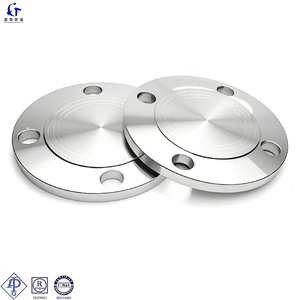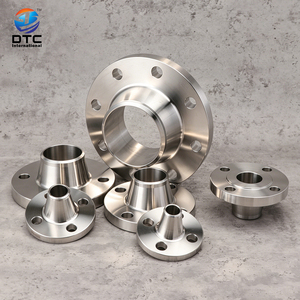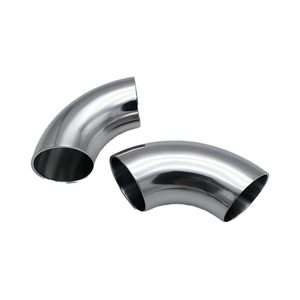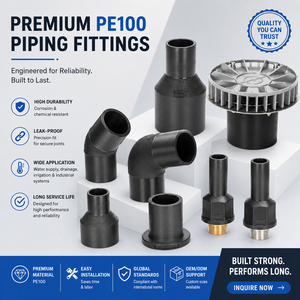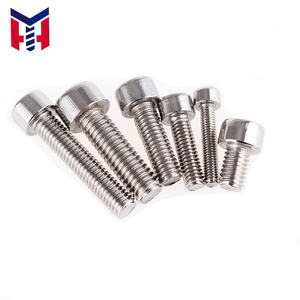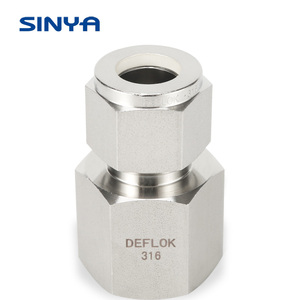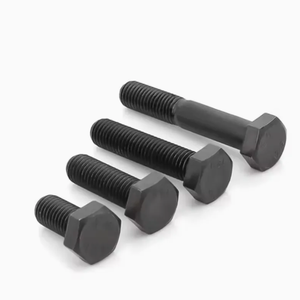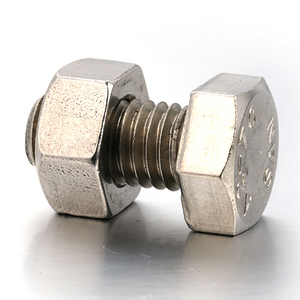
Our Mumbai manufacturing facilities manufacture fully certified large-bore connecting components, high-tensile bolting, and precision fittings according to strict ASME, EN, DIN, and API standards with 100% material traceability.
Piping engineers designing large-diameter pressurized pipelines face critical design evaluations once line sizes exceed NPS 24. While ASME B16.5 governs sizes through NPS 24, ASME B16.47 covers large diameter steel flanges from NPS 26 through NPS 60. Understanding the morphological and mechanical variances between Series A and Series B is vital for optimizing weight, structural integrity, and bolt loading.
Series A flanges (originating from MSS SP-44) are significantly heavier, thicker, and engineered to endure substantial external piping stresses and bending moments. Series A flanges utilize larger bolt diameters and fewer bolt counts, making them the default selection for high-stress pipeline tie-ins, offshore manifold risers, and primary process lines in petrochemical processing.
Conversely, Series B flanges (originally defined under API 605) feature compact dimensions, a lower profile thickness, and an array of smaller, closely spaced bolts. Developed primarily for compact plant piping, tank farms, and non-critical low-to-medium pressure utility headers, Series B provides significant cost and mass reduction. However, components between Series A and Series B are completely non-interchangeable due to different bolt circle diameters (PCD) and bolt hole quantities.
Direct comparison of design rules, metallurgical properties, and mechanical selection parameters for project estimators and piping leads.
| Parameter | ASME B16.47 Series A | ASME B16.47 Series B | Engineering Implication |
|---|---|---|---|
| Historical Standard | MSS SP-44 | API 605 | Governs bolt pattern and legacy replacements |
| Size & Pressure Class | NPS 26″ to 60″ (Class 150 - 900) | NPS 26″ to 60″ (Class 75 - 900) | Series B includes Class 75 for low-head cooling loops |
| Flange Weight & Thickness | Heavy, thick cross-section profile | Lightweight, thin wall design | Series A resists high external moments; B lowers skid weight |
| Bolting Architecture | Fewer bolts, larger bolt diameters | Higher bolt count, smaller bolt sizes | Series A takes longer to tension; Series B distributes gasket load finely |
| Primary Application | Main transmission, subsea, cross-country lines | Refinery utility headers, storage vessels, compact modules | Series A handles bending stress; Series B conserves alloy material |
| Gasket Compatibility | Standard ASME B16.20 spiral wound dimensions | Specific API 605 compact gasket dimensions | Gaskets are strictly non-interchangeable across series |
How technical advancements, geopolitical re-shoring, and decarbonization alter large-bore component procurement over the coming decade.
Advanced hydraulic radial-axial ring rolling machines now achieve tighter dimensional allowances on forgings up to 60 inches, curtailing rough turning cycle times by 35% and drastically reducing raw alloy billet wastage for high-yield applications.
Global conversion toward low-carbon fuels demands large-bore pipeline connections compliant with NACE TM0284 (Hydrogen Induced Cracking) and NACE TM0177 (Sulfide Stress Cracking), necessitating ultra-low sulfur steels (S ≤ 0.002%) with vacuum degassing treatment.
EPC contractors now insist on verifiable digital material passports. Integrating QR-coded heat tracking backed by EN 10204 3.1 & 3.2 documentation ensures rapid site validation, preventing illicit counterfeit alloy mix-ups during multi-thousand-joint installations.
Founded in 1991 in Mumbai, Rajtilak Metal is an Indian Government Recognized Export House backed by prestigious global technical approvals.
Fully certified under Engineers India Limited (EIL) and Indian Boiler Regulations (IBR) with accredited ISO 9001 quality infrastructure.
Direct mill master heats in Super Duplex 2507, Alloy C276, Inconel 625, Titanium Grade 2, and ASTM A350 LF2 low-temperature carbon steel.
Proven execution history supporting major refinery, offshore FPSO, and cross-border pipeline packages across UAE, Saudi Arabia, Qatar, Turkey, and the USA.
State-of-the-art laboratory hosting Spectrometers, Ultrasonic flaw detectors, Charpy V-Notch impact testing to -196°C, and PMI analyzers.
Definitive engineering answers addressing sizing mismatches, pressure ratings, and metallurgical compliance.