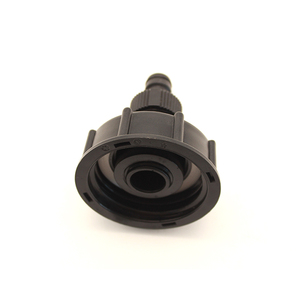
HT Coupling 3/4" Thread Connector Valve Fitting for IBC Water Tank Adapter
- Material: HPb59-1 / CW617N Brass
- Size Range: 3/4 Inch (DN20)
- Thread Spec: NPT / BSPP Thread

Engineered for high-pressure fluid redirection, instrumentation taps, vents, and drains across global petrochemical, offshore drilling, and cryogenic processing facilities.
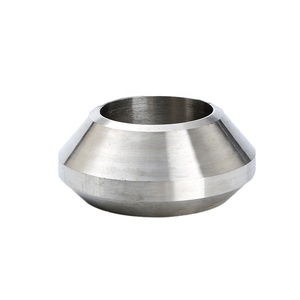
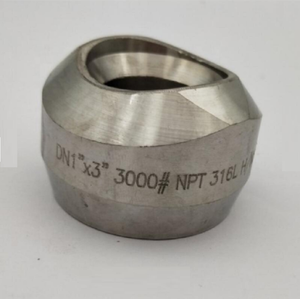
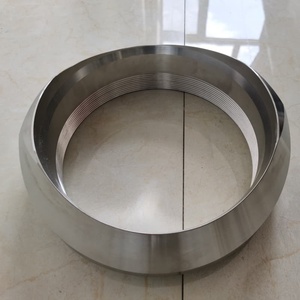
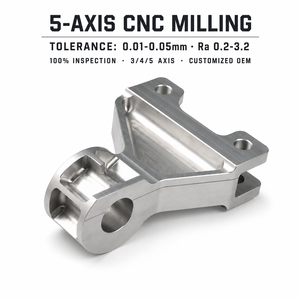
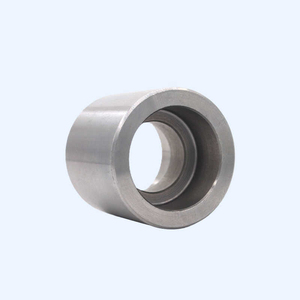
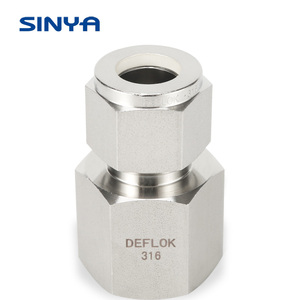
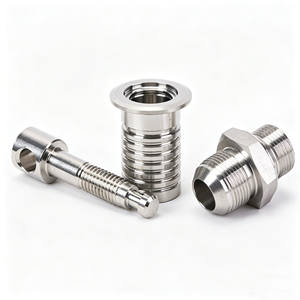
A Threadolet (threaded olet) is an integrally reinforced forged branch outlet fitting developed to provide a 90-degree threaded connection from a larger run pipe header to a smaller branch line. Unlike conventional branch configurations utilizing fabricated stub-ins or standard reducing tees, a certified forged threadolet engineered according to MSS SP-97 and ASME B16.11 delivers full hydrodynamic reinforcement while reducing critical stress concentration factors (SCF) at the crotch junction.
At our state-of-the-art forging and precision machining facilities, every Threadolet fitting undergoes closed-die forging starting from spectrochemically analyzed steel round bars. Grain flow orientation is strictly controlled along the hydrodynamic contour of the branch body, which drastically elevates shear capacity, cyclic fatigue resistance, and burst endurance compared to bar-stock machined components.
| Rating / Class | Run Pipe Size (NPS) | Branch Outlet Size (NPS) | Governing Specification | Applicable Base Materials |
|---|---|---|---|---|
| Class 3000 (3M) | 1/2″ through 48″ (DN15–DN1200) | 1/8″ through 4″ (DN6–DN100) | MSS SP-97 / ASME B16.11 / B31.3 | ASTM A105, A350 LF2, A182 F304/304L, F316/316L |
| Class 6000 (6M) | 1/2″ through 36″ (DN15–DN900) | 1/2″ through 2″ (DN15–DN50) | MSS SP-97 / ASME B16.11 / B31.3 | ASTM A182 F51 (Duplex 2205), F53 (2507), F11, F22 |
| High Pressure / Spec | Customer Engineered / Tailored | 1/4″ through 2″ Instrumentation | API 6A / ISO 15156 (NACE MR0175) | Nickel Alloy 625, Alloy C276, Monel 400, Titanium Gr. 2 |
Our threading process utilizes multi-axis CNC lathes with single-point turning and high-precision ground threading taps to ensure precision adherence to ASME B1.20.1 (National Pipe Taper - NPT) and ISO 7-1 (BSPT/BSPP) specifications. L-1 and L-2 thread plug gauges calibrated under ISO 17025 accredited laboratory standards confirm flank angles, taper consistency (3/4 inch per foot), and thread crest/root truncations to eliminate galling and fugitive emissions under severe hydrostatic pressure.
Fully compliant with ISO 9001:2015 quality frameworks, our production line adheres to stringent engineering standards approved by major authorities including EIL, IBR, and verified compliance protocols suited for Middle Eastern energy operations such as ADNOC and Saudi Aramco downstream projects.
All stock is forged exclusively from prime vacuum-degassed billets from certified mills. Every individual Threadolet is micro-stamped with its unique melt heat number, size, class, and material grade, enabling instantaneous digital reconciliation with EN 10204 3.1 Inspection Certificates.
Equipped with 11 advanced testing systems: Spectrometric Chemical Analysis, Positive Material Identification (PMI), Charpy Impact Testing (-196°C to RT), Brinell/Rockwell Hardness, Wet Magnetic Particle Inspection (MPI), and Hydrostatic Testing up to 15,000 PSI.
Procurement executives, piping materials engineers, and EPC supply chain directors face shifting industry dynamics driven by energy transition, asset integrity standards, and smart supply ecosystems.
As refineries and gas processing complexes adapt for blue/green hydrogen blending, procurement specifications for Threadolets increasingly mandate rigorous HIC (Hydrogen Induced Cracking) and SSCC (Sulfide Stress Corrosion Cracking) test regimes. Micro-alloyed carbon steels with restricted Carbon Equivalent (CE ≤ 0.42%) and controlled hardness (≤ 22 HRC) are becoming mandatory line items to prevent catastrophic hydrogen embrittlement at threaded connection roots.
Offshore FLNG, marine scrubbers, and deepwater production platforms are phasing out standard coated carbon steel in favor of UNS S31803/S32205 Duplex and UNS S32750 Super Duplex branch outlets. Purchasing models are factoring in Lifecycle Costing (LCC) rather than initial CAPEX, boosting bulk wholesale demand for high-molybdenum alloys capable of enduring pitting resistance equivalent numbers (PREN > 42).
Traditional paper mill certificates are rapidly giving way to cloud-secured digital material passports. Advanced China manufacturers are leading this shift by integrating 2D DataMatrix laser codes directly onto the forged Threadolet body, facilitating instantaneous field verification of chemical composition, heat treatment curves, and pressure test logs via handheld mobile terminals during plant construction.
In high-vibration piping systems (such as reciprocating compressor discharge headers and offshore pump manifolds), threaded branch outlets historically represented a potential weak point due to the notch sensitivity of threaded joints. Modern branch outlet engineering has evolved significantly through Finite Element Analysis (FEA) and automated 5-axis CNC machining.
Our engineers utilize transient dynamic stress modeling to contour the fillet transitions between the weld bevel and the run pipe matching radius. By eliminating abrupt geometric transitions, the localized peak stress concentration factor is reduced by up to 34% compared to legacy outlet profiles. Furthermore, the internal transition zone features high-finish radius boring to minimize turbulent eddy currents and cavitation erosion when throttling slurries or high-velocity wet gases.