Girgaon, Mumbai, Maharashtra 400004, India [email protected] +91 9869506920

China Top 45 Degree Elbow Manufacturers & Factory

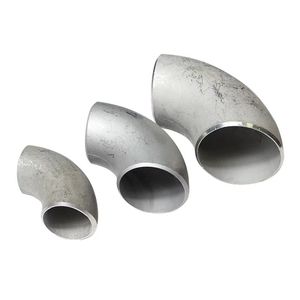
Industrial-Grade Seamless & Forged Butt-Weld, Socket-Weld, and Threaded 45° Pipe Elbows Manufactured Under ASME B16.9, ASME B16.11, DIN, and EN 1092-1 Quality Benchmarks.

Precision Piping Components

Featured Industrial Elbows & Specialized Pipeline Fittings

From cryogenic refrigeration circuits to ultra-pure semiconductor water distribution and severe petrochemical slurries, our manufacturing cluster engineers high-precision 45° and directional elbows built to withstand cyclic pressure pulses, extreme thermal swings, and chemical corrosion.

1991
Manufacturing Heritage
11+
In-House QA Laboratories
98%
On-Time Global Delivery
90%
Client Retention Rate
Engineering Whitepaper

Hydrodynamics & Metallurgical Integrity of 45° Pipe Elbows

A comprehensive technical examination of directional velocity profiles, head loss mitigation, and forged vs. seamless manufacturing paradigms for EPC contractors and piping lead engineers.

In high-velocity process piping systems across petrochemical refineries, nuclear cooling circuits, and offshore gas processing complexes, directional piping transitions are the primary locus of hydraulic turbulence, fluid boundary separation, and localized erosion-corrosion. While standard 90-degree elbows redirect process flows abruptly, a 45-degree elbow (ASME B16.9 / EN 10253) provides a subtle vector shift that dampens hydrodynamic shock waves, attenuates water hammer pulses, and minimizes pressure drop across prolonged transmission lines.

Key Engineering Finding: According to fluid dynamics modeling under the Darcy-Weisbach formulation, the resistance coefficient ($K$-factor) for a standard long-radius 45° butt-weld elbow averages $K \approx 0.15$ to $0.20$, compared to $K \approx 0.30$ to $0.45$ for a 90° long-radius elbow. Employing paired 45° elbows with an intermediate tangent spool significantly lowers the Cavitation Index ($\sigma$), preventing localized shear thinning in aggressive multi-phase slurry lines.

Seamless Mandrel Push Forming vs. Closed-Die Forging

Chinese manufacturing centers utilize two core metallurgical forming methods for 45-degree elbow production, governed by wall thickness schedule and pipe diameter requirements:

  • Hot Induction Mandrel Pushing (Hamburg Method): Predominantly specified for carbon steel (ASTM A234 WPB/WPC) and alloy steel (ASTM A234 WP11, WP22, WP91). Straight seamless pipes are pushed over a trumpet-shaped mandrel horn under uniform inductive heating ($750^\circ\text{C} - 900^\circ\text{C}$). This geometry preserves wall thickness at the extrados (outer radius) while preventing ovality deviations, guaranteeing compliance with ASME B16.9 wall tolerances.
  • High-Pressure Closed-Die Forging (ASME B16.11): Deployed for high-pressure class 2000, 3000, 6000, and 9000 socket-weld and threaded 45° elbows. Utilizing pre-heated vacuum-degassed billets forged under multi-axis hydraulic presses, the grain flow follows the contour of the fitting. This orientation dramatically enhances Charpy V-notch impact toughness and hoop tensile resistance under sour crude service (NACE MR0175 / ISO 15156).
Standard Fitting Type Nominal Size Range Pressure / Schedule Rating Applicable Material Grades
ASME B16.9 / MSS SP-43 Butt-Welding 45° Elbow (LR & SR) 1/2″ to 48″ (DN15 - DN1200) SCH 10S, 40S, 80S, 160, XXS ASTM A234 WPB, A403 WP304L/316L, A860 WPHY 52/60/70
ASME B16.11 / BS 3799 Forged Socket Weld & Threaded 45° 1/8″ to 4″ (DN6 - DN100) Class 2000, 3000, 6000, 9000 psi ASTM A105, A182 F316L/F51/F55, A350 LF2 Class 1
EN 10253-2 / DIN 2605 Butt-Welding Type A & Type B 45° DN15 to DN1000 Full Service Pressure Utilization P235GH, P265GH, 1.4404 (316L), 1.4462 Duplex
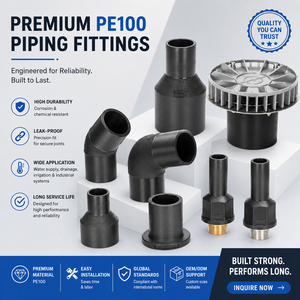
ISO 4427 / CE EN 12201 PE100 Butt-Fusion / Electrofusion 45° 20mm to 630mm OD PN10, PN16, PN25 (SDR 11 / SDR 17) Virgin High-Density Polyethylene (PE100-RC)
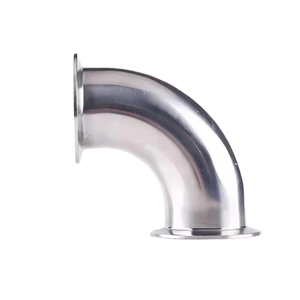
3-A / ASME BPE Sanitary Hygienic Clamp / Weld 45° 0.5″ to 6.0″ OD Tube Up to 150 psi at 20°C (CIP / SIP) AISI 316L (UNS S31603) Sulfur-Controlled Weld Ends
Why Partner With Us

Audited Quality Systems & Technical Capabilities

Backing EPC contractors and stocking distributors worldwide with certified mill traceability, advanced testing laboratories, and internationally recognized quality approvals.

Statutory & Major Project Approvals

ISO 9001:2015 certified quality management systems coupled with Engineers India Limited (EIL) and Indian Boiler Regulations (IBR) approvals. Our forgings and buttweld elbows have qualified for offshore critical service across ADNOC, Saudi Aramco, and major European consortium project datasheets.

100% Heat Traceability & EN 10204 3.1

Every single fitting features deep dot-peen or die-stamped heat numbers tying raw melts directly to optical emission spectrometer chemistry, mechanical tensile elongation, and Charpy impact curves. We supply comprehensive EN 10204 3.1 Mill Test Certificates with optional 3.2 third-party verification (TÜV, DNV, Lloyd's).

11 In-House Metallurgical Test Rigs

Our on-site testing infrastructure comprises portable and laboratory XRF Positive Material Identification (PMI), hydrostatic pressure testing up to 15,000 psi, ultrasonic wall thickness scanning, liquid penetrant testing (PT), magnetic particle inspection (MPI), and Vickers/Brinell hardness testing per ASTM E10.

98% On-Time Delivery Record

Equipped with computerized high-tonnage forming presses and automated CNC 5-axis pipe bevelers, our factory maintains rapid turnaround times. We warehouse ready-stock mother pipes and billets in Carbon, Stainless (304L/316L/904L), Super Duplex (2507), and Nickel Alloys (Inconel 625, Hastelloy C-276) for swift fulfillment.

Precision Beveling to ASME B16.25

Welding bottlenecks on pipeline construction sites are eradicated through factory-controlled end preparations. We machine plain ends, compound bevels, counterbores, and J-prep transitions customized to match mating pipe wall schedules without interpass misalignments or root gap inconsistencies.

Global Export Logistics & Seaworthy Packing

With an established export network spanning UAE, Saudi Arabia, Qatar, Oman, Egypt, Singapore, Malaysia, Indonesia, Italy, Poland, and the United States, our shipments are rust-inhibited, end-capped, and packed in fumigated ISPM-15 export wooden crates engineered for extreme maritime transit.

Market Intelligence

Future Procurement & Technological Trends in 45° Pipe Elbows

Strategic supply chain analysis and manufacturing shifts reshaping pipeline component sourcing across the next decade.

Digital Twin & Laser Scanning Verification

Procurement teams from tier-1 engineering houses now increasingly mandate 3D optical laser scanning for critical 45-degree elbows. Laser photogrammetry provides a cloud-point dimensional map of ovality, angularity, and wall thinning along the extrados, directly integrating into the plant's Building Information Modeling (BIM) digital twin to verify fit-up before dispatch.

Decarbonization & Low-Carbon Steel Mandates

With the implementation of the European Union's Carbon Border Adjustment Mechanism (CBAM) and corporate ESG targets, international procurement strategies are evaluating embodied carbon in forged and welded fittings. Leading Chinese factories are transitioning to electric arc furnace (EAF) melts utilizing recycled charge metal and automated induction forging to reduce the Scope 1 and 2 carbon footprint per metric ton.

High-Entropy Alloys & Laser Clad Overlays

For deepwater subsea completions and geothermal mineral extraction, conventional solid nickel alloys become commercially prohibitive. The modern trend pivots toward carbon steel 45-degree base elbows internally clad with Inconel 625 (UNS N06625) or Hastelloy via robotic continuous wire laser deposition, yielding superior chloride pitting resistance while preserving tensile economy.

Accelerate Your Project Piping Sourcing

Connect directly with our senior piping metallurgists and procurement estimators. Receive verified dimensional schematics, compliance datasheets, and mill test certification packages tailored to your project datasheets within 24 hours.

Get a Quote
Procurement Knowledge Base

Frequently Asked Questions by Piping Engineers & Buyers

Answers to complex queries regarding design standards, allowable stresses, welding geometry, and inspection criteria for 45-degree pipe elbows.

What is the difference between Long Radius (LR) and Short Radius (SR) 45-degree elbows?
Under ASME B16.9, standard 45-degree buttweld elbows are universally manufactured in Long Radius (LR) configurations, where the center-to-face dimension is calculated as $B = 0.5 \times \text{NPS}$ (or $1.5D \times \tan(22.5^\circ) \approx 0.621D$ for the center-to-face line). Short Radius ($1.0D$) designs are rarely produced in 45-degree angles because the minimal curvature creates steep internal flow separation and excessive wall stress concentrations without yielding significant envelope space savings. Where extreme compact clearance is mandated, custom mitered elbows or forged directional blocks are manufactured to proprietary engineering prints.
How do you prevent wall thinning at the extrados of pushed seamless 45° elbows?
During the mandrel push forming process, tensile hoop stresses naturally cause elongation and wall thinning along the extrados (outer radius), while compressive forces thicken the intrados. To guarantee compliance with ASME B16.9 Clause 2.2—which mandates that the minimum wall thickness shall not be less than 87.5% of the nominal pipe schedule—our manufacturing process utilizes heavy-wall mother pipe stock calibrated via finite element thermal simulation. Post-forming ultrasonic scanning measures wall integrity across eight coordinate axes to verify uniform pressure containment.
What are the key differences between ASME B16.9 Butt-Weld and ASME B16.11 Socket-Weld 45° elbows?
ASME B16.9 Butt-Weld elbows are specified for line sizes from 1/2″ up to 48″ and are butt-welded to the adjacent pipe, creating a smooth, full-penetration bore joint that allows non-destructive radiography (RT) or phased array ultrasonic testing (PAUT). They are mandatory for high-temperature, cyclic, or lethal toxic services. ASME B16.11 Socket-Weld 45° elbows are small-bore components (typically 1/8″ to 2″, up to 4″) where the pipe slides into a recessed socket and is secured with an external fillet weld. A standard 1/16″ (1.6 mm) bottom expansion gap is required prior to welding to avoid thermal stress cracking. Socket-weld joints are restricted in severe corrosive service due to crevice corrosion risks at the socket root.
Which test certificates and documentation accompany each export consignment?
Every production lot is released with an official EN 10204 3.1 Inspection Certificate documenting: raw material melt shop identity, heat number, ladle chemical analysis (C, Mn, P, S, Si, Cr, Ni, Mo, Cu, V, N), mechanical tensile yield strength ($R_{p0.2}$), ultimate tensile strength ($R_m$), percentage elongation, Charpy V-notch impact test values at specified design temperatures (e.g., $-46^\circ\text{C}$ for ASTM A350 LF2 / ASTM A420 WPL6), macro/micro examination, solution annealing/normalizing heat treatment charts, and non-destructive examination (NDE) compliance reports.
Can your factory supply custom bend radii (3D, 5D) or special tangent lengths on 45° elbows?
Yes. In addition to standard ASME B16.9 fittings, our production floor operates computerized induction pipe bending machines capable of forming continuous bends at 3D, 5D, 6D, and 10D bend radii for piggable oil and gas transmission loops. We supply extended straight tangents on both ends of the 45-degree elbow, eliminating the need for hazardous girth welds in proximity to the bend stress transition zone and facilitating automated orbital field welding.
What surface treatments and rust prevention coatings are provided for ocean freight?
Depending on the metallurgy and project requirements, we apply: (1) Carbon Steel: High-temperature transparent rust-preventive lacquer, black bituminous protective varnish, hot-dip galvanization per ASTM A153, or zinc-phosphate primer; (2) Stainless Steel & Nickel Alloys: Full chemical pickling and acid passivation per ASTM A380 to eliminate free-iron contamination and restore the chromium-oxide passivation layer; optional glass-bead blasting or sanitary mirror mechanical polishing (Ra < 0.4 μm); (3) Mechanical Protection: Beveled ends are capped with heavy-duty high-density polyethylene protectors, wrapped in waterproof multi-ply film, and secured inside moisture-barrier treated wooden cases.
How do you ensure NACE MR0175 / ISO 15156 compliance for sour crude oil service?
For upstream environments containing dissolved hydrogen sulfide ($H_2S$), our materials strictly adhere to NACE MR0175 metallurgical limitations: maximum carbon equivalent ($CE_{IIW} \le 0.42\%$), restricted phosphorus and sulfur contents ($S \le 0.005\%$), controlled nickel composition ($Ni \le 1.0\%$), and strict maximum hardness thresholds (e.g., Rockwell $HRC \le 22$ or $HBW \le 237$ for carbon steels). Furthermore, we conduct laboratory Sulfide Stress Cracking (SSC) and Hydrogen-Induced Cracking (HIC) testing per NACE TM0177 and TM0284 with certified immersion reports.
What is the typical commercial lead time for non-stock and high-alloy 45-degree elbows?
Standard carbon steel and austenitic stainless steel 45-degree elbows in standard dimensions (1/2″ to 12″) ship from existing inventory buffers within 3 to 7 working days. Non-standard dimensions, large-diameter heavy-wall elbows (14″ to 48″), or exotic metallurgies (Super Duplex UNS S32750, Inconel 625, Titanium Gr. 2) require a manufacturing cycle of approximately 15 to 28 calendar days, including raw billet forging, induction pressing, thermal heat treatment, CNC beveling, in-house mechanical and third-party inspection releases.