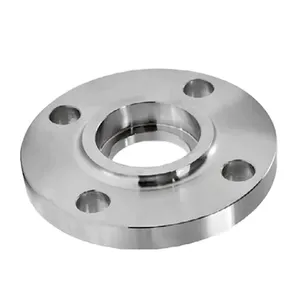

Manufactured under rigorous EN 10204 3.1 material traceability, our portfolio combines closed-die forged integrity, precise CNC geometry, and pressure-boundary reliability verified through cryogenic, hydro, and metallurgical testing.
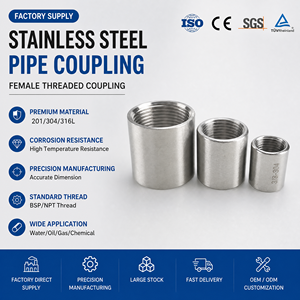
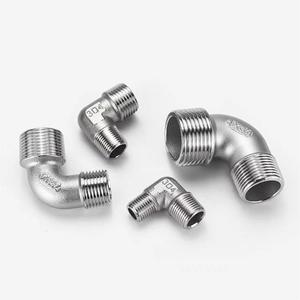
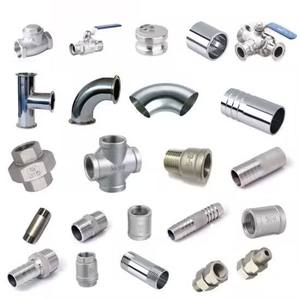
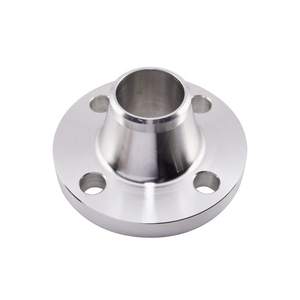
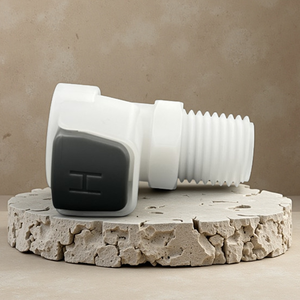
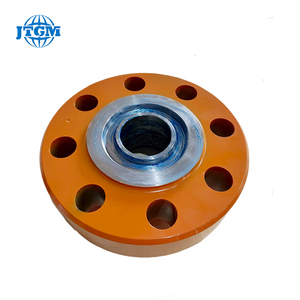
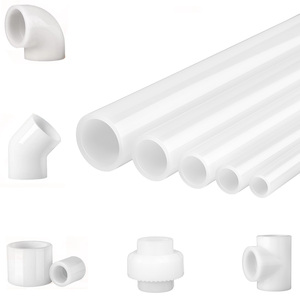
In modern pressurized piping infrastructure, high-pressure forged steel unions serve as the critical removable jointing mechanism where thermal expansion, mechanical vibration, and fluid pulsing preclude the installation of conventional flanged joints or irreversible field welds. Manufactured strictly compliant with the European Union's Pressure Equipment Directive (PED 2014/68/EU) CE marking requirements and ASME B16.11 specifications, forged unions must guarantee three continuous mechanical attributes: grain-flow alignment along load axes, precise seating contact geometry, and zero micro-fissure porosity.
Standard threaded pipe joints frequently fail in cyclic high-pressure service due to fatigue cracks initiating at the root of the thread. CE certified forged unions address this vulnerability through hot-die forging, which breaks up as-cast dendritic microstructures and directs anisotropic grain flow lines concentric to the union nut and tailpiece profiles. The three-piece assembly—comprising the male tailpiece, female headpiece, and union coupling nut—relies on either an integral spherical-to-conical metal-to-metal seat ground to micro-inch precision (Ra ≤ 0.8 μm) or inserted non-metallic/bronze sealing rings, ensuring bubble-tight sealing under hydrostatic pressures up to 9,000 psi (Class 9000).
Procurement decisions for forged unions demand strict compliance between metallurgy and environmental operating limits. For standard ambient hydrocarbon exploration, ASTM A105 carbon steel normalized at 900°C provides yield strengths ≥ 250 MPa with optimal ductility. For low-temperature arctic service, liquid gas terminals, and refrigerated LNG handling down to -46°C, ASTM A350 LF2 Class 1 carbon steel is mandatory, demanding Charpy V-Notch impact verification exceeding 27 Joules at sub-zero service temperatures.
Conversely, offshore processing of sour hydrocarbons containing dissolved hydrogen sulfide (H2S) requires conformity to NACE MR0175 / ISO 15156. Here, forged stainless steel grades ASTM A182 F316/F316L, 2205 Duplex (UNS S32205), and Super Duplex 2507 (UNS S32750) prevent Stress Corrosion Cracking (SCC) and localized pitting. Controlled chemical compositions with low carbon ceilings (≤ 0.030%) ensure carbide precipitation is suppressed along grain boundaries during hot forging, preserving anti-corrosion performance without additional heat treatments.
A quick-reference engineering matrix detailing wall thicknesses, nominal bore ranges, hydrostatic test parameters, and end-connection types across Class ratings.
| Class Rating | Nominal Size (NPS) | End Connections Available | Design Hydrostatic Test | Primary Material Standards | Seating Interface Design |
|---|---|---|---|---|---|
| Class 3000 | 1/8″ to 4″ (DN6–DN100) | NPT, BSPT, BSPP Female, Socket Weld | 450 Bar / 6,525 PSI | ASTM A105, A182 F304/F316L | Spherical-to-Angle Ground Metal-to-Metal |
| Class 6000 | 1/4″ to 3″ (DN8–DN80) | Heavy Hex Socket Weld, ASME B1.20.1 NPT | 900 Bar / 13,050 PSI | ASTM A350 LF2, A182 F11, F22 Alloy | Precision Micro-Lapped Ball-and-Cone Joint |
| Class 9000 | 1/2″ to 2″ (DN15–DN50) | Full Penetration Socket Weld (B16.11) | 1,350 Bar / 19,575 PSI | ASTM A182 F51 (Duplex), Inconel 625 | High-Contact Stellite Faced Metal Sealing |
| Hygienic / Special | 1/2″ to 4″ (DN15–DN100) | Butt Weld / Orbital, PVDF/Sanitary Triclamp | 16 Bar to 100 Bar | ASTM A182 F316L, High-Purity PVDF | PTFE Encapsulated, EPDM / O-Ring Seating |
Global supply chain shifts, mandatory decarbonization directives, and automated validation are reshaping how EPC procurement leaders select forged union manufacturers.
Global engineering projects require unbroken material passports. Traditional paper EN 10204 3.1 certificates are transitioning to digitally signed, cryptographically verified MTCs linked to raw melt heat numbers.
Downhole drilling depths and deepwater subsea completions expose fittings to hypersaline, sour environments. EPCs are reducing lifecycle maintenance by shifting from standard carbon steel to high PREN (≥ 42) alloys.
The EU Carbon Border Adjustment Mechanism (CBAM) requires transparent reporting of Scope 1, 2, and 3 emissions for imported forgings. Electric Arc Furnace (EAF) production with scrap feeds is replacing blast furnace methods.
Serving global markets across the UAE, Saudi Arabia, Qatar, Oman, Singapore, the UK, and the USA with recognized credentials.
Recognized by the Government of India as an authorized Export House, our manufacturing infrastructure is approved by Engineers India Limited (EIL) and Indian Boiler Regulations (IBR). Every union component is forged from prime billet sourced from verified domestic and international steelmakers.
To eliminate galling and seat bypass under Class 6000 and 9000 cycling, our tailpieces and nut threads are machined on 5-axis CNC machining centers. Threads (NPT, BSPT, Metric) comply with ANSI/ASME B1.20.1 standards, verified with calibrated plug and ring gauges.
Our quality assurance protocol includes 100% optical emission spectrographic verification, tensile testing, cryogenic impact testing at -46°C, ultrasonic examination for internal inclusions, and liquid penetrant inspection on socket weld boundaries before packing in seaworthy crates.
Expert answers to common engineering, metallurgical, and certification queries encountered by procurement teams and field engineers.
Connect directly with our engineering and export estimation department. We provide comprehensive technical bids, dimensional drawings, and complete quality documentation packages for tenders worldwide.
Send an Inquiry