Delivering high-integrity, corrosion-resistant components tested to stringent metallurgical, thermal, and hydrostatic engineering criteria.
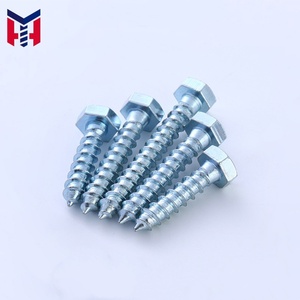
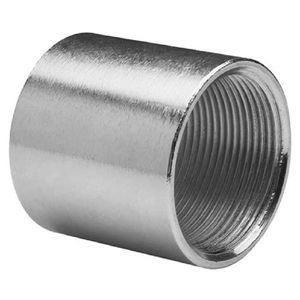
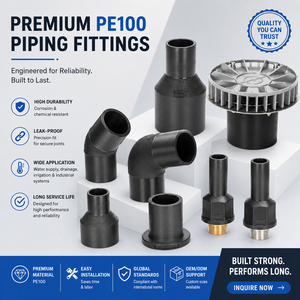
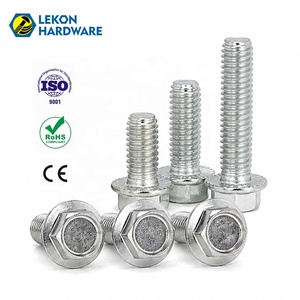
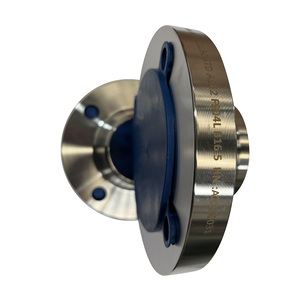
As industrial processing facilities throughout the Kansai metropolitan belt, including the Sakai-Senboku coastal industrial zone, intensify operating limits, conventional austenitic stainless steels like 304L and 316L face severe pitting and stress-corrosion cracking (SCC) constraints. Hastelloy C276 hex bolts provide the definitive engineering resolution. Composed predominantly of nickel (~57%), molybdenum (15.0–17.0%), and chromium (14.5–16.5%), augmented by tungsten (3.0–4.5%) and iron (4.0–7.0%), this solid-solution strengthened superalloy delivers extraordinary chemical inertness across oxidizing, reducing, and mixed aqueous environments.
The fundamental structural advantage of Hastelloy C276 fasteners resides in their resistance to grain-boundary precipitation during thermal excursions. Unlike lesser alloys that precipitate detrimental intermetallic phases at carbide grain junctions during service temperatures up to 1040°C, C276 maintains high interstitial stability. This prevents intergranular corrosion in the heat-affected zones adjacent to welded structural joints, making it uniquely qualified for critical bolting assemblies on chemical reactors, flue gas desulfurization (FGD) scrubbers, sour gas (H2S) headers, and marine petrochemical terminals operating in Osaka Bay.
| Alloy Element / Property | Composition (wt %) / Engineering Value | Operational Function in High-Stress Fastening |
|---|---|---|
| Nickel (Ni) | Balance (~57.0%) | Forms a ductile austenitic FCC matrix; immunizes fasteners against chloride-induced SCC. |
| Molybdenum (Mo) | 15.00 – 17.00% | Directly bolsters resistance to localized pitting and crevice corrosion attack in reducing acidic media. |
| Chromium (Cr) | 14.50 – 16.50% | Develops an ultra-thin, self-passivating oxide barrier providing stability in strongly oxidizing acids (e.g., HNO3, wet chlorine). |
| Tungsten (W) | 3.00 – 4.50% | Stabilizes pitting resistance equivalent number (PREN ≥ 68); impedes localized crevice propagation. |
| Tensile Strength (min.) | 790 MPa (115 ksi) | Maintains structural joint preload under cyclic hydraulic pulsation and dynamic seismic forces. |
| Yield Strength 0.2% Offset | 355 MPa (51 ksi) | Prevents permanent thread deformation under high initial seating torques and differential expansions. |
All Hastelloy C276 hex bolts produced and exported to Japanese procurement teams are calibrated precisely against dimensional standards including ASME B18.2.1, DIN 931, DIN 933, and JIS B1180. Threads are cold-rolled rather than cut, providing uninterrupted grain flow lines that significantly elevate fatigue limits in cyclic, pressurized service lines.
Engineered for mission-critical reliability across chemical refineries, coastal ports, and semiconductor supply chains.
In continuous chemical distillation columns, sulfuric acid reboilers, and hydrocracker heat exchangers, C276 hex bolts provide fail-safe clamping integrity against hot ferric and cupric chlorides, wet chlorine gas, and acetic anhydride lines.
High splash-zone salinity and sub-surface marine biofouling accelerate galvanic corrosion on standard steel. Our nickel-alloy fasteners secure subsea valves, splash barriers, and tidal energy transfer hubs across the Osaka Waterfront Development Area.
Ultra-pure wet chemical etching systems and pharmaceutical bioreactors in Osaka and Kyoto bio-clusters depend on C276's absolute inertness to eliminate trace metal leaching and contamination during batch sterilizations.
Adapting to stringent environmental guidelines, carbon capture initiatives, and advanced hydrogen transmission.
Osaka's aggressive hydrogen roadmap requires bolted flanges capable of withstanding high-pressure hydrogen embrittlement. Hastelloy C276's stable FCC microcrystalline structure prevents ambient-temperature lattice permeation.
Kansai maintenance managers are shifting from scheduled replacement cycles of 316L bolts every 18 months to installing C276 fasteners that deliver decade-long operational life spans, drastically curtailing unplanned turnaround downtime.
Engineering procurement specifications in Osaka increasingly require dual-stamped ASME B18.2.1 / JIS B1180 compliance, complete with EN 10204 3.1 verification from ISO 9001 certified, internationally recognized export houses.
Rajtilak Metal is an ISO certified manufacturer and a Government of India Recognised Export House, operating from our integrated facility in Mumbai and supplying world-class piping, flange, and fastener components across Japan, the Middle East, Europe, and Southeast Asia. For over three decades, our engineering practices have adhered strictly to certified metallurgy, zero-defect machining, and exhaustive non-destructive testing (NDT).
Our competitive advantages directly align with the rigorous expectations of Japanese industrial buyers:
Audited and verified under Indian Boiler Regulations (IBR) and Engineers India Limited (EIL), ensuring our manufacturing flow lines meet global petrochemical standards.
Every Hastelloy bolt, coupling, flange, and fitting is hard-stamped with its specific melt heat number, linked directly to an EN 10204 3.1 Mill Test Certificate containing full optical spectrometry chemistry and tensile data.
From M5 micro-fasteners to large M72 / 3" heavy hex bolts, complemented by complete ASME B16.5 flanges, B16.9 buttweld fittings, and B16.11 forged threaded components.
Clarifications on JIS cross-compatibility, third-party inspection, torque limits, and Osaka port logistics.
Submit your fastener schedules, flange configurations, or custom engineering drawings. Our technical metallurgists review all specifications within 24 hours.