
Our heavy-duty precision flange and connection systems are forged to satisfy rigorous maritime, chemical transshipment, and high-pressure logistical standards throughout the Central American isthmus.
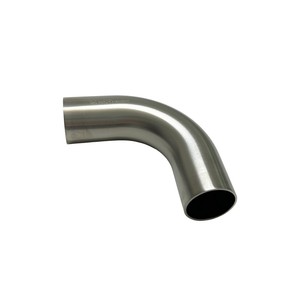
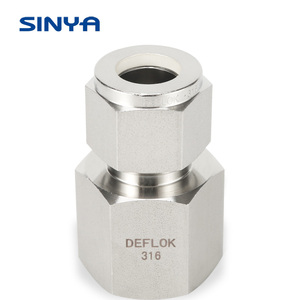
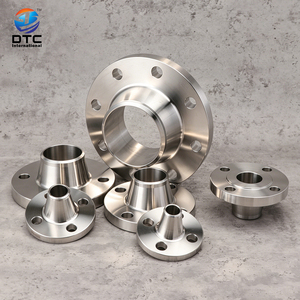
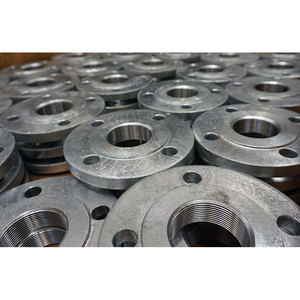
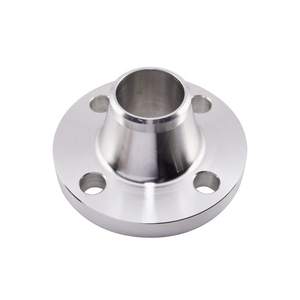
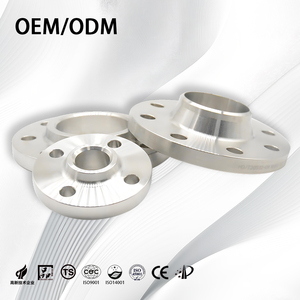
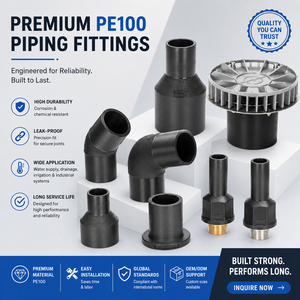
A comprehensive examination of geometric tolerances, dual-fillet weld integrity, and hydro-mechanical behavior in humid, saline tropical operations.
A Slip On Flange (SOF), standardized globally under ASME B16.5, DIN EN 1092-1 Type 12, and BS 4504, features an inside diameter deliberately machined slightly larger than the outside diameter of the matching conduit. This intentional dimensional margin allows the pipe to slide directly into the flange bore prior to attachment. In contrast to Weld Neck (WN) flanges, which necessitate full-penetration butt-welding against a matched bevel, slip on flanges are affixed using two fillet welds: one heavy weld along the external hub collar and a secondary internal seal weld near the pipe's terminus inside the flange face.
From an installation and piping stress analysis standpoint, the slip-on geometry provides notable advantages during fabrication. Because the pipe slips inside the flange cavity, exact field alignment and pipe-cutting lengths are significantly less demanding than the strict tolerances required by butt-weld designs. Alignment errors can be compensated for during dry-fitting, drastically reducing shop labor overhead and turnaround time in maintenance situations. The design requires a deliberate clearance: the pipe end is kept back approximately 1/16" (1.6 mm) from the flange face. This expansion gap prevents the internal fillet weld from washing across or distorting the finely machined gasket sealing serrations during thermal deposition.
Under cyclic fatigue, pulsating pressure lines, or thermal shock conditions, structural designers calculate slip-on flanges with a calculated stress concentration factor approximately 1.3 to 1.5 times that of a tapered weld neck. Nonetheless, within ASME Class 150 and Class 300 ratings, forged carbon steels (ASTM A105) and low-carbon austenitic stainless steels (ASTM A182 F304L and F316L) provide ample tensile yield and shear limits. With an allowable joint efficiency factored into design calculations, slip on flanges deliver an optimal cost-to-performance ratio across terminal cooling lines, low-pressure vapor headers, gravity-fed storage manifold connections, and shipboard utility services.
How our heavy-duty forged flanges serve the specialized demands of maritime passages, bunkering corridors, and logistics hubs.
The Panama Canal Authority (ACP) operates complex hydraulic systems, water-saving basins, and culvert equalization networks at the Miraflores, Pedro Miguel, and Agua Clara locks. Slip on flanges in carbon steel (ASTM A105 galvanised or coated) and ductile alloys are utilized heavily throughout gravity conduits, raw fresh-water conduits, hydraulic return systems, and atmospheric washdown piping.
Panama is one of the world's highest-volume offshore refueling and marine bunkering junctions. Along the Pacific terminal piers at Balboa and the Caribbean corridors of Cristóbal and Bahia Las Minas, extensive terminal piping transfers Intermediate Fuel Oil (IFO), Marine Gas Oil (MGO), and low-sulfur blends. ASTM A182 F316L and heavy-wall A105 slip-on flanges are deployed across transfer yards.
The Astillero Braswell shipyards and adjacent marine maintenance berths continuously service dry bulk carriers, Neopanamax container ships, and chemical tankers. Quick-turnaround voyage repairs frequently require rapid replacement of ballast lines, bilge drainage spools, cooling water loops, and scrubbers where field cutting and quick fillet welding make slip-on flanges the preferred technical option.
The Instituto de Acueductos y Alcantarillados Nacionales (IDAAN) manages drinking water processing plants (such as Chilibre) and sewage networks servicing Panama City and Colón. F304L stainless and epoxy-coated carbon slip-on flanges are standard for filtration headers, chlorine dosing lines, booster pump skids, and settling tank assemblies.
As the primary logistical trade redistribution hub of the Western Hemisphere, the Colon Free Zone and the Pacific logistics corridor host enormous chilled warehousing, reefer container staging, and food storage facilities. Ammonia-based and secondary glycol chilling circuits use low-temperature A350 LF2 and 304L slip on flanges across large mechanical headers.
Thermal power projects (such as the AES Colón combined-cycle LNG plant) require reliable peripheral utilities, including demoted low-pressure steam blowdown, condenser cooling water, and fuel-gas pre-treatment lines. Slip-on configurations satisfy ASME B31.1 power piping criteria for non-critical cycles, delivering proven dependability.
Strategic investments across the isthmus demand higher metallurgy standards, sustainable maritime adaptations, and regional supply chain resilience.
With global maritime IMO 2030/2050 decarbonization mandates, Panama's port terminals are transitioning to service LNG and green methanol dual-fuel ships. This trend is driving an industry shift from standard carbon steel flanges to low-temperature ASTM A350 LF2 and cryogenic ASTM A182 F316L/F304L slip-on flanges for vapor recovery manifolds and localized terminal transfers.
Recent climate variability has driven the ACP to design massive closed-loop water pumping, reservoir diversion, and deep-well water injection networks to maintain transit draft levels. These large projects require huge quantities of Class 150/300 slip-on flanges (up to 48" using ASME B16.47 Series A/B) that facilitate straightforward field tie-ins on massive raw water conduits.
Global supply disruptions have prompted Latin American manufacturing and processing industries to adopt nearshoring models centered around Panama's Free Trade Zones. Industrial processing skids, fire-protection deluge manifolds, and chemical storage depots are being prefabricated locally, accelerating standard catalog slip-on flange consumption across the region.
A quick-reference engineering matrix to align project datasheets with international design and testing codes.
| Flange Dimension Standard | Material Specification | Nominal Pipe Size (NPS) | Pressure Class / Rating | Facing & Surface Finish | Typical Panamanian Application |
|---|---|---|---|---|---|
| ASME B16.5 | ASTM A105 / A105N (Carbon) | 1/2" to 24" | Class 150, 300, 600 | RF (125-250 AARH Serrated) | Bunkering lines, utility headers, ballast manifolds |
| ASME B16.5 | ASTM A182 F304L / F316L | 1/2" to 24" | Class 150, 300 | RF (Smooth or Serrated) | Seawater cooling, chemical docks, sanitary washdown |
| ASME B16.47 Series A / B | ASTM A105 / A350 LF2 | 26" to 60" | Class 150, 300 | RF / Flat Face (FF) | Canal water basins, drainage sluice conduits, cooling towers |
| EN 1092-1 (Type 12) | P245GH, P250GH, 1.4404 | DN 15 to DN 1200 | PN 6, PN 10, PN 16, PN 25 | Type B1 Raised Face | European-built dredging vessels, pump modules |
| ASME B16.5 | ASTM A350 LF2 (Low Temp) | 1/2" to 24" | Class 150, 300, 600 | RF / RTJ (Groove) | Refrigerated LPG/LNG utilities, cold storage headers |
| MSS SP-44 / API 605 | ASTM A694 F52 / F60 / F65 | 12" to 36" | Class 300, 600 | RF (High Yield) | Trans-Panama pipeline crude transfer and pumping hubs |
Combining heavy forging heritage since 1991 with direct sea-freight logistics into the ports of Balboa and Manzanillo.
Operates under an ISO 9001 certified quality management system. Certified and audited by Engineers India Limited (EIL), Indian Boiler Regulations (IBR), with project supply records for major international oil & gas operators.
Every single slip on flange carries clear die-stamp markings indicating diameter, rating, material heat number, and standard. Shipped with EN 10204 3.1 Mill Test Certificates directly verified back to the original furnace melt.
Our flanges undergo anti-rust chemical immersion, receive protective plastic face caps, and are packed into heat-treated, fumigated ISPM-15 wooden crates built to endure ocean transit and tropical coastal storage without oxidation.
Equipped with 11+ in-house testing rigs, including Positive Material Identification (PMI spectrometers), ultrasonic thickness testing, hydrostatic test stands, magnetic particle inspection, and Charpy impact testers.
Beyond stock ASME B16.5 dimensions, our closed-die and open-die forging shops produce tailored flange thicknesses, non-standard pilot spigots, special drilling patterns, and reducing slip on variants according to engineered client drawings.
Operating as a Government of India recognized export house, our dedicated export documentation teams routinely arrange frictionless multimodal container consignments direct to Puerto de Balboa (Pacific) and Puerto Cristóbal/Manzanillo (Atlantic).
Practical answers covering commercial imports, certification, weld procedures, and logistics for engineers and purchasing agents.
Slip-on flanges do not require exact pipe end beveling and can easily accommodate minor pipe length variations during field assembly. On marine bunkering docks, this drastically shortens welding turnaround. In addition, slip on flanges have lower initial procurement costs while remaining reliable for standard Class 150/300 fuel handling systems.
Yes. Every batch is supplied with an EN 10204 3.1 Mill Test Certificate containing complete chemical composition and mechanical properties tied directly to the stamped heat number. For Panama Canal Authority (ACP) tenders or sovereign civil works, we routinely host third-party inspection agencies such as SGS, Bureau Veritas, DNV, or Lloyd's Register prior to shipment.
All carbon steel flanges are coated with clear anti-rust lacquer or rust-preventative oil, or hot-dip galvanized per ASTM A153 where specified. Flange faces are shielded with heavy-duty plastic protectors, and cargo is wrapped in moisture-barrier vapor films inside fumigated solid-wood maritime crates meeting ISPM-15 standards.
Yes. Due to European shipbuilders, French legacy canal assets, and German dredging machinery operating across the isthmus, we stock and manufacture both ASME B16.5 / B16.47 standards (Class 150 to 2500) and European EN 1092-1 / DIN standard slip on and plate flanges (PN 6 to PN 100), ensuring complete compatibility across legacy and modern operations.
Per ASME Section IX and B31.3 codes, slip on flanges must be welded both externally at the hub and internally near the face. The pipe end should stop approximately 1/16" (1.6 mm) from the flange face before laying down the internal fillet weld to safeguard against thermal warping of the raised face gasket seat.
Sea freight shipments leaving Mumbai (Nhava Sheva Port) typically arrive at Panamanian container ports (Balboa on the Pacific or Manzanillo/Colón on the Caribbean) in approximately 28 to 35 days, depending on transshipment routing. Urgent maintenance components can be dispatched via air freight to Tocumen International Airport (PTY) within 5 to 7 business days.
From one-off voyage repairs in Balboa to multi-container lock infrastructure expansions, our engineering and export team provides competitive manufacturer-direct pricing, certified test reports, and dedicated technical support.
Contact Us