Procure certified components manufactured with precise wall clearances, dual chemical traceabilities, and full heat treatment documentation for mission-critical assemblies.
A deep mechanical overview for piping stress engineers, naval architects, and mechanical contractors managing complex thermal or fluid cycles.
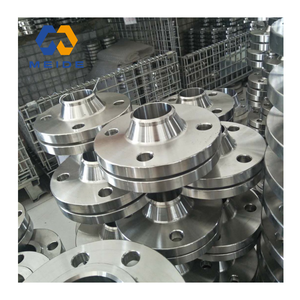
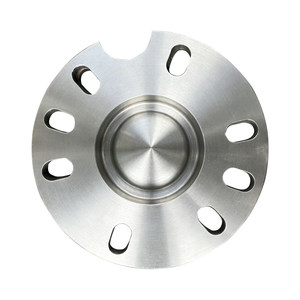
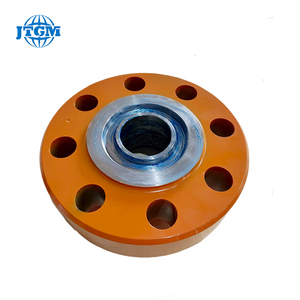
A Lap Joint Flange (LJ Flange) operates distinctly from integral slip-on or weld neck configurations. Engineered as a two-component mechanical union comprising a backing loose ring flange and a butt-welded lap joint stub end (Type A or Type B per ASME B16.9), this assembly prevents torsional stress transmission through the pipeline during bolt torquing. The backing flange sits freely along the pipe axis, rotating unobstructed around the cylindrical hub of the stub end.
Because the metallic backing ring never comes into direct physical contact with the operational media traversing the pipe interior, specifying engineers can combine dissimilar metallurgy: selecting an economical ASTM A105 carbon steel or ductile iron backing flange matched with an ultra-pure 316L, 904L, or Hastelloy stub end. This delivers superior chemical resistance on internal wet surfaces while dramatically reducing structural capital expenditure across large installations.
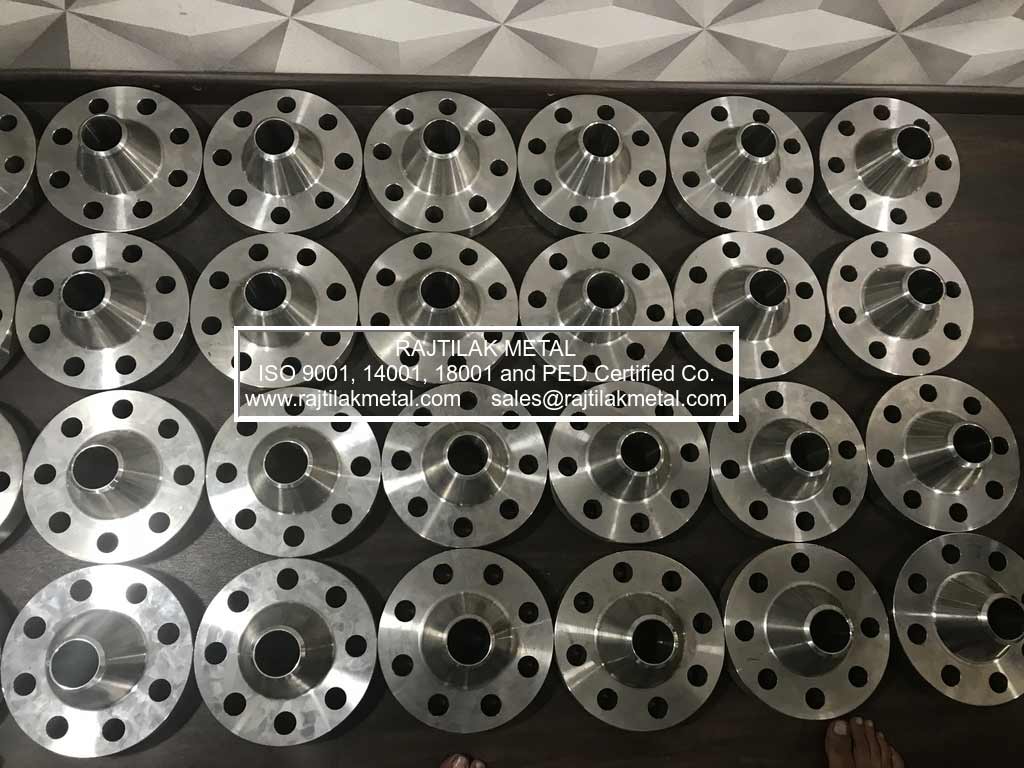
One of the primary failure modes during field erection of industrial piping spools in congested utility chases is circumferential bolt-hole misalignment. Fixed flanges require rigorous pre-welding angular orientation; an offset as slight as 1.5 degrees can freeze stud insertion or cause high bending moments across downstream valve stems.
Lap Joint Flanges resolve angular deviation entirely by permitting 360-degree rotational latitude right up to the final gasket seating phase. When piping runs through bulkhead penetrations or within modular skid framing common in modern plant fabrication, mechanical crews can pivot the bolt circle effortlessly, ensuring even torque distribution across spiral-wound or PTFE gaskets without introducing residual torsional prestress into butt welds.
Furthermore, during routine maintenance inspection regimes—particularly where corrosion, erosion, or fouling demands frequent uncoupling—the ease of sliding back the loose ring permits fast visual inspection of the pipe lip without requiring hydraulic spreader jaws.
Analyzing operating environments across Greater Boston, Cambridge life sciences corridors, and coastal maritime operations.
In Kendall Square, Cambridge, and South Boston Waterfront biopharma complexes, ultra-clean CIP/SIP process lines require frequent sanitization. Lap joint assemblies enable rapid modular cleanroom skid swap-outs, utilizing electro-polished 316L stub ends with lightweight, corrosion-protected backing rings.
Ship repair installations and coastal ballast systems operating in Quincy, Charlestown Navy Yard, and East Boston face severe seawater galvanic action. Our bronze and CuNi (90/10) stub ends with epoxy-coated forged carbon backing rings prevent rapid joint corrosion while dampening propulsion vibration.
Boston's vast district heating grids and university campus steam loops operate under continuous thermal expansion cycles. Lap joint connections facilitate zero-torque joint assembly in narrow underground utility tunnels, reducing maintenance downtime during emergency winter repairs.
Key shifts observed among regional engineering firms, mechanical estimators, and industrial project directors.
The Commonwealth of Massachusetts has instituted stringent clean energy mandates, directly driving extensive thermal efficiency retrofits throughout historic buildings and industrial manufacturing centers across Middlesex and Suffolk counties. Piping networks are shifting from obsolete heavy-wall threaded iron toward thin-wall stainless steel (Schedule 10S and 5S) matched with Class 150 lap joint stub ends.
This metallurgical transition delivers two decisive operational advantages: it reduces overall suspended piping weight inside aging structural envelopes, and it allows contractor workforces to perform faster field alignments without open-torch heating or awkward hydraulic alignment clamps in tight, confined municipal spaces.
Simultaneously, regional chemical and advanced manufacturing operations are standardizing on dual-certified materials—such as 316/316L stainless steel and Duplex 2205—ensuring compliance with both low-carbon weldability guidelines and elevated mechanical yield limits under fluctuating temperature loads.
Comprehensive manufacturing parameters compliant with ASME B16.5, ASTM A105, ASTM A182, and EN 1092-1 Type 02.
| Nominal Size | Pressure Class | Backing Material | Stub End Material | Facing Radius (r) | Primary Inspection Protocol |
|---|---|---|---|---|---|
| 1/2" to 2" | Class 150 / 300 | ASTM A105 / A350 LF2 | ASTM A182 F304L/F316L | 3.0 mm (±0.5) | PMI Spectrometry + Hydrostatic Proof |
| 2-1/2" to 6" | Class 150 / 300 | A105 / P250GH / WCB | 316L / Duplex 2205 | 8.0 mm (±0.8) | Ultrasonic Inspection + Visual B16.5 |
| 8" to 12" | Class 150 / 300 / 600 | ASTM A105 / A36 Plate | ASTM A403 WP316L / 904L | 11.0 mm (±1.0) | Magnetic Particle (MT) + Radiography |
| 14" to 24" | Class 150 / PN 16 | Forged Carbon / Corten | Hastelloy C276 / Titanium Gr 2 | 13.0 mm (±1.5) | Liquid Penetrant (PT) + Heat Trace |
| 26" to 48" | ASME B16.47 Ser. A | Forged Normalized Carbon | High Yield WPHY 52/60/65 | Engineered Spec | EN 10204 3.1 MTC Heat Lot Certification |
Combining heavy forging capability with stringent metallurgical controls certified to global EPC standards.
Established in 1991, we operate as an ISO 9001, EIL, and IBR approved production enterprise delivering heavy industrial forgings and ASME components to global energy and chemical complexes across 15+ nations.
Every single flange and stub end carries physical laser or roll-stamped heat numbers directly linked to raw melt lab chemical analyses and mechanical tensile testing sheets supplied with shipment files.
With 11 dedicated mechanical testing apparatuses, optical spectrometers, and CNC boring mills, we produce standard lap joint flanges as well as non-standard custom diameters up to 60 inches tailored to engineering prints.
Critical metallurgical, logistics, and dimensional answers to streamline vendor qualification and project requisition.
While both slip over pipe, a slip-on flange is fillet-welded at both the hub and internal throat, making it a permanent part of the pipe spool with its face acting as the gasket seal. A lap joint flange is never welded to the pipe; it rotates freely on the outside of a lap joint stub end, which is butt-welded to the line. The gasket seals directly against the stub end's raised lap, making the lap joint assembly ideal for systems requiring frequent dismantling or quick bolt alignment.
Yes. This is one of the most cost-effective piping engineering practices. Since only the stub end encounters the internal process fluid, you can specify high-grade alloys (e.g., 304L, 316L, 2205) for the wetted stub end and economical ASTM A105 carbon steel for the loose backing flange. In marine or coastal environments such as Boston Harbor, we recommend zinc plating, hot-dip galvanizing, or epoxy coating on the carbon steel backing ring to resist salt-air atmospheric corrosion.
Per ASME B16.5 standards, the lap joint bore features a designated chamfer or corner radius (r) machined to accommodate the fillet radius of the ASME B16.9 stub end. Our CNC turning centers are programmed with automated tool monitoring to ensure that the internal bore radius meets exact tolerance thresholds, preventing any point-loading or cocking of the flange during full bolt torque load.
All orders are delivered with comprehensive EN 10204 3.1 Inspection Certificates specifying exact chemical ladle analysis, yield strength, tensile elongation, Charpy V-notch impact values (for low-temperature A350 LF2 grades), and hardness testing. Third-party inspection (TPI) by agencies such as DNV, Lloyd's Register, or Bureau Veritas can be coordinated directly at our manufacturing facilities.
We maintain an extensive rolling inventory of forged blanks in standard sizes from 1/2" to 24" across Class 150 and Class 300 ratings. Standard machining and dispatch can occur within expedited windows, with container or air freight routes terminating directly at the Port of Boston (Conley Terminal) or Boston Logan International Airport for mission-critical shutdowns.
Consult with our engineering estimators today to review project drawings, verify ASME/EN pressure ratings, and receive competitive direct-factory quotations with complete MTC packages.