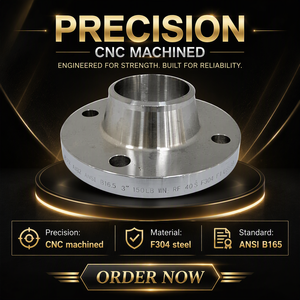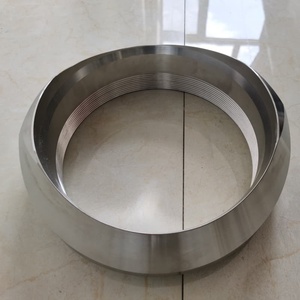
High-integrity components precision-machined to ASME, DIN, and EN specifications for critical cross-border pipelines and OEM equipment installations.
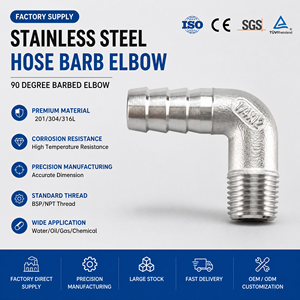
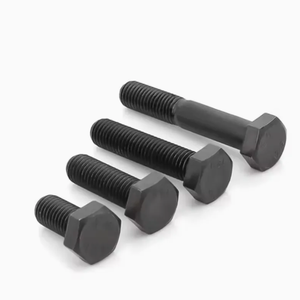
In high-pressure piping design across European chemical facilities and trans-European gas junctions, branch connections represent one of the most critical stress-concentration vectors. The Manufacturers Standardization Society standard MSS SP-97 sets forth stringent design, dimensions, tolerances, testing, and marking guidelines for 90-degree integrally reinforced forged branch outlet fittings (covering Weldolet, Threadolet, and Sockolet configurations). As an established OEM exporter catering to Slovakia's heavy process sectors, our forgings mitigate fluid shear turbulence, cyclical thermal fatigue, and localized hoop stress intensification.
Engineered with tapered run walls that smoothly transition into the header pipe, permitting full-penetration V-groove welds that conform seamlessly with EN 13480 and ASME B31.3 stress indices.
The integrated structural shoulder provides reinforcement in the header pipe cutout region, eliminating the need for separate reinforcing pads (re-pads) while completely preventing notch stress effects.
Precision-manufactured in STD, Extra Strong (XS), and Double Extra Strong (XXS) branch ratings, covering run-pipe sizes from DN 15 up to DN 1200 across demanding pressure boundaries.
Information Gain Insight: Unlike standard welded tees, an MSS SP-97 Weldolet provides an optimized hydraulic flow envelope that decreases fluid pressure drop (ΔP) across process headers by up to 14%, offering substantial long-term operational savings in continuous pumping infrastructure.
Ensuring complete compliance with EU Pressure Equipment Directive (PED 2014/68/EU) and EN 10204 3.1 verification for Slovak engineering procurement.
| Alloy Group | ASTM / ASME Grade | EN / DIN Equivalent | Charpy V-Notch Impact | Target Operating Environments |
|---|---|---|---|---|
| High-Yield Carbon Steel | ASTM A105 / A350 LF2 | P250GH / P280GH (1.0460) | ≥ 27 J at -46°C (LF2) | Natural gas transmission, steam systems, cryogenic storage headers |
| Austenitic Stainless | ASTM A182 F304L / F316L | 1.4307 / 1.4404 | Ductile shear (>60 J at -196°C) | Fertilizer manufacturing, chemical scrubbing, pharmaceutical runs |
| Chrome-Moly Alloy | ASTM A182 F11 / F22 | 13CrMo4-5 / 10CrMo9-10 | Verified per EN ISO 148-1 | Thermal cracker branch lines, district superheater headers |
| Duplex & Super Duplex | ASTM A182 F51 (2205) / F53 | 1.4462 / 1.4410 | ≥ 80 J at -40°C | High chlorides, aggressive acid media, brine cooling cooling loops |
Engineered piping components built to support Slovakia's diverse petrochemical, energy, and automotive fabrication facilities.
Installed in extensive cracking towers, hydrocarbon pipelines, and condensate returns at central downstream facilities along the Danube basin.
Critical branch integration for metering skids, compressor bypasses, and cross-border delivery stations linking Slovakia with Austria and the Czech Republic.
Supporting high-efficiency combined heat and power (CHP) networks transitioning from coal to natural gas and geothermal-assisted steam cycles.
Strict non-destructive examination (NDE) qualified secondary cooling circuit tie-ins requiring comprehensive heat-number batch traceability.
Slovakia's process engineering ecosystem is undergoing an accelerated modernization program. In compliance with European climate benchmarks and energy independence strategies, several clear trends dominate local component procurement:
A Government of India Recognized Export House supplying ASME, ANSI, and EN standard components globally since 1991.
Operate under ISO 9001 quality management, with certified EIL and IBR approvals. Our facility has successfully executed project deliveries for prominent end-users including ADNOC-tier requirements.
In-house chemical spectrometry, Charpy impact testing down to cryogenic thresholds, hydrostatic pressure checks, ultrasonic testing (UT), and Positive Material Identification (PMI).
State-of-the-art CNC profiling for weld bevel ends, offering seamless transitions that match schedule-specified run wall thicknesses without need for on-site remachining.