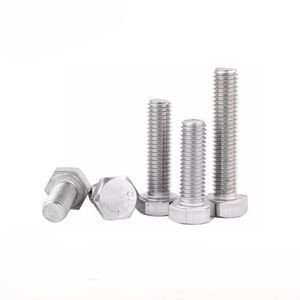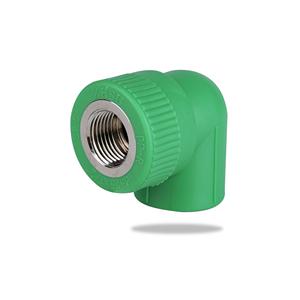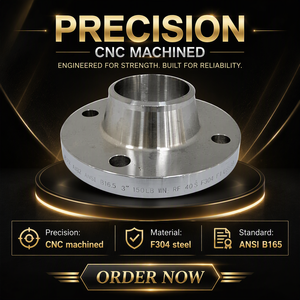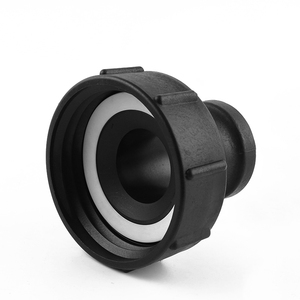
Integrate our precision forged branch outlets, buttweld components, and certified hardware directly into your industrial line architecture.
A rigorous metallurgical overview of integrally reinforced forged branch connections under MSS SP-97 and ASME B16.11 standards.
A Sockolet (Socket Weld Outlet) provides an integrally reinforced, 90-degree branch connection engineered for high-pressure industrial pipelines where stress concentration and turbulent fluid dynamics preclude the use of conventional fabricated branch pads or standard reducing tees. Originally conceived and standardized within the manufacturing scope of MSS SP-97, a Sockolet merges the structural continuity of a contoured self-reinforcing run curvature with an inner female socket weld junction governed by ASME B16.11. Unlike Weldolets, which terminate in a beveled butt-weld geometry, the Sockolet accommodates plain-end pipe by utilizing a recessed socket that supports fillet weld attachment. This structural arrangement dramatically stabilizes small-bore piping tie-ins across chemical plants, refining trains, and thermal infrastructure.
In typical high-temperature or severe cyclic service environments, premature line fracture often originates at branch junctions where uneven bending moments and internal thermal fatigue concentrate. Conventional welding tees require multiple volumetric welds—two circumferential butt welds on the header and one on the branch—increasing project radiography requirements and potential sites for volumetric inclusions. The Sockolet completely eliminates two transverse butt-weld joints. Its engineered base contours precisely track the run pipe’s outer radius, maintaining full cross-sectional reinforcement in direct adherence to the area-replacement principles articulated in ASME B31.3 Section 304.3.
During the physical fabrication and welding protocol of a Sockolet, welders must observe the mechanical necessity of an expansion gap. As dictated by welding specifications, a minimum 1/16-inch (1.6mm) axial clearance must be preserved between the pipe terminus and the internal ledge of the fitting socket prior to initiating the external fillet weld. This clearance mitigates severe residual stresses caused by differential thermal expansion during the heat cycle, preventing micro-fissuring and cyclic fatigue cracks that occur when bottomed-out pipes attempt to expand longitudinally against a rigid forged shoulder.
| Class Rating | Header (Run Pipe) OD | Branch Dimension Scope | Standard Wall Equivalent | Metallurgical Designations |
|---|---|---|---|---|
| Class 3000 (3M) | 1/2" (DN15) – 36" (DN900) | 1/8" (DN6) – 4" (DN100) | Matches Schedule 80 / XS Pipe | ASTM A105, A182 F304L/F316L, A350 LF2 |
| Class 6000 (6M) | 1/2" (DN15) – 36" (DN900) | 1/8" (DN6) – 2" (DN50) | Matches Schedule 160 Pipe | ASTM A182 F51 (Duplex 2205), F53 (2507) |
| Class 9000 (9M) | 1/2" (DN15) – 24" (DN600) | 1/2" (DN15) – 1-1/2" (DN40) | Matches Schedule XXS (Double Extra) | Nickel Alloys (Alloy 625, Hastelloy C276) |
Serving the strategic modernization of Portugal’s maritime processing, deep-sea logistics, and green chemical infrastructures.
At the Port of Sines industrial basin, refining complexes and international LNG regasification facilities require continuous cryogenic and hydrocarbon run offshoots. Class 3000 and 6000 ASTM A350 LF2 low-temperature carbon steel and A182 F316L Sockolets are heavily specified across off-site storage manifolds, liquid natural gas loading arms, and vapor collection systems.
Portugal stands as an influential pulp and paper manufacturing leader in Europe. The corrosive black liquor recovery boilers and bleached chemical wood-pulp processing circuits located in Setúbal, Figueira da Foz, and Aveiro require piping fittings resistant to pitting and intergranular failure. Our 254 SMO and Duplex 2205 Sockolets secure high-vibration sensor taps.
Aligned with Portugal’s Plano Nacional de Energia e Clima (PNEC 2030), green hydrogen generation facilities via water electrolysis demand ultra-clean fitting chemistries. Zero-leakage forged Sockolets prevent micro-molecular leakage under pressure, while reverse osmosis coastal desalination units deploy our Super Duplex PREN>42 branch outlets.
Understanding the intersection of European Union technical mandates, traceability criteria, and carbon-efficient supply chains.
Industrial installations throughout the European Union mandate strict adherence to the Pressure Equipment Directive (PED). Sockolet fittings supplied to Portuguese engineering contractors must possess certified EN 10204 3.1 inspection documentation with full traceability to prime ladle refining, chemical heat numbers, and impact test data (Charpy V-Notch at sub-zero thresholds).
With the phased implementation of the Carbon Border Adjustment Mechanism (CBAM), Portuguese industrial procurers require detailed Scope 1 and Scope 2 embedded emission reporting on imported forged components. Our Chinese manufacturing plants employ closed-die precision electric-induction forging and energy-efficient heat treating, significantly cutting unit embedded emissions.
Offshore marine tie-backs and regional gas infrastructure specify that fittings must withstand sulfide stress cracking (SSC) and stress corrosion cracking (SCC). Our low-carbon stainless and nickel-alloy Sockolets operate below maximum Rockwell HRC hardness limits via solution annealing, guaranteeing full resistance against sour, wet-H2S operating matrices.
Combining three decades of heavy forging mastery, state-of-the-art testing, and frictionless export handling to Lisbon, Leixões, and Sines.
We exclusively select fully degassed, vacuum-refined prime billets with restricted sulfur and phosphorus content to guarantee flawless microstructural density across each finished branch outlet.
Equipped with high-precision CNC toolsets, our run-side saddles achieve microscopic conformity to pipe radii, reducing on-site bevel prep, field grinding, and high-low mismatch during installation.
Each order undergoes Positive Material Identification (PMI), ultrasonic non-destructive testing (UT), magnetic particle inspection (MT), and optical emission spectrographic verification before crating.
Handling CIF and DDP terms directly into the ports of Leixões (Porto) and Sines with certified export-grade treated fumigated wooden crates, desiccated moisture wrap, and full customs packs.
Key technical and logistical questions answered for project managers, pipe fitters, and Iberian procurement specialists.
Connect directly with our engineering sales group. Obtain itemized technical offers, mill test portfolios, and complete dimension sheets customized to your project specifications.
Get Catalog