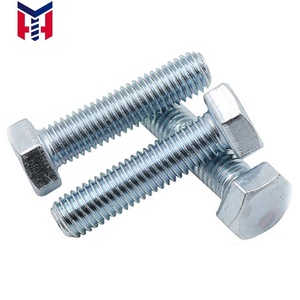

Fully compliant with ASME B16.9, ASME B16.5, DIN, and KS (Korean Industrial Standards) with full 3.1 Traceability.
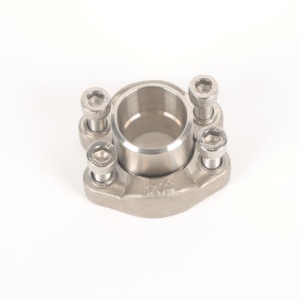
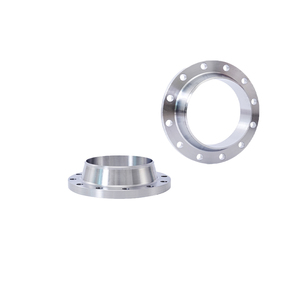
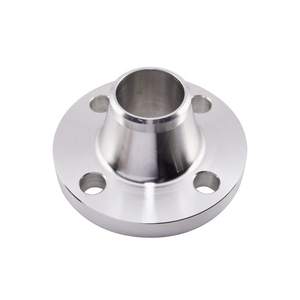
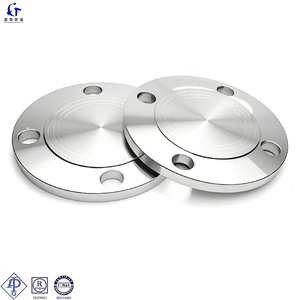
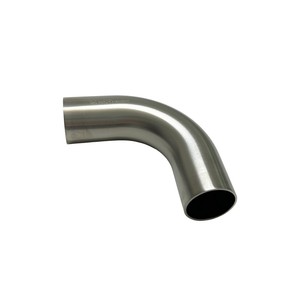
Backing major EPC contracts across South Korea and East Asia with uncompromising laboratory validation and on-schedule maritime dispatch.
Operating History (30+ Years)
In-House NDT & Mechanical Testing Units
PMI & Dimensional Verification
On-Time Port Delivery Execution
In high-stakes industrial engineering, pipeline reliability hinges directly on metallurgical integrity at points of directional, diameter, or branch transition. ASTM A234 Grade WPB represents the definitive standard specification for piping fittings of wrought carbon steel and alloy steel for moderate and elevated temperature service. As industrial EPCs across the Republic of Korea (ROK) continue delivering massive energy, offshore gas, and chemical refining structures, understanding the nuances of ASTM A234 WPB procurement—from steel chemistry controls to stringent dimensional tolerances—is pivotal to avoiding pipeline rupture, localized hydrogen attack, and unplanned operational downtime.
ASTM A234 WPB fittings fabricated for critical service must maintain rigorous control over elemental compositions. In standard processing, ASTM A234 WPB mandates a maximum carbon content of 0.30%, manganese between 0.29% and 1.06%, phosphorus maximum of 0.050%, sulfur at 0.058% maximum, and silicon at minimum 0.10%. However, Korean EPC engineering practices (frequently driven by KEPCO, Hyundai E&C, Samsung E&A, and GS E&C engineering standards) enforce tighter metallurgical bounds to assure maximum weldability and resist cracking under cyclical thermal fatigue.
To eliminate preheating necessities in field conditions and mitigate Hydrogen-Induced Cracking (HIC) or Sulfide Stress Corrosion Cracking (SSCC), leading international manufacturers supply ASTM A234 WPB with restricted Carbon Equivalent (CE) thresholds typically governed by the IIW formula:
CE = C + Mn/6 + (Cr + Mo + V)/5 + (Ni + Cu)/15 ≤ 0.42% (or 0.40% for severe wet sour applications)
Controlling residual tramp elements (such as copper, nickel, chromium, and molybdenum) prevents local hardening in the Heat Affected Zone (HAZ) during high-throughput field orbital welding, a major consideration in Korean high-speed modular piping prefabrication.
| Standard Parameter | ASTM A234 WPB Standard Scope | Enhanced Korean EPC / Sour Service Spec | Test / Verification Method |
|---|---|---|---|
| Carbon (C) Max | 0.30% | 0.20% – 0.23% Max | Spectrometry / Optical Emission (OES) |
| Manganese (Mn) | 0.29% – 1.06% | 0.80% – 1.05% (Optimized) | EN 10204 3.1 Traceable Melt |
| Sulfur (S) Max | 0.058% | ≤ 0.005% (Deep Desulfurization) | Combustion Analysis (LECO) |
| Yield Strength (Min) | 240 MPa (35 ksi) | 240 – 320 MPa (Yield-to-Tensile ≤ 0.85) | ASTM A370 Tensile Testing |
| Tensile Strength | 415 – 585 MPa (60 – 85 ksi) | 450 – 560 MPa | Full Section / Transverse Specimen |
| Impact Energy (Charpy V-Notch) | Optional under standard A234 | Min. 27J @ -20°C (or -29°C per A333 Grade 6 equivalent) | ISO 148-1 / ASTM E23 Impact Testing |
ASTM A234 WPB buttweld fittings are categorized into seamless (fabricated from seamless carbon steel pipe or hollow billet via hot-push mandrel or cold drawing with subsequent normalization) and welded (formed from ASTM A516 grade plates with subsequent longitudinal seam submerged arc welding and 100% radiographic inspection). For offshore topside modules and high-pressure steam distribution headers across Korea's industrial power plants, seamless buttweld fittings up to 24 inches NPS are prioritized to eliminate joint efficiency penalties (ASME B31.3 joint quality factor E = 1.0).
Every hot-formed elbow, tee, concentric reducer, eccentric reducer, and end cap must undergo rigorous normalizing or stress-relieving heat treatments. This thermal cycle recrystallizes the grain structure deformed during extrusion, relieving residual stresses and ensuring uniform ferrite-pearlite matrix density with a fine grain size of ASTM No. 7 or finer.
The operational environment in the Korean domestic market demands specialized product compliance across distinct geographic clusters:
Ulsan, Onsan, and Daesan Petrochemical Complexes: Refining corridors operated by majors like SK Energy, S-Oil, and GS Caltex process heavy, sulfurous crude feeds. ASTM A234 WPB fittings installed here demand NACE MR0175/ISO 15156 compliance, restricted hardness (≤ 22 Rockwell C / 237 HBW), and ultrasonic thickness measurement to ensure integrity against high-temperature hydrocarbon flow and hydrogen embrittlement.
Geoje, Busan, and Mokpo Shipbuilding Corridors: Home to HD Hyundai Heavy Industries, Samsung Heavy Industries (SHI), and Hanwha Ocean. Marine auxiliary cooling lines, ballast piping, and fuel gas piping systems require carbon steel fittings that withstand maritime atmospheric corrosion. Here, hot-dip galvanizing per ISO 1461 or internal epoxy cladding is paired with mill test certificates validated to EN 10204 3.1 and marine classification societies (KR, DNV, ABS, Lloyd's Register).
Combined Cycle & Nuclear Balance of Plant (BOP): Korean utility steam generation lines demand A234 WPB butt weld components tested for elevated-temperature tensile yield and strict hydrostatic burst thresholds to support power plant uptime.
How the green transition, modular fabrication, and global EPC projects are transforming product specifications.
Korea's "Carbon Neutrality 2050" roadmap is catalyzing upgrades in gas distribution lines. Retrofitting lines for hydrogen blending (up to 20%) requires ASTM A234 WPB fittings with ultra-low phosphorus and sulfur, preventing sub-surface microporosity and hydrogen-induced cracking in pressurized pipelines.
Shipyards and industrial builders in Busan and Yeosu increasingly favor modular plant skids. This shifts demand towards tight-tolerance bevel preparation (ASME B16.25 Compound Bevels) and strict dimensional tolerances (±1.5mm wall variance) for seamless robotic orbital welding without manual re-facing.
Korean procurement authorities reject material with broken documentation chains. Supply chains now require digital heat tracing, connecting the ASTM A234 WPB raw billet melt origin, forging temperature record, and final hydrostatic verification directly to barcode/QR mill tags.
Combining three decades of Indian manufacturing pedigree with global approvals and international project logistics.
With more than three decades of audited manufacturing excellence, we hold ISO 9001 quality certifications, EIL (Engineers India Limited) and IBR approvals, and direct supply records across Middle Eastern and East Asian megaprojects.
All carbon steel billets and heavy plates are procured exclusively from prime primary mills in India, South Korea (POSCO), and Japan, ensuring complete chemical consistency, clean grain boundaries, and full EN 10204 3.1 certification.
Equipped with advanced CNC lathes, automated beveling lines, and closed/open die forging presses capable of fabricating custom-engineered components up to 60" NPS, heavy wall thickness (Schedule XXS), and specialized branch saddles.
Full export documentation expertise, seaworthy palletized fumigated packaging, and established ocean freight corridors connecting Mumbai ports directly to Busan New Port and Incheon, guaranteeing reliable lead times.
Essential technical clarifications for EPC engineers, sourcing managers, and QA/QC inspectors.
Connect directly with our engineering sales desk for ASTM A234 WPB buttweld fittings, matching ASME B16.5 flanges, and project-specific bill of material estimates.