
Precision forged flanges, engineered high-tensile bolting, and heavy wall fluid transport fittings delivered with full material traceability and complete metallurgical verification.
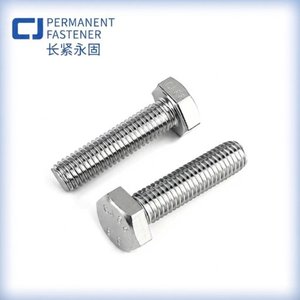
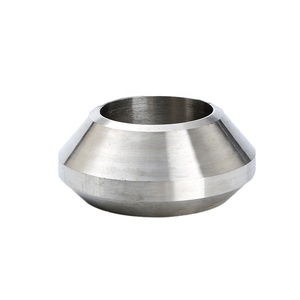
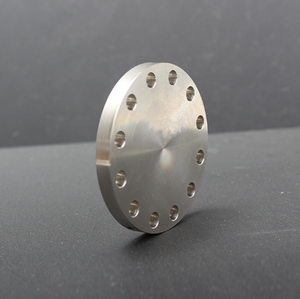
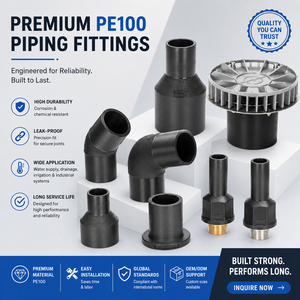
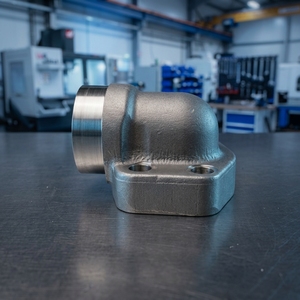
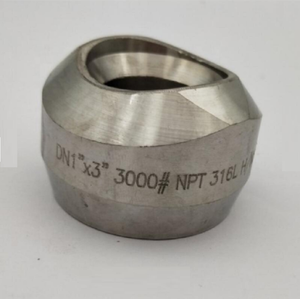
ASTM A105 (ASME SA-105) is the preeminent standard specification for forged carbon steel piping components intended for ambient- and higher-temperature service in pressurized systems. Operating across demanding piping classes—from ASME B16.5 Class 150 through Class 2500 and ASME B16.47 Series A & B (up to 60 inches)—our forgings provide the requisite grain flow orientation, structural soundness, and impact resistance that non-forged bar stocks or cast alternatives fail to deliver.
For critical procurement officers, EPC engineering firms, and industrial maintenance directors serving the Peruvian industrial landscape, selecting high-integrity carbon steel flanges is central to mitigating disaster risks in high-stress, abrasive, or cyclic operations. Our normalized ASTM A105 (often designated as ASTM A105N) forgings undergo rigorous heat treatment—heating between 880°C and 920°C followed by controlled air cooling—which homogenizes grain structures, elevates notch toughness, and relieves residual forming stresses.
| Property / Element | ASTM A105 Standard Criteria | Normalized (A105N) Delivery Value | Engineering Significance for Peru Operations |
|---|---|---|---|
| Carbon (C) Max | 0.35% max | 0.18% - 0.22% (Controlled) | Prevents brittle microstructures and optimizes on-site field weldability. |
| Manganese (Mn) | 0.60% - 1.05% | 0.85% - 0.95% | Provides solid-solution strengthening and hardness depth. |
| Carbon Equivalent (CE) | ≤ 0.45 (per ASME B31.3 / NACE) | ≤ 0.41 Typical | Drastically lowers pre-heating thresholds and prevents Cold Cracking (HIC). |
| Tensile Strength | 70,000 psi [485 MPa] min | 530 - 580 MPa | Maintains containment under sudden cyclic surging in slurry pipelines. |
| Yield Strength | 36,000 psi [250 MPa] min | 290 - 340 MPa | High resistance to mechanical displacement in seismic mining regions. |
| Charpy V-Notch Impact | Not mandated unless specified | ≥ 27 Joules at -29°C / -46°C (LF2 opt.) | Guarantees ductility in high-altitude Andean environments (>4,000m). |
To prevent localized galvanic failure and excessive gasket relaxation, our machining facilities utilize CNC lathes to produce serrated concentric or spiral serrations conforming precisely to ASME B16.5 clause 6.4.5, retaining a surface roughness between Ra 3.2 µm to 6.3 µm (125 µin to 250 µin) for standard Raised Face (RF) flanges. For severe gas containment, our Ring Type Joint (RTJ) grooves are machined to absolute pitch tolerances with root radius finishing that prevents ring gasket binding.
From high-altitude copper concentrates in the Andes to coastal refinery terminals, our ASME B16.5 A105 forgings are engineered for Peru’s unique industrial geography.
Operating in high-altitude open-pit and underground mining operations across Moquegua, Arequipa, Ancash, and Cajamarca (including large facilities such as Quellaveco, Cerro Verde, and Antamina).
Servicing natural gas gathering, fractionation, and transmission spanning the Cusco jungle basins, over the Andes cordillera, down to the Pisco liquefaction terminal.
Facilitating aggressive coastal installations at the Port of Callao, Matarani, and the massive Mega-Port of Chancay logistics terminal development.
Strategic purchasing in Peru has moved beyond low-bid sourcing to value-engineered supply chains focused on lifecycle reliability and environmental safety.
With OSINERGMIN and OEFA strictly auditing mining pipelines and hydrocarbon distribution, Peruvian plant operators mandate zero-fugitive-emission flange assemblies utilizing precision-machined gasket faces.
Standard "as-forged" flanges are increasingly rejected in technical bidding by Peruvian miners. Normalizing (A105N) is now the baseline engineering specification across the Southern Mining Corridor to resist seismic shock loading.
Peruvian engineering audits now mandate QR-coded or deep-stamped EN 10204 3.1 Mill Test Certificates directly matched to individual flange heat numbers, eliminating non-compliant, fraudulent mill runs.
Contractors prefer sourcing integrated piping packages—pairing ASTM A105 flanges with ASTM A193 B7/A194 2H fasteners, MSS SP-97 olets, and ASME B16.9 buttweld fittings—from a single validated manufacturer.
Operating continuously since 1991, our manufacturing enterprise stands as an internationally recognized export house holding certified ISO 9001 quality systems, Indian Boiler Regulations (IBR) approvals, and Engineers India Limited (EIL) certifications. We do not operate as intermediate traders; our direct forging floor integrates comprehensive closed-die and open-die hammer facilities, continuous heat treatment normalizing furnaces, and precision CNC machine shops capable of handling components from 1/2-inch to 60-inch outer diameters.
Every heat lot entering our stockyard undergoes strict optical emission spectrometry (PMI) to verify chemical composition, alongside Rockwell/Brinell hardness testing, Charpy V-notch impact validation, and hydrostatic pressure testing. When exporting to the Peruvian market—specifically transiting to the Port of Callao, Paita, or Matarani—we enforce severe anti-corrosive protocols: rust-preventative oiling, heavy black oxide/bituminous protective coating, hard plastic flange edge protectors, and packaging inside ISPM-15 compliant heat-treated solid timber ocean cases built to withstand dynamic maritime vibration.
Whether your procurement requirements call for standard ASME B16.5 Slip-On Flanges, high-pressure Class 2500 RTJ Weld Necks with custom Schedule 160 or XXS bore configurations, or specialized MSS SP-97 branch outlets, our technical sales desk works side-by-side with your engineering design teams to fulfill the exact pressure-temperature rating requirements of ASME B31.1, B31.3, and B31.8 codes.
Key technical, regulatory, and logistics answers addressing import inquiries across Lima, Arequipa, and Cusco.
The "N" denotes that the carbon steel forging has undergone post-forge normalization heat treatment. While base ASTM A105 permits as-forged conditions for Class 150/300 flanges, Peruvian mining and energy standards universally mandate ASTM A105N for all pressure classes to ensure fine-grained microstructure, uniform yield characteristics, and superior low-temperature Charpy impact performance across high-altitude Andean locations.
Yes. Every consignment is accompanied by a genuine EN 10204 3.1 Mill Test Certificate detailing actual ladle melt chemical analysis, carbon equivalent (CE), tensile strength, yield point, elongation, and Brinell hardness. If mandated by EPC contracts, we coordinate third-party inspection (TPI) through SGS, Bureau Veritas, or TÜV to supply full EN 10204 3.2 certified documentation.
Yes. We manufacture and warehouse complete flange sets, including high-tensile ASTM A193 Grade B7 stud bolts, ASTM A194 Grade 2H heavy hex nuts (in zinc-plated, cadmium-plated, or PTFE-coated finishes), as well as MSS SP-97 weldolets and spiral wound gaskets. Sourcing complete assemblies from one point of origin guarantees dimensional compatibility and verified bolt load calculations.
Flange sealing faces are treated with industrial rust inhibitor compounds and fitted with heavy-duty polyethylene protective caps. The assemblies are then heat-shrink wrapped and packed into heavy-duty ISPM-15 heat-treated fumigated wooden crates lined with moisture-barrier polythene sheeting, preventing salt-air oxidation and mechanical impact damage throughout Pacific maritime shipping.
For standard ASME B16.5 sizes (1/2" to 24", Class 150 to 900) held in our ready stock of over 2,000 metric tons, staging, third-party inspection, and vessel booking requires 7 to 14 business days. Ocean transit time from major Indian ports (Nhava Sheva/Mumbai) to the Port of Callao typically spans 35 to 42 sailing days depending on carrier routing.
Yes. We forge and machine ASME B16.47 Series A (MSS SP-44) and Series B (API 605) flanges from 26 inches up to 60 inches outer diameter in Class 150, 300, and 600. These are widely deployed across Peruvian mineral processing plants, thickener tanks, and large-diameter water intake conduits.