
Technical Whitepaper: Sourcing High-Integrity Pipe Reducers & Fluid Transition Components
In modern industrial process engineering, fluid transport networks are continuously exposed to elevated hydraulic pressures, dynamic thermal shifts, and corrosive chemical compounds. The pipe reducer—available in concentric and eccentric mechanical geometries—is an indispensable structural element utilized to alter conduit diameter, modulate fluid velocity, and maintain stable boundary-layer dynamics across upstream and downstream segments. Selecting an accredited pipe reducer manufacturer or qualified forging mill requires rigorous technical evaluation that extends far beyond dimensional standard compliance, requiring comprehensive metallurgical validation, seamless stress-transition profiles, and non-destructive material evaluation.
Concentric vs. Eccentric Reducers: Hydraulic and Mechanical Principles
Fluid engineering designs mandate two discrete morphologies for diameter-reducing pipe fittings:
- Concentric Pipe Reducers: Engineered with a shared longitudinal centerline between the major and minor diameters. These fittings are universally installed on vertical piping runs to facilitate uniform velocity transitions without producing uneven wall shear. In horizontal gas lines, concentric reducers minimize boundary disruption. However, when deployed in liquid piping layouts horizontally, they introduce an elevated apex that risks entrapping entrained gases, promoting severe fluid cavitation.
- Eccentric Pipe Reducers: Designed with an offset centerline, creating a flat-on-bottom (FOB) or flat-on-top (FOT) structural plane. In centrifugal pump suction manifolds, flat-on-top configurations prevent volatile air pockets from migrating into the pump impeller, averting mechanical cavitation failure. Conversely, flat-on-bottom arrangements are critical for viscous fluids or high-solids slurries, facilitating complete system drainage and preventing particulate settling.
| Component Specification | Applicable Standards | Material Classifications | Primary Quality Control Checkpoints |
|---|---|---|---|
| Buttweld Pipe Reducers | ASME B16.9, MSS SP-43, DIN 2616 | ASTM A234 WPB, A403 WP304L/316L, Duplex 2205 | Ultrasonic Thickness, Bevel Angle Gauge, Heat Treat Verification |
| Forged High-Pressure Reducers | ASME B16.11, BS 3799, MSS SP-95 | ASTM A105N, A350 LF2, A182 F11/F22 | Hydrostatic Testing, Magnetic Particle Inspection (MPI) |
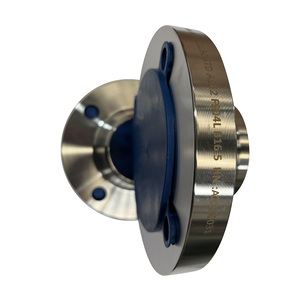
| Engineered Flange Adapters | ASME B16.5, EN 1092-1, BS 10 | Carbon Steel, Nickel Alloys (Inconel, Monel), Titanium | Coordinate Measuring Machine (CMM), Positive Material ID (PMI) |
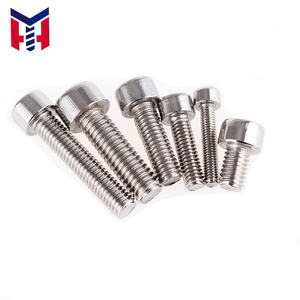
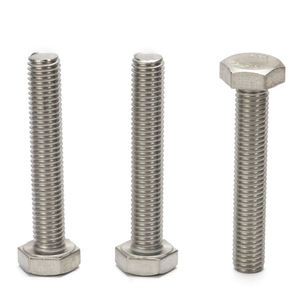
| High-Tensile Fasteners | ASTM A193 B7/B8, A194 2H, ISO 898-1 | Chrome-Moly Alloy Steel, A4-70 Stainless Steel | Proof Load Testing, Charpy V-Notch Impact, Thread Pitch Micrometry |
Future Procurement Trends in the Global Piping & Fittings Sector
The global procurement market for pipe fittings, forged components, and industrial reducers is experiencing rapid structural evolution driven by geopolitical reshoring, the worldwide energy transition, and tighter regulatory frameworks:
1. Complete Digital Traceability via Metallurgical Passports
Global Engineering, Procurement, and Construction (EPC) conglomerates are transitioning from physical paper records to cryptographically verified material tracking systems. Modern specifications demand EN 10204 3.1 or 3.2 documentation featuring live melt-to-spool heat mapping, validating raw ingots through open-die or closed-die forging stages down to final CNC bevel machining.
2. Rise of Exotic Alloys for Decarbonization and Hydrogen Service
With massive capital deployment into Carbon Capture, Utilization, and Storage (CCUS), offshore wind power conversions, and hydrogen blending networks, traditional carbon steel fittings (such as ASTM A105 and A234 WPB) are increasingly supplemented by Super Duplex UNS S32750, Inconel 625, and high-nickel compositions resistant to hydrogen embrittlement and micro-cracking.
3. Stringent Supply Chain De-risking and Approved Manufacturer List (AML) Compliance
Procurement directors are actively auditing supplier qualification frameworks. Holding certifications such as Indian Boiler Regulations (IBR), Engineers India Limited (EIL) approvals, and proven supply tracks for state operators like ADNOC has become the baseline prerequisite for vendor qualification.
Technological & Manufacturing Trajectories
To satisfy tighter dimensional tolerances, leading factories are implementing modern manufacturing methodologies:
- Multi-Axis CNC Cold-Forming and Hot-Extrusion: Advanced hydraulic cold drawing and induction hot-forming lines eliminate micro-wrinkling along reducer tapers, preserving uniform hoop strength and wall thickness across the entire reduction axis.
- Automated NDT & Automated Bevel Inspection: Phased Array Ultrasonic Testing (PAUT) and high-speed laser profilometry guarantee that welding end preparations conform precisely to ASME B16.25 standards, eliminating joint misalignments during automated orbital field welding.
- Corrosion-Resistant Weld Overlay (Cladding): For aggressive sour-gas and subsea pipelines, mills are expanding internal weld overlays, applying corrosion-resistant alloys (CRA) like Alloy 625 over cost-effective carbon steel parent materials.