Engineered to international tolerances, pressure vessel codes, and strict mechanical specifications. Explore our certified inventory of flanges, fittings, and heavy-duty hardware.
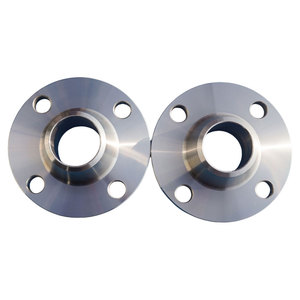
Orifice flanges serve as the mechanical backbone for differential pressure flow measurement in process piping systems worldwide. Unlike standard weld neck, slip-on, or blind flanges governed strictly by ASME B16.5 or EN 1092-1, orifice flanges are purpose-engineered under the rigorous mandates of ASME B16.36. The structural uniqueness of an orifice flange pair lies in its integrated radial pressure taps—precisely drilled into the flange ring itself—which eliminates the engineering overhead of penetrating pipe walls to mount differential pressure transmitters.
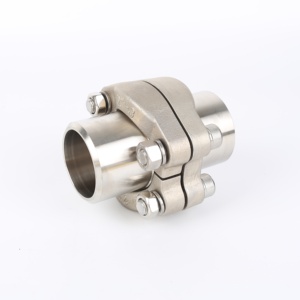
In severe service environments across hydrocarbons, chemical feedstocks, and steam headers, precision metering hinges on minimizing turbulence. The internal geometry of our forged orifice unions is machined to exact tolerances: jack screws are integrated to mechanically separate the flange pair during maintenance without inflicting radial score lines on the sealing faces; orifice plates (concentric, eccentric, or segmental) are held in dynamic equilibrium via precision gasket interfaces; and the internal tap holes are counter-bored and threaded (commonly 1/2" NPT) to guarantee laminar signal capture by upstream and downstream instrumentation.
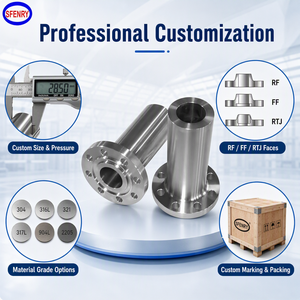
Material integrity dictates life expectancy in abrasive or sour operating atmospheres. Our manufacturing infrastructure delivers hot-forged orifice unions in ASTM A105 carbon steel, low-temperature ASTM A350 LF2, austenitic stainless steels (ASTM A182 F304/F304L, F316/F316L, 904L), high-yield chrome-moly alloys (ASTM A182 F11, F22), and corrosion-resistant nickel alloys including Inconel 625 and Hastelloy C-276. Every melt undergoes strict metallurgical controls to prevent intergranular stress corrosion and boundary carbide precipitation.
Strategic purchasing demands foresight. Understand the technological, regulatory, and macro-industrial transitions transforming orifice flange acquisition over the coming decade.
Global procurement teams are moving away from evaluating flange line-items purely by procurement purchase cost. Instead, focus is shifting toward asset longevity, lifecycle costs, and seal-face reliability. High-integrity forged components drastically lower maintenance frequency and unplanned downtime during turnarounds.
With increasing extraction in high-H2S reservoirs and deeper offshore formations, engineering standards mandate dual-certified materials complying with NACE MR0175/ISO 15156. Traceable low-carbon melt chemistries and controlled hardness thresholds are becoming standard baseline RFQ specifications.
Paper-based mill test certificates are being superseded by encrypted digital dossiers. EPC megaprojects now require direct heat-number integration, QR-code stamped flanges, and instant material test report (MTR) accessibility verifying chemical composition, Charpy impact toughness, and ultrasonic testing records.
Continuous investment in tooling, metallurgical science, and automated inspection drives our factory forward.
Conventional drilling introduces micro-burrs and inconsistent tap angles that distort differential pressure readings. Modern factory workflows employ 5-axis synchronous machining to tap internal orifices and surface transitions with mirror-finish internal bores down to 0.4 Ra.
Rather than fabricating entire assemblies out of solid superalloys, advanced cladding techniques (such as electroslag weld cladding and laser direct energy deposition) allow Inconel 625 or 316L corrosion overlays onto A105 carbon steel forgings, slashing procurement expenses while maintaining severe-service resistance.
Next-generation quality inspection incorporates phased array ultrasonic testing (PAUT), automated magnetic particle scanning, and PMI (Positive Material Identification) via handheld XRF analyzers directly at the forging station, guaranteeing flaw-free mechanical structures before dispatch.
Combining three decades of industrial forging expertise with internationally recognized certifications to deliver zero-defect piping solutions.
Established export footprint recognized worldwide, supplying critical pipe fittings, forged flanges, and high-tensile structural bolting since 1991.
Fully compliant with ISO 9001 certified quality management systems, EIL (Engineers India Limited) and IBR (Indian Boiler Regulations) approved manufacturing workflows.
Every piece is permanently marked with its individual heat number and supplied with full EN 10204 3.1 certification linked directly to verified raw material melts.
Complete flexibility across closed die and open die forging facilities to execute specialized bores, high-pressure ratings up to Class 2500, and custom customer drawings.
Answers to common technical queries raised by piping engineers, project managers, and sourcing specialists.
Consult with our piping engineering team to finalize your bill of materials, verify pressure-temperature ratings, and access competitive export pricing.
Get Catalog