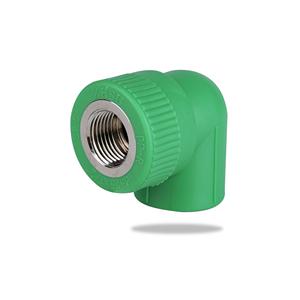
Direct from Mumbai's leading government-recognized export house. Every batch is manufactured under rigid European and American standards, backed by full heat traceability and EN 10204 3.1 certification.
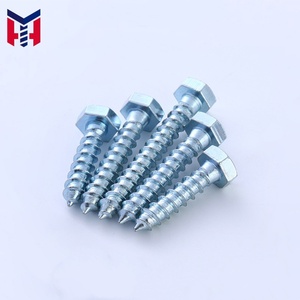
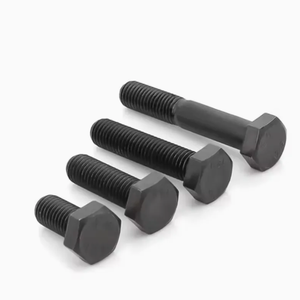
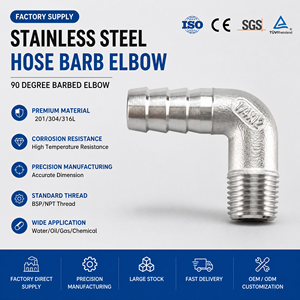
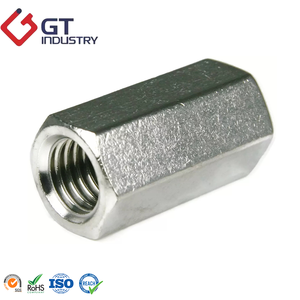
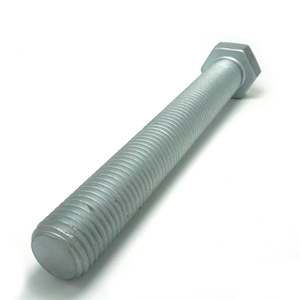
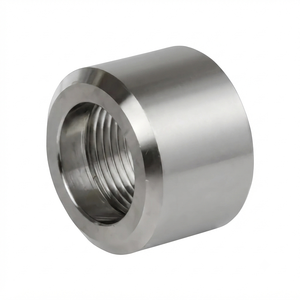
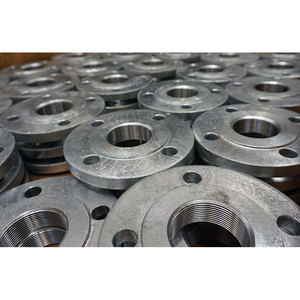
Founded in 1991 in Mumbai, Rajtilak Metal has grown into a premier Government of India Recognised Export House and a certified global manufacturer of heavy industrial fastening systems, forged flanges, and pipeline components. For over 34 years, our products have supported mission-critical engineering initiatives across oil and gas platforms, petrochemical complexes, offshore wind arrays, and subsea pipelines.
Unlike standard commercial stockists, our manufacturing facility operates under comprehensive ISO 9001 quality management guidelines, boasting official approvals from prestigious certifying authorities including Engineers India Limited (EIL) and the Indian Boiler Regulations (IBR). Our track record includes long-term supply credentials for ADNOC-approved capital energy projects throughout the UAE, Saudi Arabia, Qatar, and the broader GCC basin.
A critical metallurgical assessment of Property Classes 8.8, 10.9, 12.9, and ASTM A193/A320 high-strength bolting for procurement engineers, structural designers, and QA/QC directors.
In high-load mechanical joints, the yield-to-tensile ratio establishes the boundary between elastic elongation and permanent deformation. While Class 8.8 bolts exhibit nominal tensile capacity of 800 MPa with an 80% yield ratio (640 MPa), Class 10.9 and 12.9 alloy steels incorporate precise molybdenum, chromium, and vanadium additions. This microalloying facilitates full through-hardening martensitic transformation, attaining yield levels up to 1080 MPa without embrittlement.
Cut threads mechanically shear the longitudinal metal grain flow, generating microscopic notch stress concentrations at thread roots. Our factory enforces cold and hot thread rolling following heat treatment. Thread rolling continuously compresses grain lines along root contours, imparting deep residual compressive stresses that enhance dynamic cyclic fatigue endurance by more than 350% compared to conventional cut threads.
High tensile bolts with tensile ratings exceeding 1000 MPa (Class 10.9 and 12.9) face acute vulnerability to Hydrogen-Induced Stress Corrosion Cracking (HISC). When electroplated zinc is specified, acid pickling can introduce monoatomic hydrogen into interstitial steel lattices. We execute strict baking cycles within 2 to 4 hours of plating, sustaining 200°C–220°C for up to 24 hours to ensure thorough hydrogen outgassing.
| Property Class / Spec | Standard Reference | Tensile Strength (Rm, MPa) | Yield Strength (Re, MPa) | Core Hardness (HRC) | Typical Service Applications |
|---|---|---|---|---|---|
| ISO 898-1 Class 8.8 | DIN EN ISO 898-1 | 800 – 830 | 640 | 22 – 32 HRC | Standard civil construction, structural frameworks, framing, non-vibratory machinery mounts. |
| ISO 898-1 Class 10.9 | DIN EN ISO 898-1 | 1000 – 1040 | 900 – 940 | 32 – 39 HRC | Heavy automotive assemblies, railway rolling stock, pre-stressed structural steel building frames. |
| ISO 898-1 Class 12.9 | DIN EN ISO 898-1 | 1200 – 1220 | 1080 – 1100 | 39 – 44 HRC | High-pressure hydraulic blocks, engine blocks, aerospace ground hardware, severe clamping joints. |
| ASTM A193 Grade B7 | ASME SA193 / ASTM | 860 (min) | 725 (min) | Up to 35 HRC | Refinery pressure vessels, ASME B16.5 pipe flanges, elevated-temperature boilers, subsea manifolds. |
| ASTM A320 Grade L7 | ASME SA320 / ASTM | 860 (min) | 725 (min) | Up to 35 HRC | Cryogenic valves, LNG refrigeration plants, arctic gas pipelines with Charpy V-notch impact at -101°C. |
| ASTM A193 Grade B8M (SS 316) | ASME SA193 Class 1/2 | 585 – 760 | 240 – 655 | 80 – 95 HRB | Marine offshore splash zones, acid-handling scrubbers, chemical tanks, coastal desalination plants. |
Procurement leaders must navigate shifting geopolitical dynamics, carbon regulations, and next-generation quality tracking. Here are the core forces transforming high-tensile hardware acquisitions.
The European Union's Carbon Border Adjustment Mechanism (CBAM) and corporate Scope-3 emission pledges have made raw material carbon intensity a decisive procurement criteria. Major tier-1 EPC contractors now require documented carbon footprints per metric ton of cold-headed and forged fasteners. Buyers are migrating toward integrated mills employing Electric Arc Furnace (EAF) operations powered by renewable energy grids to avoid downstream cross-border carbon border tariffs.
Counterfeit fastening products and fraudulent Mill Test Certificates represent massive legal and operational vulnerabilities in critical infrastructures. Future procurement frameworks are integrating Digital Product Passports (DPP) anchored by tamper-proof cryptographic ledgers. Optical matrix marking on fastener heads enables field technicians and QA inspectors to scan installed bolts and instantly retrieve mill melt chemistries, heat numbers, and ultrasonic test certifications.
Reliance on single-country fastener manufacturing exposed massive logistical vulnerabilities during recent maritime transit crises. Global engineering conglomerates are formalizing multi-region supply chains, establishing dedicated framework agreements with established Indian manufacturing hubs like Rajtilak Metal. With direct access to deep-water ports in Mumbai and raw materials from premier global mills, India serves as a dependable cornerstone for redundant supply chains.
From non-electrolytic barrier coatings to smart sensor integration, cutting-edge metallurgical advances are dramatically expanding fastener reliability in extreme operating environments.
Electrolytic zinc plating is rapidly being superseded by advanced non-electrolytic zinc-flake technology (such as Geomet, Dacromet, and Delta-Protekt). Applied via dip-spin immersion and cured at 300°C without acid-pickling steps, these micro-layered barriers completely eliminate hydrogen absorption during processing. They deliver over 1,500 hours of neutral salt spray resistance (ASTM B117) with ultra-thin thicknesses (5–12 µm), maintaining tight thread tolerances.
Next-generation fastener metallurgy is pioneering carbide-free bainitic and martensitic alloy structures yielding tensile strengths surpassing 1400–1600 MPa. By replacing coarse cementite networks with nanometer-scale carbon-enriched austenite films, these advanced metallurgical compositions provide remarkable notch toughness, high yield ratios, and robust resistance to delayed hydrogen embrittlement failure under intense pre-loads.
Torque wrenching is notoriously inaccurate for establishing precise bolt tension due to wide friction coefficient variances (k-factor swings of ±30%). Emerging structural applications incorporate embedded piezo-electric transducers and acoustic resonance pins into bolt centers. These smart fasteners measure real-time bolt elongation and clamp-load clamping force ultrasonically during assembly and continuous remote asset operation.
Clear, technically verified answers addressing real-world engineering specifications, quality control, international compliance, and testing protocols.
While both represent high-tensile alloy systems, their qualification criteria address different operating demands. ISO 898-1 Class 10.9 requires a minimum tensile strength of 1000–1040 MPa and is predominantly optimized for metric structural, heavy civil, and automotive joints under ambient conditions. Conversely, ASTM A193 Grade B7 is an AISI 4140/4142 chromium-molybdenum steel engineered specifically for high-temperature, high-pressure pressure vessel and flange bolting per ASME Section VIII and B16.5.
For fasteners with hardness exceeding 32 HRC (Class 10.9 and 12.9), our factory avoids aggressive hydrochloric acid pickling in favor of mechanical shot blasting. Following electroplating, components immediately undergo automated de-embrittlement baking at 190°C–220°C for 8 to 24 hours (governed by ASTM F1940 and ISO 9588) to drive out diffusible hydrogen before structural assembly and pre-loading.
Our EN 10204 3.1 inspection certificate provides complete chemical ladle analysis (Carbon, Silicon, Manganese, Phosphorus, Sulfur, Chromium, Nickel, Molybdenum, Vanadium), verified room-temperature and elevated tensile/yield tests, elongation percentages, reduction of area, Charpy V-notch impact values (Joules at specified sub-zero temps), verified core hardness, heat treatment batch charts, and heat lot numbers matching head stampings.
Direct mating of carbon or low-alloy steel bolts with stainless steel flanges in humid or electrolyte-rich environments induces severe galvanic corrosion, as carbon steel acts as an active sacrificial anode. In such assemblies, engineers must specify insulating sleeve-and-washer kits (G10/Mylar) or upgrade the fastening hardware to ASTM A193 Grade B8M (SS 316) or high-strength duplex alloys such as UNS S31803 (2205).
Standard metric sizes (M10 through M36) and imperial diameters (1/2" to 1-1/2") in property classes 8.8 and ASTM A193 B7 are maintained in ready inventory for immediate global air or sea shipment. Non-standard fasteners, extended lengths, and large diameters from M42 to M72 or 2" to 3-1/2" UNC manufactured to technical customer drawings require approximately 3 to 4 weeks for forging, precision machining, heat treatment, and third-party inspection.
Yes. We frequently host nominated international third-party inspection agencies including Bureau Veritas (BV), Lloyd's Register (LR), DNV GL, SGS, and TÜV Rheinland. Our testing facilities fully accommodate client-mandated witness testing, covering ultrasonic sound velocity, MPI, positive material identification (PMI), hydraulic pressure testing, and dimensional verification.
Connect directly with Rajtilak Metal's senior metallurgists and procurement estimators. Secure mill pricing, custom forging specifications, and detailed EN 10204 3.1 compliance documentation for your next project.