Class 1500 Alloy
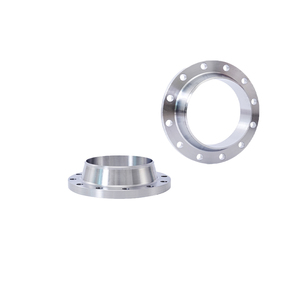

Procured directly from verified manufacturing heats with strict metallurgical oversight, 100% PMI testing, and full EN 10204 3.1 traceability.
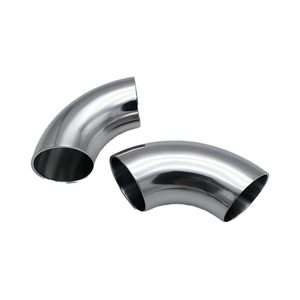
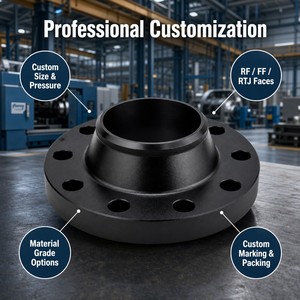
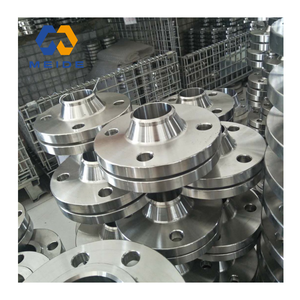
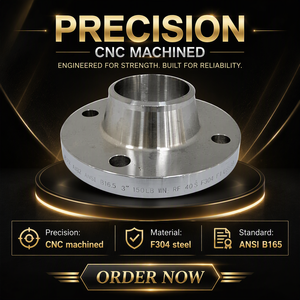
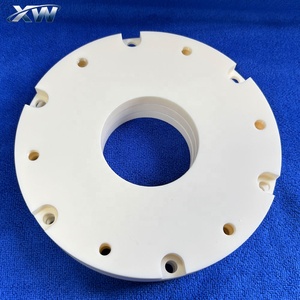
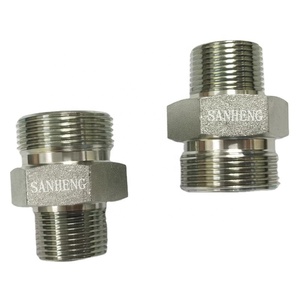
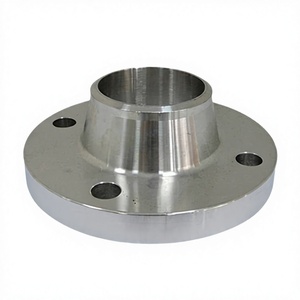
Demystifying chemical limits, heat-treatment regimens, and ductile-to-brittle transition kinetics in critical medium-to-high temperature process environments.
The standard composition of ASTM A234 Grade WPB requires Carbon ceiling at 0.30% max, with Manganese between 0.29%–1.06%. However, for critical offshore, sour hydrocarbon (NACE MR0175/ISO 15156), and cracking environments, our foundry enforces an ultra-tight Carbon Equivalent (CE ≤ 0.42%):
Whether formed via cold mandril extrusion, hot hydroforming, or hydraulic press brake dies, our ASTM A234 WPB elbows, tees, and reducers undergo strict post-forming heat treatment:
Thinning at the outer extrados during extrusion is the leading failure point in low-grade buttweld elbows. Our multi-stage nondestructive testing protocols guarantee zero wall deficiency:
| Material Specification | Tensile (min) | Yield (min) | Temperature Threshold | Typical Critical Service Application |
|---|---|---|---|---|
| ASTM A234 WPB (K03006) | 415 MPa / 60 ksi | 240 MPa / 35 ksi | -29°C to 427°C (-20°F to 800°F) | Refinery crude distillation, utility steam, midstream transmission pipelines. |
| ASTM A420 WPL6 | 415 MPa / 60 ksi | 240 MPa / 35 ksi | Down to -46°C (-50°F) Charpy V-Notch | Cryogenic LNG transport, arctic gas collection manifolds, refrigerated gases. |
| ASTM A234 WP11 / WP22 | 415–585 MPa | 205–310 MPa | Up to 593°C (1100°F) | Thermal power superheaters, boiler headers, catalytic reformer piping spools. |
| ASTM A860 WPHY 52 / 60 / 65 | 455–530 MPa | 360–450 MPa | -46°C to 120°C (High-Yield) | High-pressure cross-country natural gas transport headers under cyclic strain. |
Since 1991, Rajtilak Metal has maintained recognition as an official Government of India Recognised Export House. Backed by approvals from Engineers India Limited (EIL), Indian Boiler Regulations (IBR), and tier-one Middle Eastern operators including ADNOC-qualified package suppliers, we eliminate procurement volatility through vertically integrated forging, CNC turning, testing, and seaworthy packing.
How digital tracing, metallurgical decarbonization, and modular piping architectures are resetting global procurement standards through 2030.
Traditional manual stamping is shifting toward deep-laser annealed 2D matrix identifiers directly on the outer OD. Scanning the fitting on-site instantly renders the complete EN 10204 3.1 chemical split, impact toughness scores, and heat treat certification, removing paperwork delays during field tie-ins.
Global supply disruptions have compelled tier-one engineering firms in the GCC, Europe, and North America to establish multi-year supplier agreements with certified manufacturers that maintain ready stock billets, raw mother pipes, and forging blanks to guarantee 2-to-4 week dispatch windows.
As natural gas pipeline networks transition toward hydrogen blending (up to 20% H2), carbon steel fittings face severe risk of hydrogen-induced embrittlement (HIE). Procurement directives are proactively shifting to WPB stock verified for tight hardness parameters (≤ 22 HRC / 237 HBW) and ultra-low inclusions.
Detailed answers based on project experience across refining, energy generation, and offshore gas processing operations.
Fittings marked 'WPB' can be manufactured from seamless steel pipes (ASTM A106 Grade B) or plate/welded tubes (ASTM A285/A515). When fabricated from welded stock or containing longitudinal joints, ASME B16.9 mandates non-destructive radiography (RT) or ultrasonic examination (UT). Seamless fittings carry no weld joint efficiency discount, providing superior reliability in high-vibration and cyclic-fatigue environments.
While all three share near-identical carbon-manganese chemical envelopes, they define distinct product forms: ASTM A106 Gr. B governs seamless nominal pipes; ASTM A105 applies specifically to forged piping components such as flanges, socket weld, and threaded fittings; and ASTM A234 WPB governs factory-made wrought carbon and alloy buttweld fittings (elbows, tees, reducers, and caps).
Dual certification is permissible only when all chemical, thermal treatment, tensile, yield, elongation, and Charpy impact parameters of both target specifications are completely satisfied. While A234 WPB specifies minimum yield at 35 ksi, line-pipe applications requiring ASTM A860 WPHY 52/60 necessitate significantly higher yield properties achieved via controlled micro-alloying and quenching/tempering.
Standard ends are supplied with plain bevels conforming to ASME B16.25: a 37.5° (±2.5°) bevel angle with a root face of 1.6 mm (±0.8 mm) for wall thicknesses between 5 mm and 22 mm. Heavy-wall fittings above 22 mm feature compound beveling to avoid burn-through and ensure deep weld root penetration during automated orbital welding.
Every commercial consignment includes an EN 10204 3.1 Inspection Certificate containing actual ladle chemical analysis, mechanical tensile and hardness testing, heat treatment charts, dimensional inspection records, and positive material identification (PMI) logs. Third-party EN 10204 3.2 certification via inspection agencies (TUV, DNV, SGS, BV) is also readily accommodated.
Standard carbon steel buttweld fittings receive a protective thin black rust-preventative lacquer, transparent rust-inhibiting synthetic varnish, or hot-dip galvanization per ASTM A153. Fittings are fitted with plastic end caps to protect delicate bevel edges, grouped on fumigated wooden pallets, and wrapped in shrink-barrier vapor films inside reinforced plywood cases.
Need urgent pricing for ASME B16.9 buttweld fittings, custom heavy-wall forged nozzles, or large-diameter A182 flanges? Submit your detailed line items, schedules, and datasheets for an expedited commercial and technical offer.