Girgaon, Mumbai, Maharashtra 400004, India [email protected] +91 9869506920

Top China Forged Steel Flange Manufacturer & Exporter

Precision-Machined ASME, DIN, EN 1092-1 & Customized Pressure Retaining Pipeline Flanges with Direct Mill Traceability and Full EN 10204 3.1 Certification.

Engineered Inventory

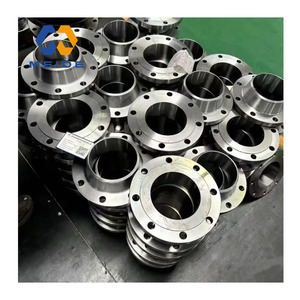
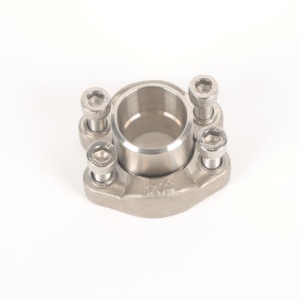
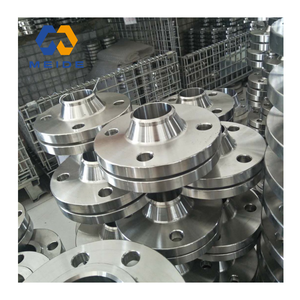
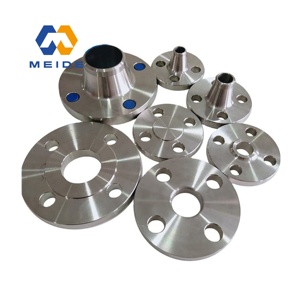
Flagship Industrial Forged Flange Solutions

High-integrity components precision-machined for petrochemical, offshore exploration, superheated steam, and heavy industrial fluid conveyance lines.
100% Ultrasonic & PMI Inspected
35,000+ Tons Annual Forging Yield
EN 10204 3.1 Certified Melt Origin Traceability
60+ Global Export Destinations
Procurement Whitepaper

Engineering Integrity in Closed-Die and Seamless Ring Forging

A technical guide to eliminating micro-porosity, optimizing grain structure, and ensuring compliance across mission-critical pressure applications.

Directional Grain Flow Alignment

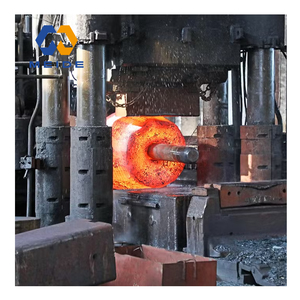
Unlike flame-cut plate rings or cast steel fittings, open-die and closed-die forging forces continuous structural grain lines to trace the contour of the flange neck, eliminating internal plane shears under thermal expansion.

Normalized Microstructure

Every ASTM A105 and low-temperature A350 LF2 batch undergoes programmed thermal cycle normalizing. This process refines ferritic-pearlitic matrices, ensuring Charpy V-notch impact toughness values down to -46°C.

Gramophone Gasket Serration

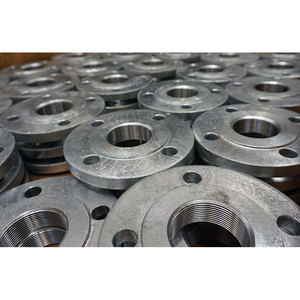
Critical joint stability demands precise surface roughness. Our CNC lathes carve concentric or spiral serrated facings held strictly within Ra 3.2–6.3 μm (125–250 AARH), ensuring complete spiral-wound gasket embedment.

Quality Assurance Notice: All raw forging billets processed in our facilities originate exclusively from certified prime vacuum-degassed melts. Raw stocks are pre-tested for chemical stoichiometry via direct optical emission spectroscopy (OES) before hot shearing and ring rolling operations commence.

Global Standard Specifications & Material Cross-Reference

Project procurement directors and EPC engineering teams require unified material validation across differing engineering standards. Our facility guarantees bidirectional certification matching ASME, European Norm, and British Standard classifications:

Component Category Governing Dimensional Standard Material Class & Designation Nominal Working Pressure Key Testing Regimes
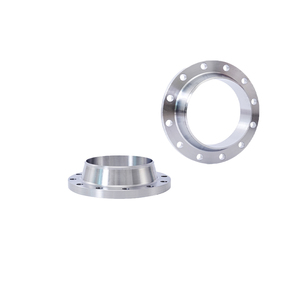
Weld Neck / Blind / Slip-On ASME B16.5 / B16.47 Series A & B ASTM A105N, A350 LF2, A182 F304/L, F316/L Class 150 to Class 2500 (PN20 to PN420) PMI, UT Level II, Tensile, Hydrostatic
Plate Flanges / Loose Rings EN 1092-1 (Types 01, 02, 05, 11, 12) P245GH, P250GH, P280GH, 1.4404, 1.4301 PN 6, PN 10, PN 16, PN 25, PN 40 to PN 100 Charpy V-Notch (-20°C / -46°C), Dimensional CMM
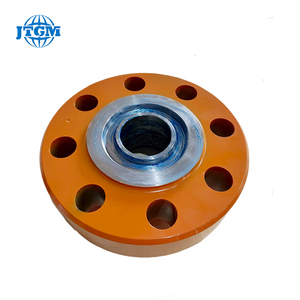
High-Pressure Choke & Wellhead API Spec 6A (6B / 6BX Formats) AISI 4130, 42CrMo4, AISI 8630 Modified 2,000 PSI to 20,000 PSI Working Pressure NACE MR0175 / ISO 15156 Sour Gas Wet H2S Immersion
High-Temperature Steam Piping ASME B16.5 / Power Piping B31.1 ASTM A182 Grade F11, Grade F22, F91 Class 600 to 4500 (Elevated Thermal Regimes) Intergranular Corrosion (IGC), Creep-Rupture Testing

Technological Trends Reshaping Forged Flange Manufacturing

The industrial piping sector is moving rapidly beyond commodity stock toward components designed for high-stress, cyclical operational profiles. Understanding these macro shifts enables engineering procurement teams to specify configurations that avoid premature operational degradation:

  • Near-Net-Shape Hydraulic Rolling: Advanced hydraulic radial-axial ring rolling reduces stock material machining allowances by over 28%, significantly boosting tensile yields along circumferential profiles while reducing thermal stress concentrations.
  • NACE MR0175 / ISO 15156 Metallurgy: The demand for Sour Gas service continues to dominate the Middle East and African markets. We enforce strict HRC hardness thresholds (≤22 HRC) and sulfide stress corrosion cracking (SSCC) verification on all alloyed carbon flanges.
  • Traceable Digital Verification: Beyond laser-stamped heats, project lots now incorporate machine-readable Datamatrix markings tying components directly to raw billet melt heats, heat-treatment logs, and Charpy impact curves.
  • Supercritical CO2 and Cryogenic LNG Adaptation: High nickel contents and cryogenic impact qualifications ensure zero ductile-to-brittle transitions down to -196°C for LNG bunkering lines.

Procurement Strategy: Mitigating Supply Chain Vulnerabilities

Procuring forged flanges from overseas manufacturers requires more than basic price evaluation. Top-tier engineering contractors balance the following variables during vendor audits:

  • Dimensional Precision of Raised Face Gasket Serration: Poorly maintained lathe tooling produces irregular serration profiles, risking joint failure under bolt torque. We use dedicated CNC profile tracking to maintain tight tolerances.
  • Raw Material Mill Control: Porosity and non-metallic inclusions in scrap-melted steel cause micro-leak paths across bolt-circle drillings. Our operations exclusively procure high-purity, fully killed, vacuum-degassed continuously cast billets.
  • Complete Non-Destructive Testing (NDT) Regimes: High-pressure hubs undergo 100% volumetric ultrasonic evaluation according to ASTM A388 to verify the absence of sub-surface laminations, slag lines, or forge bursts.
Procurement Directives

Frequently Asked Questions on Sourcing Flanges from China

Direct technical answers to common queries from global procurement managers, QA auditors, and plant piping engineers.

What sets forged flanges apart from cast or steel-plate alternatives?
Forged flanges are formed through intense mechanical plastic deformation under elevated temperatures. This consolidates internal micro-structures, refines grain flow, and eliminates porosity, air voids, and shrinkage cavities common in sand casting. Forged fittings offer higher yield strengths, superior impact toughness, and elevated safety margins under high mechanical vibration and cyclic pressure spikes.
What specific documentation is delivered with each production consignment?
Every containerized shipment includes comprehensive EN 10204 3.1 Inspection Certificates specifying exact chemical compositions (carbon equivalent values included), mechanical tension test data, Charpy V-notch impact performance, normalizing cycle records, hardness measurements, and non-destructive examination (UT/MT) reports directly tied to stamped heat lot numbers.
How do you ensure NACE MR0175 sour service compliance?
Compliance is achieved through precise chemical limits (controlling sulfur, phosphorus, and residual elements), followed by computer-controlled heat treatments that yield an ultra-fine, uniform microstructure. Flange surfaces and cross-sections undergo strict Rockwell hardness testing to ensure values remain at or below 22 HRC, preventing hydrogen-induced cracking (HIC) and sulfide stress cracking (SSC).
Can custom dimensions or proprietary client engineering drawings be accommodated?
Yes. While ASME B16.5, B16.47, and EN 1092-1 make up the bulk of standard configurations, our heavy engineering division produces custom forged hubs, metric slewing rings, swivel flanges, and specialized high-hub nozzle flanges up to 2800 mm in outer diameter from client-furnished CAD or STEP files.
What measures protect machined flange facings during sea freight transit?
Machined sealing facings and bevel ends receive high-grade rust-preventative oil coatings, followed by heavy-duty snap-on plastic flange protectors or bolted wooden discs. Individual assemblies are wrapped in moisture-resistant barrier film, palletized with desiccants, and packed in reinforced sea-freight ply-wooden crates compliant with ISPM 15 standards.

Need Custom Machining or Volume Mill Estimates?

Connect directly with our engineering sales group. We evaluate complete project datasheets, MTO material lists, and proprietary drawings, returning competitive commercial offers within 24 hours.

Get a Quote