
Featured Heavy-Duty Piping Components & Fasteners
Manufactured to rigorous ASME, ASTM, DIN, and JIS codes, ensuring dimensional accuracy, reliable continuous pipeline fluid mechanics, and uncompromised pressure containment across supercritical systems.
Engineering Eccentric Reducers: Hydraulic Integrity & Flow Dynamics
In process piping design, selecting between concentric and eccentric reducers dictates continuous pump performance, prevents destructive vapor pockets, and preserves laminar velocity transitions.
Cavitation Mitigation
Installed with the flat side on top (FST) at centrifugal pump suction nozzles, eccentric reducers prohibit the accumulation of non-condensable gas bubbles, protecting high-energy impellers against devastating cavitation erosion.
Complete Pipe Drainage
Configured flat side down (FSD) in rack piping and chemical transfer headers, eccentric buttweld geometry guarantees gravity-assisted drainage, preventing liquid stagnation, sludge pooling, and aggressive microbiologically influenced corrosion (MIC).
Stress Concentrations
Due to asymmetric geometry, eccentric configurations introduce longitudinal bending stresses under cyclic thermal thermal expansion. High-grade hot-forming and solution-annealing are vital to eliminate residual forming strain.
| Material Specification | Applicable Standards | Nominal Sizes | Working Environment | Key Mechanical Target |
|---|---|---|---|---|
| ASTM A234 WPB / WPC | ASME B16.9 / MSS SP-75 | 1/2" – 48" (DN15 – DN1200) | Refinery, High-Temp Hydrocarbons | Yield ≥ 240 MPa; Tensile 415-585 MPa |
| ASTM A403 WP304L / 316L | ASME B16.9 / EN 10253-4 | 1/2" – 36" (DN15 – DN900) | Chemical, LNG, Marine Offshore | Intergranular Corrosion Resistance (ASTM A262 E) |
| ASTM A420 WPL6 | ASME B16.9 | 1/2" – 24" (DN15 – DN600) | Refrigeration, Low-Temp Cryogenics | Charpy V-Notch Impact at -45°C ≥ 27 Joules |
| ASTM A860 WPHY 52 / 60 / 65 | MSS SP-75 / API 5L Linepipe | 2" – 56" (DN50 – DN1400) | High-Yield Gas Transmission Lines | Yield ≥ 450 MPa, NACE MR0175 HIC & SSC Safe |
Future Procurement Trends in Piping Systems (2025–2030)
Global EPC contractors and tier-1 procurement managers are executing fundamental shifts in how high-pressure buttweld fittings and reducers are sourced, validated, and managed.
Full Metallurgical Traceability
Global demand is standardizing on digital heat number verification mapped to EN 10204 3.1 / 3.2 certificates. Raw material heats are tracked via optical emission spectrometry (OES) and positive material identification (PMI) right to the spool joint.
Near-Net Hydroforming Innovations
Cold and thermo-mechanical hydroforming processes replace conventional welded-plate segments in large-diameter eccentric transitions. This eliminates circumferential seams, minimizes wall-thinning tolerances, and delivers uniform grain structure.
Consolidated Supply Ecosystems
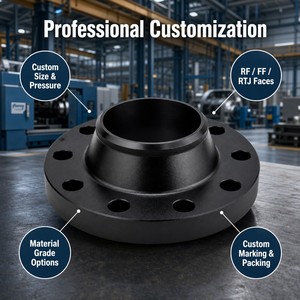
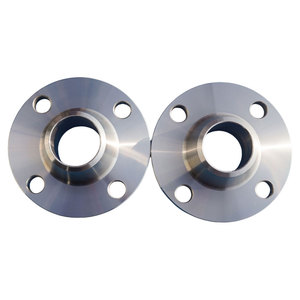
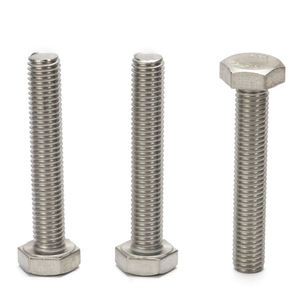
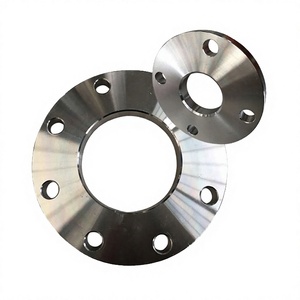
EPCs are consolidating vendor rosters, preferring integrated Chinese manufacturers capable of pairing ASME B16.9 buttweld reducers directly with matching ASME B16.5 flanges and heavy-hex engineered fasteners under a unified factory audit.
Why Major Engineering Firms Partner With Our Manufacturing Hub
Backed by extensive technical heritage, full certifications, and high-capacity production, we eliminate project friction from quotation to hydrostatic field tests.
Approved For Extreme Applications
Certified under ISO 9001 quality systems and meeting strict client approval criteria across the Middle East, Southeast Asia, and Europe. Our production lines conform to Indian Boiler Regulations (IBR), Engineers India Limited (EIL) norms, and ADNOC-level project requirements.
In-House Advanced Testing Suite
Equipped with 11 advanced testing systems: direct-reading spectrometers, computer-controlled 600kN tensile benches, sub-zero Charpy impact pendulums, ultrasonic thickness probes, hydrostatic pressure benches, and magnetic particle crack detectors.
End-to-End Component Package
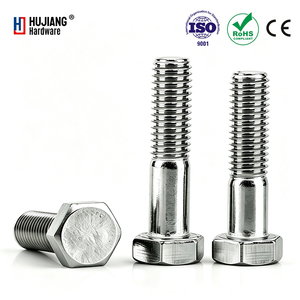
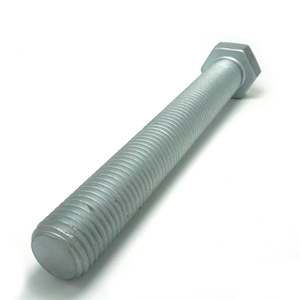
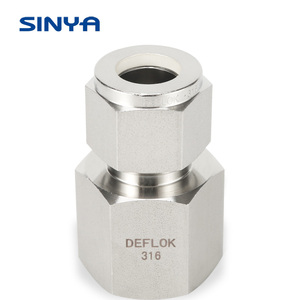
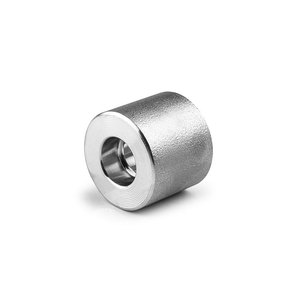
Beyond buttweld eccentric reducers, we fabricate seamless tees, high-yield elbows, ANSI/DIN forged flanges, socket weld fittings, and Grade 8.8 to 12.9 high-tensile bolting. This allows full spool procurement under a single commercial invoice and delivery schedule.
Frequently Asked Questions on Eccentric Reducer Procurement
How do you prevent excessive wall thinning on the sloped transition?
During the hydraulic drawing and press process, asymmetrical deformation causes localized stretching. We utilize oversize starting shells engineered via finite-element simulation, ensuring the remaining wall thickness at the sloped taper complies with ASME B16.9 minimum tolerance requirements (≥ 87.5% of nominal wall thickness).
What are the primary criteria for deciding between Flat Side Up or Flat Side Down?
Flat Side Up (Top) is mandatory for horizontal pump suction lines to prevent vapor lock and cavitation. Flat Side Down (Bottom) is specified on pipe racks, headers, and steam lines to ensure continuous gravity drainage of condensates or liquid residue during shutdowns.
Can you supply EN 10204 3.2 third-party certification?
Yes. In addition to our standard factory EN 10204 3.1 mill test certificates, we regularly collaborate with Lloyd’s Register, DNV-GL, SGS, BV, and TUV to conduct independent witnessing of heat treatment, impact testing, and dimensional checks for 3.2 release.
How are large-diameter reducers (> 24 inches) manufactured and tested?
Sizes above 24" are formed using specialized die-pressing followed by submerged arc welding (SAW) or gas tungsten arc welding (GTAW). All longitudinal seam welds undergo 100% radiographic examination (RT) or phased array ultrasonic testing (PAUT) according to ASME Section VIII.
What bevel angles and end preparations are provided?
Standard bevels conform to ASME B16.25 (plain ends for under 0.19" wall; 37.5° ± 2.5° with a 1.6mm root face for wall thicknesses between 0.19" and 0.88"). Custom compound bevels for automated orbital welding can be machined upon drawing submission.
What surface protection and seaworthy packaging is standard?
Carbon steel reducers receive black rust-preventative varnishing, phosphatizing, or hot-dip galvanizing. Stainless and nickel-alloy components undergo pickling and passivation. Export packaging utilizes heavy fumigated wooden cases, internal waterproof wrapping, and end caps.
Plan Your Next Pipeline Project With Verified Specialists
Whether you require standard ASME B16.9 eccentric reducers, heavy-wall forged connections, or custom project alloy packages, our metallurgical engineers and export directors are ready to review your data sheets.
Contact Us