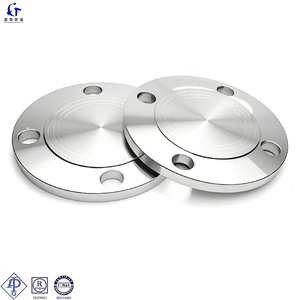
Certified pressure components manufactured strictly to ASME B16.5, ASME B16.47 Series A/B, DIN, and ISO standards with complete heat-melt traceability.
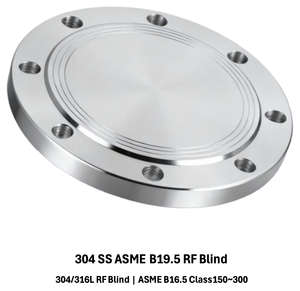
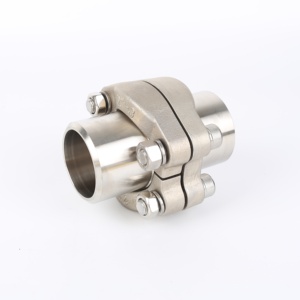
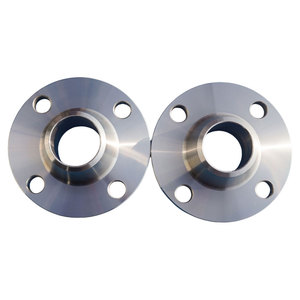
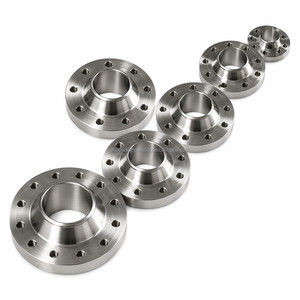
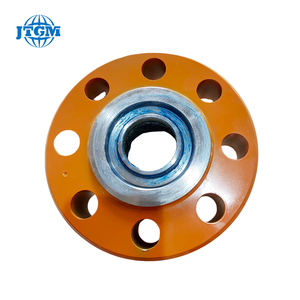
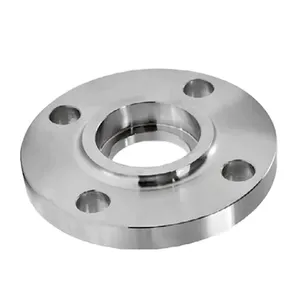
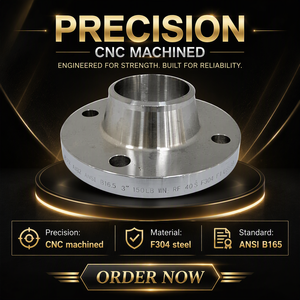
A rigorous metallurgical overview detailing how raw material chemistry, forging ratios, and thermal processing govern performance in mission-critical process loops.
A frequent misconception in global industrial piping procurement is interpreting Class 150 as a constant 150 psi working threshold. Under the strict parameters of ASME B16.5 Table 2-1.1 (Standard Carbon Steel Material Group 1.1 - ASTM A105), a Class 150 flange exhibits a maximum cold working pressure (CWP) of 285 psig (19.6 bar) at temperatures from -20°F to 100°F (-29°C to 38°C). As fluid temperature climbs toward 500°F (260°C), the allowable working stress decreases due to matrix softening, dropping rated containment capacity down to 170 psig (11.7 bar). Engineering procurement teams must align design pressures with actual process operating temperatures rather than nominal class designations alone.
| Material Specification | ASME Material Group | Ambient Max CWP (-29°C to 38°C) | Yield Strength (Min, MPa) | Tensile Strength (Min, MPa) | Recommended Industrial Media |
|---|---|---|---|---|---|
| ASTM A105 (Carbon Steel Forged) | Group 1.1 | 285 psig (19.6 bar) | 250 MPa (36 ksi) | 485 MPa (70 ksi) | Non-corrosive hydrocarbons, municipal steam, utility cooling |
| ASTM A350 LF2 (Low-Temp Carbon Steel) | Group 1.1 | 285 psig (19.6 bar) | 250 MPa (36 ksi) | 485 MPa (70 ksi) | Cryogenic loops, refrigerated LPG, Arctic sub-zero gas grids |
| ASTM A182 F304/304L (Austenitic SS) | Group 2.1 | 275 psig (19.0 bar) | 205 MPa (30 ksi) | 515 MPa (75 ksi) | Nitric acid loops, food/dairy sanitization, light chemical lines |
| ASTM A182 F316/316L (Moly-Bearing SS) | Group 2.2 | 275 psig (19.0 bar) | 205 MPa (30 ksi) | 515 MPa (75 ksi) | Marine offshore splash zones, dilute chlorides, sulfuric acid |
| ASTM A182 F51 / Duplex 2205 | Group 2.8 | 290 psig (20.0 bar) | 450 MPa (65 ksi) | 655 MPa (95 ksi) | High-chloride desalination brines, sour gas, wet sour service |
Integrating tier-1 closed-die hammer lines with ISO 9001:2015 traceability to deliver uncompromised joint integrity.
We source certified hot-rolled bar stock exclusively from tier-1 Chinese blast furnaces with full raw-melt test verification. Rejecting sub-par reclaimed ingot scrap ensures zero internal dendritic segregation, micro-porosities, or slag inclusions inside the forged flange matrix.
Our heavy drop-forging presses optimize material flow lines along the critical hub-to-flange transition fillet. Automated normalizing furnaces with calibrated multi-point thermocouples relieve residual mechanical stress, ensuring uniform fine-grain ferrite-pearlite or fully solution-annealed austenitic microstructures.
Every Class 150 forged flange is permanently low-stress hard stamped with our foundry mark, nominal size, pressure rating, ASTM grade, and heat number. Our QA department issues full EN 10204 3.1 Mill Test Certificates mapping direct ladle chemical analysis and mechanical tensile/Charpy test records.
How international procurement managers are mitigating tariff disruptions, ensuring Scope 3 carbon compliance, and establishing multi-regional buffer strategies.
With the European Union's Carbon Border Adjustment Mechanism (CBAM) taking hold, tier-1 EPCs prioritize Chinese manufacturers utilizing electric arc furnace (EAF) recycling powered by renewable grids. Low-emission manufacturing credentials reduce downstream import duty tariffs and support corporate carbon-neutral procurement directives.
Manual paperwork is giving way to laser-etched two-dimensional DataMatrix codes applied during final machining. Inspection officers on refinery construction sites can scan the flange body to instantly pull authentic raw-material melts, ultrasonic testing curves, wall-thickness profiles, and compliance documents directly from the cloud.
Industrial buyers increasingly avoid piecemeal sourcing by ordering matched piping packages. Procuring Class 150 weld neck flanges alongside matching ASME B16.9 buttweld elbows, reducers, spectacle blinds, and ASTM A193 B7 stud bolt sets from a unified Chinese manufacturing exporter minimizes site fitment mismatches and reduces logistics overhead.
Modern piping reliability demands tighter dimensional tolerances and exact surface finishes to eliminate fugitives and leak paths.
The raised face (RF) sealing surface of a Class 150 flange must maintain a controlled roughness average between 125 µin and 250 µin (3.2 µm to 6.3 µm Ra) with a 45-55 grooves-per-inch spiral serration. Our twin-spindle CNC lathes guarantee consistent gasket bite without cutting through spiral-wound graphite rings.
Misaligned bolt circles cause uneven gasket load distribution and bolting galling. Using automatic multi-spindle drilling centers calibrated with laser tool setting, our flanges achieve bolt-hole spacing within ±0.75 mm and bolt-circle diameter within ±1.5 mm, guaranteeing rapid field alignment.
Material cross-contamination is eliminated via handheld XRF and stationary optical emission spectrometers. Every stainless steel (304L/316L/904L) and duplex flange undergoes Positive Material Identification prior to rust-preventative dipping and packing, confirming molybdenum, chromium, and nickel composition.
Direct technical answers addressing the critical specification, testing, and commercial concerns of piping engineers and procurement officers.
Connect with our senior technical sales team for comprehensive dimensional catalogs, custom fabrication drawings, material test samples, and competitive direct-mill FOB/CIF quotations.
Get Catalog