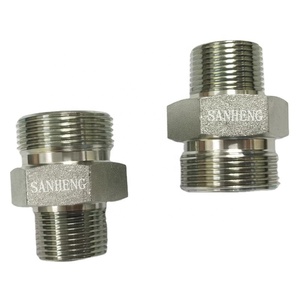
Engineered to withstand rigorous mechanical stress, cyclic thermal fatigue, and sour gas environments. Fully verified with EN 10204 3.1 certification and traceable heat numbers.
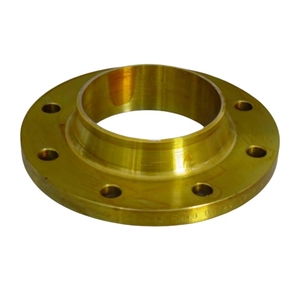
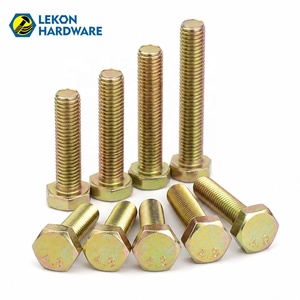
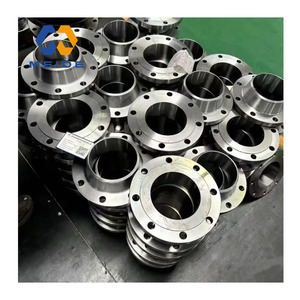
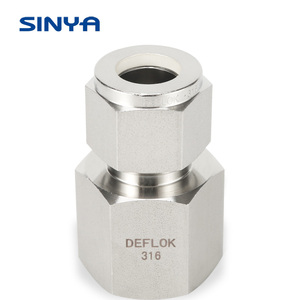
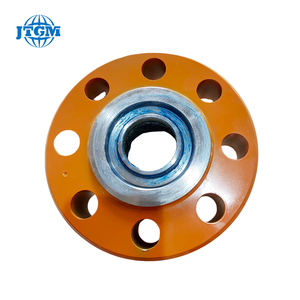
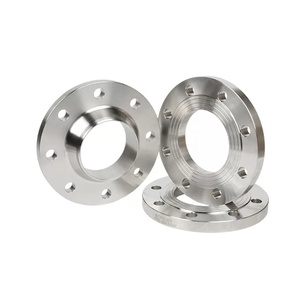
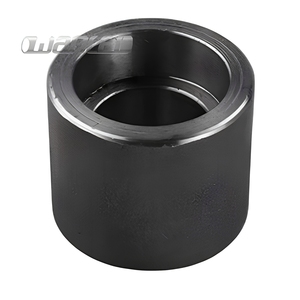
Over the past four decades, China's pipe fitting and flange industrial base has evolved from rudimentary foundry operations into an advanced, automated, and digitally integrated forging network. Concentrated in specialized industrial belts such as Hebei (Cangzhou/Mengcun), Shandong, and Zhejiang (Wenzhou), Chinese manufacturing facilities now supply high-integrity carbon steel piping components to global Engineering, Procurement, and Construction (EPC) consortiums across North America, Europe, the Middle East, and Southeast Asia.
A critical driver of this shift is the stringent adherence to international dimensional and metallurgical standards, including ASME B16.9 (factory-made wrought buttwelding fittings), ASME B16.11 (forged socket-welding and threaded fittings), ASME B16.5 / B16.47 (pipe flanges), and European standard EN 1092-1. Modern Tier-1 exporters utilize fully integrated production tracks: from controlled-atmosphere induction billet heating and 10,000-ton hydraulic forging presses to high-precision 5-axis CNC machining centers that guarantee strict wall thickness tolerances and precise weld bevel preparations.
Carbon steel remains the industrial backbone of pressurized fluid transportation due to its optimal balance of high tensile strength, fracture toughness, ductility, and cost-effectiveness. In heavy industrial operations, selecting the correct material specification prevents catastrophic brittle failure or stress-corrosion cracking:
Procurement engineers can cross-reference common manufacturing standards, dimensional tolerances, and rating boundaries via the engineering matrix below:
| Component Type | Governing Standard | Nominal Size Range | Pressure Class / Schedule | Standard Metallurgy | Primary Quality Control Check |
|---|---|---|---|---|---|
| Buttweld Fittings (Elbows, Tees, Reducers) | ASME B16.9 / DIN 2605 / EN 10253 | 1/2" – 72" (DN15 – DN1800) | SCH 10 through SCH 160 / XXS | ASTM A234 WPB, WPC, Q355D, P235GH | Bevel Angle & Ovality Gauge, UT Thickness |
| Forged Socket Weld & Threaded Fittings | ASME B16.11 / BS 3799 | 1/8" – 4" (DN6 – DN100) | Class 2000, 3000, 6000, 9000 | ASTM A105N, ASTM A350 LF2, AISI 4130 | Thread Go/No-Go Gauge, MPI Crack Inspection |
| Forged Steel Flanges (WN, SO, Blind) | ASME B16.5 / B16.47 / EN 1092-1 | 1/2" – 60" (DN15 – DN1500) | Class 150 – 2500 / PN 6 – PN 400 | ASTM A105, A350 LF2, P250GH, 16Mo3 | Serration Roughness (Ra 3.2-6.3μm), CMM Bore |
| Branch Connection Outlets (Olets) | MSS SP-97 / ASME B31.3 Design | 1/8" – 24" Run Outlets | Class 3000, 6000 / STD, XS, SCH 160 | ASTM A105, ASTM A350 LF2, Alloy F11/F22 | Liquid Penetrant Testing (PT), Hydrostatic Proof |
| Engineered Heavy Industrial Fasteners | ASTM A193 / A194 / DIN 6921 | M12 – M72 / 1/2" – 3" | Grade 8.8, 10.9, 12.9 / B7, B8, 2H | Medium Carbon Steel, 40Cr, 42CrMo | Tensile Proof Load, Core Hardness (HRC) |
Combining three decades of rigorous quality assurance, accredited testing infrastructure, and verified raw material sourcing.
Every single elbow, tee, reducer, and flange is permanently stamped with mill heat numbers, material specifications, and dimensional classes. We deliver genuine EN 10204 3.1 mill test certificates tracing chemistry and mechanical testing back to prime vacuum-degassed melts.
Operating 11+ dedicated testing units including optical emission spectrometers (PMI), hydraulic burst benches, ultrasonic thickness scanners, Charpy impact test stations (-60°C), and magnetic particle crack detectors to guarantee zero-defect field installation.
We manufacture piping components meeting ISO 15156 / NACE MR0175 recommendations. Controlled carbon equivalents (CE ≤ 0.42%), restricted sulfur/phosphorus residuals (≤ 0.005%), and post-weld heat treatments (PWHT) shield equipment from Hydrogen-Induced Cracking (HIC) and Sulfide Stress Cracking (SSC).
Equipped with open-die and closed-die forging setups capable of hot-rolling seamless carbon steel rings, bespoke orifice flanges up to 60 inches, heavy wall thickness transitions (XXS), and customized high-pressure manifolds mapped directly from client engineering CAD drawings.
Operating within ISO 9001:2015, ISO 14001, and ISO 45001 management frameworks. Products hold international recognitions including IBR (Indian Boiler Regulations), EIL approval suitability, and project deployment clearance across Middle Eastern national energy operators.
Surface preservation options include transparent rust-preventative oil, black bituminous lacquer, thermal hot-dip galvanizing (ASTM A153), or 3-layer PE coating. Products are capped with high-density poly edge protectors and packed in fumigated ISPM-15 export wooden crates.
Global industrial supply chains are recalibrating around regulatory sustainability, supply risk diversification, and technological traceability. For procurement directors, category managers, and EPC supply chain leads, navigating the carbon steel piping market requires staying ahead of key forward-looking vectors:
With the European Union's Carbon Border Adjustment Mechanism (CBAM) entering full implementation, carbon steel fittings exporters are actively shifting raw material procurement toward Electric Arc Furnace (EAF) scrap-based steelmaking and hydrogen-reduced direct reduced iron (DRI). Forward-thinking Chinese mills are issuing verified Environmental Product Declarations (EPD) that calculate Scope 1, 2, and 3 embodied carbon per metric ton of forged fittings, ensuring seamless tariff clearance in Western jurisdictions.
Paper and basic PDF Mill Test Certificates are rapidly yielding to secure, tamper-proof digital authentication systems. QR-code engraving on fitting collars enables on-site QA/QC inspectors to immediately access original lab reports, heat records, heat treatment charts, and mechanical stress curves directly via mobile devices, eliminating counterfeit piping risks in critical offshore installations.
To reduce expensive on-site field welding labor, EPCs increasingly demand prefabricated piping spools directly from qualified Chinese exporters. This requires factories to possess ASME 'U' and 'PP' stamp authorizations, housing certified automatic orbital sub-arc welding stations that merge elbows, flanges, and straight runs under tightly controlled factory conditions.
The manufacturing technology behind carbon steel fittings is undergoing continuous modernization to meet the harsh operating parameters of ultra-deepwater, superheated steam, and emerging hydrogen transit grids:
Addressing common technical, quality control, testing, and logistics inquiries encountered during high-volume procurement.
Connect directly with our senior piping engineering sales team for comprehensive line-item pricing, EN 10204 MTC samples, and technical review of your project datasheets.
Inquire Now