Manufactured under rigorous ISO 9001 certified protocols for petrochemical, offshore subsea, chemical processing, cryogenic fluid, and high-pressure steam distribution.
Holding approvals from global energy majors, statutory authorities, and third-party agencies including EIL, IBR, and major ADNOC approved sub-contract packages.
Every single flange forged within our facilities receives an indelible cold-stamped or dot-peened heat number linking directly to the molten heat ladle analysis, mechanical tension records, and metallurgical micro-structure evaluations.
Our comprehensive testing laboratory houses eleven specialized non-destructive and destructive examination instruments, ensuring that tensile yield, Charpy V-notch impact toughness, and grain boundary corrosion properties exceed nominal ASTM requirements.
Equipped with multi-axis CNC vertical and horizontal machining centers, heavy ring-rolling machinery, and closed-die forging presses up to 4,000 metric tons. We machine standard ASME configurations and complex bespoke forgings directly to engineering drawings.
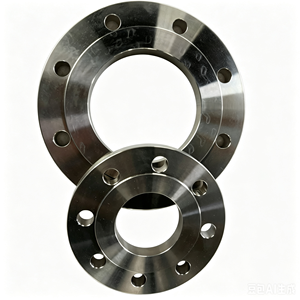
The American Society of Mechanical Engineers (ASME) standard B16.5 governs steel pipe flanges and flanged fittings from Nominal Pipe Size (NPS) 1/2 through NPS 24 in pressure classes Class 150, 300, 400, 600, 900, 1500, and 2500. Selecting an optimal industrial flange requires balancing operating pressure, fluid corrosiveness, design temperature, mechanical vibration, and piping stress.
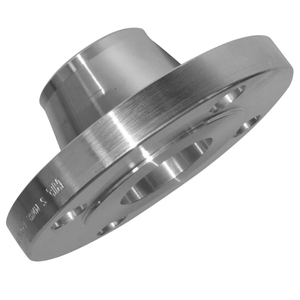
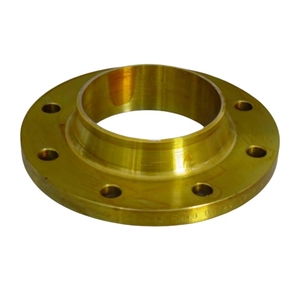
From a mechanical perspective, the Weld Neck Flange (WNF) represents the most structurally resilient geometry within ASME B16.5. Its tapered transition hub prevents localized stress concentrations near the pipe-to-flange circumferential buttweld, transferring tensile and bending forces safely into the pipe wall. Conversely, Slip-On Flanges (SOF) provide economical assembly for lower-pressure applications, relying on internal and external fillet welds, though they present lower fatigue endurance under severe cyclic thermal shock.
| ASME B16.5 Flange Type | Standard Pressure Ratings | Standard Facing Geometries | Primary ASTM Material Grades | Key Engineering Applications |
|---|---|---|---|---|
| Weld Neck (WN) | Class 150 – 2500 | RF, FF, RTJ (R, RX, BX) | ASTM A105N, A182 F316L, A350 LF2 | High-pressure, subsea, extreme cyclic thermal loads |
| Slip-On (SO) | Class 150 – 1500 | Raised Face (RF), Flat Face (FF) | ASTM A105, A182 F304L, A516 Gr.70 | Low-to-medium pressure utility pipelines, cooling water |
| Blind Flange (BL) | Class 150 – 2500 | RF, FF, RTJ | ASTM A105N, A182 F51 (Duplex), Inconel 625 | Pressure vessel nozzle blanks, piping termination points |
| Socket Weld (SW) | Class 150 – 1500 | Raised Face (RF) | ASTM A182 F316/316L, F11, F22 | Small-diameter (under 2 inch) high-pressure instrumentation |
| Lap Joint (LJ) | Class 150 – 600 | Must pair with Stub End | Carbon Steel Body / SS316L Wetted Stub End | Corrosive chemical pipelines requiring rapid unbolting/alignment |
| Threaded (TH) | Class 150 – 2500 | RF, FF (NPT / BSPT Tapered) | ASTM A105, Brass, A182 F304 | Volatile locations where post-weld heat treatment is prohibited |
How international standards, decarbonization goals, and automated quality assurance are transforming capital equipment purchasing workflows across global energy infrastructure.
EPC megaprojects are eliminating static PDF mill certificates in favor of machine-readable cryptographic material passports. Every forged flange is marked with a laser QR code delivering real-time validation of heat ladle chemistry, ultrasonic non-destructive reports, and ISO compliance via secure cloud repositories.
European and American infrastructure directives increasingly mandate Scope 1, 2, and 3 emissions auditing for metal fabrications. Foundries employing electric arc furnaces (EAF) powered by green grids and utilizing near-net-shape closed-die tooling now capture higher sourcing priority over legacy coal blast furnace producers.
With deepwater exploration demanding greater sulfide stress cracking (SSC) and hydrogen-induced cracking (HIC) resistance, procurement specifications require strict limits on hardness (maximum 22 HRC), restricted chemical carbon equivalencies (CE < 0.42), and fine-grained microstructures certified to NACE MR0175 / ISO 15156.
Standard radiography is rapidly giving way to automated PAUT inspection for heavy-wall forged neck hubs. PAUT provides volumetric flaw reconstruction in three dimensions, catching sub-surface forging bursts and non-metallic inclusions without the radiation safety hazards of gamma-ray setups.
Procurement directors increasingly bypass fragmented component purchasing. Leading factories provide fully integrated flanged connection skids: mating flanges, engineered graphite/spiral-wound gaskets, and ASTM A193 Grade B7/B8 stud bolts with ASTM A194 2H heavy hex nuts to guarantee joint integrity.
To reduce capital expenditure on solid nickel alloys or titanium flanges, plant engineers specify carbon steel ASME A105 forgings clad with a 3.0mm Inconel 625 or 316L weld overlay on all wetted surfaces. This configuration delivers premium corrosion protection with the mechanical tensile strength and lower cost of structural carbon steel.
Addressing the critical metallurgical, regulatory, and mechanical questions evaluated by project piping engineers, quality auditors, and commercial estimators.
ASME B16.5 covers flanges from Nominal Pipe Size (NPS) 1/2" up to NPS 24" across classes 150 to 2500. ASME B16.47 covers large-diameter steel flanges from NPS 26" to NPS 60". Furthermore, B16.47 splits into Series A (derived from MSS SP-44, featuring thicker hubs and heavier bolt circles suitable for critical pipeline service) and Series B (derived from API 605, featuring compact bolt circles designed for lighter process piping).
Under ASME B16.5 paragraph 6.4.5, flange gasket contact surfaces must have a specific phonographic spiral or concentric serration. For standard spiral-wound metallic gaskets, the surface roughness must fall strictly between 125 μin and 250 μin (3.2 μm to 6.3 μm) AARH/RMS, machined using a 1.5mm (0.06 in.) or larger radius cutting tool at a feed rate of 0.8mm per revolution.
Standard ASTM A105 is certified for ambient and elevated-temperature service with an ASME minimum temperature rating of -20°F (-29°C). For low-temperature service down to -50°F (-46°C) or cryogenic LNG regimes (-196°C), piping design codes mandate normalized ASTM A350 LF2 (Class 1 or 2) with mandatory impact Charpy V-notch verification.
RTJ flanges feature precision-machined annular grooves designed to seat solid metal octagonal or oval gaskets (such as Soft Iron, SS316, or Monel). They are engineered for high-pressure, severe cyclic, or hazardous fluid systems (typically Class 600 through 2500), where mechanical bolt compression yields plastic deformation of the gasket metal into the groove for an absolute zero-leak seal.
Dual certification indicates the forging meets both the low-carbon chemistry requirement (≤ 0.030% C) of the "L" grade to prevent intergranular sensitization during welding, while simultaneously attaining the higher yield and tensile strength thresholds of the straight "non-L" grade through controlled thermomechanical processing and nitrogen balance.
All production orders include 100% visual and dimensional verification alongside EN 10204 Type 3.1 Mill Test Certificates detailing chemical analysis and mechanical testing (yield, tensile, elongation, Brinell hardness). Optional NDT includes 100% Positive Material Identification (PMI via XRF/OES), Liquid Penetrant Testing (PT), Magnetic Particle Inspection (MPI), and Ultrasonic Testing (UT).
Whether you require standard ANSI B16.5 slip-on, weld neck, and blind flanges from stock or complex custom-engineered forgings produced to detailed CAD/CAM specifications, our engineering sales desk provides comprehensive technical quotes with EN 10204 3.1 compliance documentation within 24 hours.