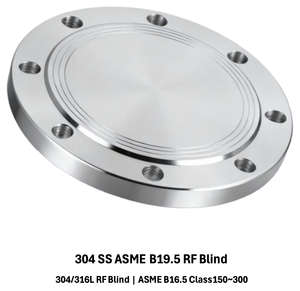
Explore our ISO 9001 certified, IBR approved heavy engineering range. Built to withstand extreme thermal cycles, cyclic vibration, and aggressive corrosive media with mill-grade EN 10204 3.1 heat traceability.
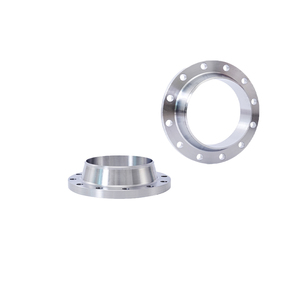
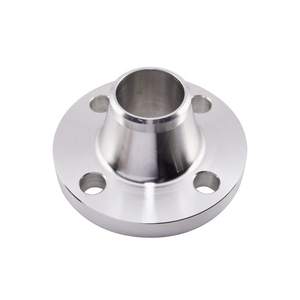
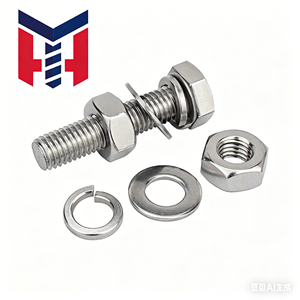
In modern high-pressure piping assemblies and civil structural engineering, joint failure is overwhelmingly attributed to fastener fatigue, thread shear, and stress corrosion cracking (SCC) rather than pipe wall rupture. A heavy hex nut, governed dimensionally by ASME B18.2.2 and metallurgically by ASTM A194 or ASTM A563, differs fundamentally from a standard finished hex nut. The heavy series provides an increased width across flats (WAF) and a substantially thicker nut body.
This dimensional superiority increases the contact surface area beneath the bearing face, effectively distributing clamp loads across a broader washer surface. This critical design modification eliminates localized stress concentrations that induce flange face gouging and bolt relaxation under dynamic pressure pulsations.
Our forging process uses controlled grain-flow forming techniques that align the metallurgical micro-structure along the nut contour. This continuous grain boundary flow enhances shear resistance along internal 8-UN and UNC thread profiles, ensuring zero thread galling even under extreme cold tightening parameters.
| Nominal Thread Size | Standard Hex WAF | Heavy Hex WAF | Heavy Hex Height | ASME B16.5 Pairing |
|---|---|---|---|---|
| 1/2" - 13 UNC | 3/4" (19.05 mm) | 7/8" (22.23 mm) | 31/64" (12.30 mm) | Class 150 - 300 Flanges |
| 5/8" - 11 UNC | 15/16" (23.81 mm) | 1-1/16" (26.99 mm) | 39/64" (15.48 mm) | Class 300 - 600 Flanges |
| 3/4" - 10 UNC | 1-1/8" (28.58 mm) | 1-1/4" (31.75 mm) | 47/64" (18.65 mm) | Class 600 - 900 Flanges |
| 7/8" - 9 UNC | 1-5/16" (33.34 mm) | 1-7/16" (36.51 mm) | 55/64" (21.83 mm) | Class 900 - 1500 Flanges |
| 1" - 8 UN | 1-1/2" (38.10 mm) | 1-5/8" (41.28 mm) | 63/64" (25.00 mm) | Class 1500 - 2500 Flanges |
| 1-1/4" - 8 UN | 1-7/8" (47.63 mm) | 2" (50.80 mm) | 1-7/32" (30.96 mm) | Boiler & Pressure Vessels |
Heavy hex nuts must be paired accurately with mating stud bolts to avoid premature galvanic corrosion and dissimilar thermal elongation issues. Below is our manufacturing matrix according to international codes.
| ASTM Grade | Base Chemistry | Proof Load Stress (psi / MPa) | Hardness Range (Rockwell / HBW) | Operating Temperature | Compatible Stud Grade |
|---|---|---|---|---|---|
| ASTM A194 Grade 2H | Quenched & Tempered Medium Carbon (AISI 1045) | 175,000 psi (1,205 MPa) | 24 to 35 HRC / 248-327 HBW | -29°C to 427°C (-20°F to 800°F) | ASTM A193 B7 / A320 L7 |
| ASTM A194 Grade 4 | Carbon-Molybdenum Alloy Steel | 175,000 psi (1,205 MPa) | 24 to 35 HRC / 248-327 HBW | -100°C to 593°C (Low Temp / High Pres) | ASTM A320 L7M / L43 |
| ASTM A194 Grade 7 / 7M | AISI 4140/4142 Chrome-Moly (Quenched & Tempered) | 175,000 psi (135,000 psi for 7M NACE) | 24-35 HRC (7M: 159-235 HBW max) | -100°C to 538°C (Sour Gas NACE MR0175) | ASTM A193 B7M / A320 L7M |
| ASTM A194 Grade 8 | AISI 304 (18Cr-8Ni) Austenitic Stainless Steel | 80,000 psi (550 MPa) | 126 to 192 HBW (Max 90 HRB) | -196°C to 800°C (Cryogenic to High Heat) | ASTM A193 B8 Class 1 / Class 2 |
| ASTM A194 Grade 8M | AISI 316 (16Cr-12Ni-2Mo) Acid & Marine Grade | 80,000 psi (550 MPa) | 126 to 192 HBW (Max 90 HRB) | -196°C to 815°C (Chloride Environments) | ASTM A193 B8M Class 1 / Class 2 |
| ASTM A563 Grade DH | Carbon Steel Heat Treated (Structural Bolting) | 175,000 psi (1,205 MPa) | 24 to 38 HRC | Atmospheric Structural Service | ASTM A325 / A490 Heavy Hex Bolts |
Global supply chain disruptions, stricter carbon accounting, and automated assembly requirements are redefining heavy fastener procurement for EPCs and OEMs through 2026 and beyond.
Procurement teams now reject paper certificates in favor of digitized, tamper-proof EN 10204 3.1 & 3.2 data. Real-time optical emission spectrometry (OES) logs and Charpy impact curves are directly embedded via QR matrix engravings on each bulk keg, slashing job-site inspection bottlenecks.
With the EU Carbon Border Adjustment Mechanism (CBAM) entering full compliance, buyers prioritize mills employing Electric Arc Furnace (EAF) steel production and low-emission induction heating coils. Our manufacturing line integrates scrap-optimized feeds reducing lifecycle embodied carbon by over 38%.
The industry is transitioning from hot forging to multi-station high-speed cold heading for sizes up to M36 (1-1/2"). Cold forming generates uninterrupted metal grain boundaries, tighter thread pitch tolerances, superior bearing surface squareness, and zero scale formation, cutting machining overhead.
Traditional hot-dip galvanizing is facing limitations in high-torque bolted joints due to nut tapping over-sizing requirements. Sourcing is pivoting to engineered micro-thin coatings: PTFE fluoropolymer (Xylan 1070/1424), Zinc-Nickel electroplating, and ceramic-filled thermosetting barrier films with 3,000+ salt-spray hours.
Subsea Christmas trees, wind turbine monopiles, and high-pressure steam boilers utilize multi-stud hydraulic tensioners. Sourcing specifications mandate strict bearing-to-thread perpendicularity (≤ 0.05 mm) to prevent asymmetric bending stress along the bolt axis during synchronized pre-stressing.
Rather than spot buying, critical infrastructure contractors establish long-term vendor-managed inventory (VMI) with verified Chinese factories. Guaranteed allocations of raw vacuum-degassed round bars ensure steady pricing buffers against wild swings in molybdenum and nickel alloy markets.
Founded in 1991, our production plant operates across an integrated value chain encompassing closed-die forging, multi-spindle CNC tapping, vacuum heat treatment, and automated optical sorting.
Holding government-recognized export house status, our facility is audited and approved for mission-critical offshore oil & gas projects, IBR boiler applications, and major petrochemical EPC projects across the United Arab Emirates, Saudi Arabia, Qatar, Oman, Turkey, Singapore, the European Union, and North America. Every single nut carries stamped identification showing manufacturer hallmark, grade, and melt heat number linked back to raw steel ingots.
Clear, technically rigorous answers to assist mechanical engineers, quality managers, and procurement officers during project bidding and vendor qualification.
ASTM A194 Grade 2H nuts undergo rigorous quenching and tempering heat treatment resulting in a minimum proof load stress of 175,000 psi and a Rockwell hardness between 24 and 35 HRC. Standard A563 Grade A nuts are non-heat treated commercial nuts intended solely for ambient structural fasteners with a proof load of only 90,000 psi. In pressure boundary piping or high-torque conditions, Grade A nuts strip threads before achieving required bolt pre-load.
Under ASTM A563 and ASTM A194 specifications, hot-dip galvanizing adds 45 to 65 μm of zinc coating to the internal threads. To ensure proper assembly without binding, nuts are tapped oversize after heat treatment according to ASTM A563 Table 5 diameter allowances (e.g., +0.016" for 5/8" to +0.021" for 1"). Despite overtapping, proof load tests are conducted on the finished galvanized nut to confirm proof load capacity is fully maintained.
Grade 7 is manufactured from heat-treated 4140 chromium-molybdenum alloy steel with high hardness for high-pressure boilers. Grade 7M undergoes an additional post-quench tempering process specifically designed for sour service compliant with NACE MR0175 / ISO 15156. Grade 7M has its maximum hardness strictly capped at 235 HBW (22 HRC) to eliminate susceptibility to sulfide stress cracking (SSC) in hydrogen sulfide (H2S) environments.
Yes. Beyond standard ASME B18.2.2 and metric DIN 934/ISO 4032 profiles, our factory produces custom engineered nuts from M20 to M120 and 3/4" to 4" UNC/UNF/8-UN. This includes spherical collar nuts, slotted castle nuts, coupling nuts, cross-drilled lock nuts, and high-temperature nickel superalloys like Inconel 625/718, Hastelloy C-276, and Super Duplex 2507.
When high-tensile carbon and alloy steel nuts (hardness ≥ 31 HRC) are electroplated with zinc, zinc-nickel, or cadmium, atomic hydrogen can enter the grain boundaries during the pickling and cathodic charging phases. We perform mandatory post-electroplate baking at 190°C to 220°C (375°F to 425°F) within 4 hours of plating for a duration of 8 to 24 hours, guaranteeing full hydrogen de-embrittlement as per ASTM B850.
All shipments are accompanied by EN 10204 Type 3.1 inspection certificates detailing exact ladle chemistry analysis, mechanical tensile yield, elongation, Charpy V-notch impact values (for low-temperature cryogenic batches), proof load test records, hardness charts, and coating thickness test coupons. Third-party inspection (TPI) by DNV, Lloyd's, SGS, or TUV is readily facilitated upon order placement.
Whether you need project take-off pricing for ASME B16.5 flange stud/nut sets, customized drawings for non-standard fasteners, or mill-direct container rates, our senior metallurgical team is standing by to assist.