
Industry Whitepaper: The Strategic Engineering of Buttweld Elbows & Industrial Pipe Fittings
In modern high-pressure piping design, the integrity of a pipeline is fundamentally governed by its direction-change components. Buttweld elbows—available predominantly in 45-degree, 90-degree, and 180-degree return configurations—must withstand significant continuous stress: fluid-induced cavitation, cyclic thermal expansion, internal abrasive velocity, and bending moments transmitted through long-distance pipe spools. As a leading specialized manufacturer and tier-1 exporter from China, we deliver heavy-duty buttweld fittings forged and formed under rigid metallurgical management conforming to ASME/ANSI B16.9, EN 10253, DIN 2605, and MSS-SP 75 standards.
A true seamless buttweld elbow offers uninterrupted grain flow, uniform wall thickness throughout the intrados and extrados, and superior structural elasticity compared to segmented mitered joints or casting equivalents. Our manufacturing plants leverage high-frequency induction mandrel bending (hot push forming), continuous cold extrusion, normalizing, and solution heat treatment processes to eliminate micro-cracking and residual tensile stress, ensuring failure-free lifetime performance in subsea, petrochemical, cryogenic LNG, and power transmission infrastructure.
Authoritative Enterprise Advantages: Why Global EPC Contractors Source From Us
With multi-decade engineering expertise, deep capital equipment investments, and an integrated supply chain connecting certified basic steel mills to computerized CNC precision machining facilities, our industrial footprint maintains clear authority across international piping networks:
Raw Material Metallurgy & Complete Traceability
Every carbon steel (ASTM A234 WPB, WPC, Q355D), low-temperature alloy (ASTM A420 WPL6), austenitic stainless steel (WP304/304L, WP316/316L), and high-yield line pipe material (MSS-SP 75 WPHY 42 through WPHY 70) is melted from virgin hot metal heats. Every single piece is laser-stamped or die-embossed with unique heat numbers, allowing full cross-referencing against our comprehensive EN 10204 3.1 Mill Test Certificates (MTC).
Advanced Forming & Precision Bevel Machining
Utilizing closed-loop numeric induction push machines and custom hydraulic calibration presses, we tightly regulate wall thinning across the elbow extrados to less than 10%—significantly superior to the allowable maximum tolerances in ASME B16.9. Root faces, land thicknesses, and welding bevel geometries (37.5° ±2.5° or compound bevels for heavy wall thicknesses exceeding 22mm) are precision CNC turned to guarantee fast, seamless automatic orbital field welding.
Stringent Quality Assurance & Tier-3 Approvals
Our quality verification infrastructure includes computerized wet chemical wet analysis, mechanical tensile and Charpy V-notch impact testing down to -196°C, hydrostatic burst validation, Positive Material Identification (PMI), ultrasonic wall thickness profiling, radiographic examination (RT) for welded seams, and Magnetic Particle Inspection (MPI). Our systems hold ISO 9001, CE-PED, and compliance credentials vetted by international third-party inspection agencies (SGS, TUV, BV, DNV).
Comprehensive Technical Specifications Matrix
Procurement teams and piping engineers can utilize the dimensional and standard matrix below to verify line items prior to finalizing RFQ submissions:
| Component Family | Standard Specifications | Dimensional Range | Wall Thickness / Pressure Class | Standard Material Matrix |
|---|---|---|---|---|
| Buttweld Elbows (45°/90°/180°) | ASME B16.9, DIN 2605, EN 10253, JIS B2311 | 1/2″ – 72″ (DN15 – DN1800) | SCH 10 through SCH XXS, Custom to 120mm | ASTM A234 WPB/WPC, A420 WPL6, WP304L, WP316L, WP22 |
| High-Pressure Forged Olets | ASME B16.11, MSS-SP 97 | 1/8″ – 4″ (Run up to 36″) | Class 3000, Class 6000, Class 9000 | ASTM A105, A350 LF2, ASTM A182 F304/F316L, F11, F22 |
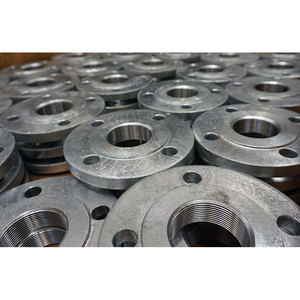
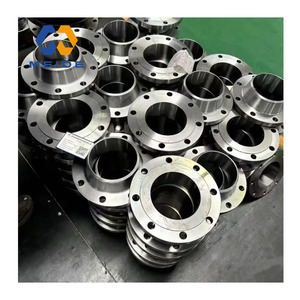
| Industrial Flanges | ASME B16.5, B16.47 Series A/B, EN 1092-1 | 1/2″ – 60″ (DN15 – DN1500) | Class 150 – Class 2500, PN 6 – PN 400 | Carbon Steel Q355D, P235GH, P250GH, 1.4404, A105N |
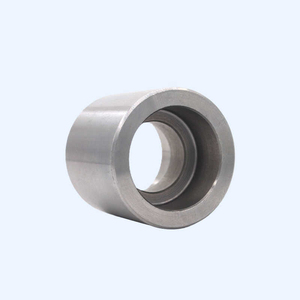
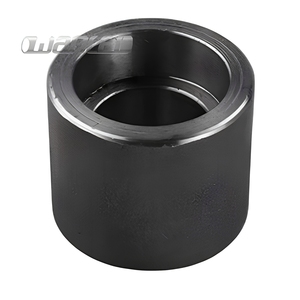
| Socket Weld & Threaded | ASME B16.11, BS 3799, ISO 4144 | 1/8″ – 4″ (DN6 – DN100) | 2000 LBS, 3000 LBS, 6000 LBS | Stainless Steel 304/316, ASTM A105 Carbon Steel |
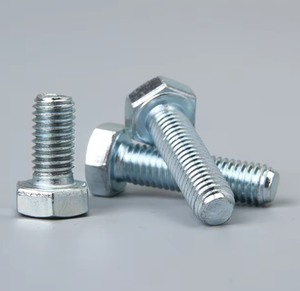
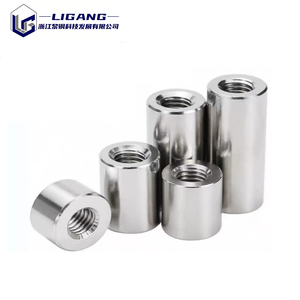
| High-Tensile Studs & Fasteners | ASTM A193, A194, ISO 898-1 | M12 – M72 | 1/2″ – 3″ UNC | Grade 8.8, 10.9, 12.9 | B7/2H, B8M/8M | Alloy Steel 4140/42CrMo, Stainless Steel 316, Inconel |
Procurement Trends & Future Technological Innovations (2025–2030)
The global piping components industry is experiencing a profound paradigm shift driven by clean-energy transitions, sour gas exploitation, and automated mega-facility construction. Procurement executives should take note of three critical trends impacting pipe elbow supply chains:
1. Hydrogen-Ready Pipeline Metallurgy & HIC Testing
With pure hydrogen transportation and carbon capture, utilization, and storage (CCUS) projects proliferating globally, standard ASTM A234 WPB elbows are undergoing specialized re-engineering. Future purchasing orders will require rigorous Hydrogen Induced Cracking (HIC) and Sulfide Stress Corrosion Cracking (SSCC) compliance according to NACE TM0284 / NACE MR0175. This demands vacuum-degassed ultra-low sulfur steels (S ≤ 0.002%) to prevent micro-delamination under high-pressure gas percolation.
2. Automated Cladding & Mechanically Lined Elbows
Rather than casting or forging expensive solid superalloys (such as Inconel 625, Hastelloy C276, or Monel 400), major offshore drilling operators are procuring composite bimetallic fittings. Our automated internal plasma-arc cladding lines weld a 3.0mm corrosion-resistant alloy (CRA) layer over an ASME B16.9 high-strength carbon steel backing elbow. This engineering innovation cuts exotic alloy material costs by 45% while achieving complete chemical resistance against acidic multiphase flows.
3. Digital Product Passports & Non-Destructive 3D Scanning
Dimensional compliance on critical radius elbows is transitioning away from manual mechanical templates to robotic blue-light 3D laser metrology. This captures over 2,000,000 surface coordinates, instantaneously mapping wall thickness distribution across the elbow crotch and generating a cloud-based digital twin. Engineering firms can import this data directly into finite element pipe-stress modeling software prior to onsite component delivery.