Precision-machined threaded hardware manufactured to international pressure retaining standards, featuring strict NPT/BSPT gage verification.
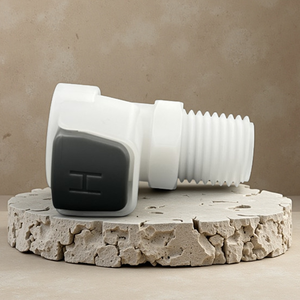
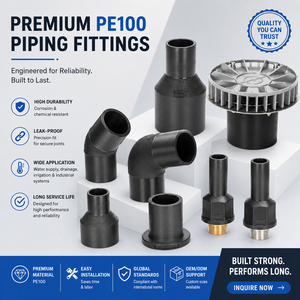
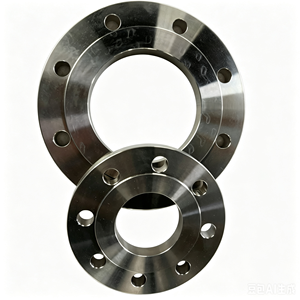
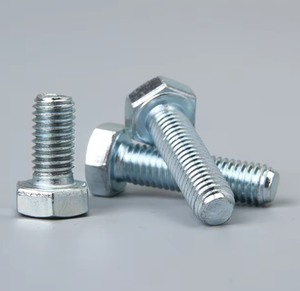
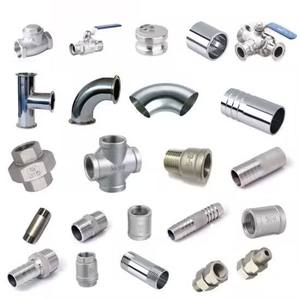
In process plant design, instrument hookups, and fluid distribution lines, the Hex Nipple serves as a critical male-threaded joint connection. While fundamentally designed to bridge two female-threaded ports, industrial-grade hex nipples—produced under ASME B16.11, BS 3799, and MSS SP-97 specifications—must resist extreme hydraulic pressures, thermal cycles, and corrosive exposure. As one of the top industrial metal components and fittings manufacturers, our operations adhere strictly to rigorous metallurgy benchmarks verified by ISO 9001 certified quality management systems, EIL approvals, and Indian Boiler Regulations (IBR) recognition.
A precision hex nipple features a distinct hexagonal middle section engineered precisely for wrench gripping, ensuring that proper installation torque can be applied without distorting the internal fluid flow profile or compromising pipe threads. High-integrity manufacturing demands seamless wrought bars or drop-forged billets conforming to ASTM A105 (Carbon Steel), ASTM A182 (F304/304L, F316/316L, Duplex 2205, Super Duplex 2507), or nickel alloys including Inconel 625, Monel 400, and Hastelloy C276. Threading accuracy is governed by ASME B1.20.1 for National Pipe Taper (NPT) and ISO 7-1 / BS 21 for BSPT/BSPP profiles, inspected utilizing hardened calibrated go/no-go ring gauges to prevent galling, weeping, or micro-gap gas leaks under cyclic hydrostatic pressure up to Class 6000 and Class 9000.
| Standard | Design Classification | Size Scope | Material Specification | Primary Application |
|---|---|---|---|---|
| ASME B16.11 / BS 3799 | Standard & Heavy Hex Nipple (3000# / 6000#) | 1/8″ to 4″ (DN6 – DN100) | ASTM A105, A350 LF2, A182 F316L | Oil & Gas Headers, Skid Fabrication, Chemical Drains |
| ASME B1.20.1 / EN 10226 | Reducing Hex Nipple (Differential Bores) | 1/4″ × 1/8″ to 3″ × 2″ | 304/304L, 316/316L, Alloy 20 | Instrumentation Gauges, Control Valve Reductions |
| MSS SP-83 / API 6A | High-Pressure Barstock Hex Nipple (10,000 PSI) | 1/4″ to 1-1/2″ | Duplex 2205, Inconel 625, Titanium Gr. 2 | Offshore Wellheads, Subsea Chokes, Sour Gas Service |
| DIN 2982 / ISO 4144 | Commercial Hexagon Barrel Nipple (PN 16 - PN 100) | DN8 to DN100 | 1.4404, 1.4301, P235GH, P250GH | Municipal Water, Food & Beverage Processing, Steam Utilities |
Traceability remains the bedrock of structural safety. Every single hex nipple fabricated at our facility receives a permanent micro-stamped heat number alongside material grade, wall schedule or pressure class, and thread designation. We guarantee that all deliveries are coupled with genuine EN 10204 3.1 Mill Test Certificates (MTC), reporting exact chemical composition (carbon equivalents, sulfur, phosphorus levels) and mechanical resilience properties (tensile strength, yield point, and Charpy V-Notch low-temperature impact tests).
The international landscape for industrial piping components is witnessing major shifts driven by energy transition dynamics, automated plant construction, and rigorous ESG carbon disclosure regulations. Procurement teams across Europe, North America, and the Middle East are modifying vendor assessment frameworks from mere unit cost metrics to total lifecycle value and operational durability. The following critical procurement and engineering trajectories define the next decade of hex nipple and forged fittings sourcing:
1. Shift Toward High-Performance Duplex & Super Austenitic Alloys: While carbon steel ASTM A105 historically accounted for more than 60% of procurement volume, the rapid scaling of green hydrogen transport, offshore wind substations, and high-salinity seawater reverse osmosis (SWRO) desalination has mandated materials resistant to localized pitting and crevice corrosion. Sourcing for UNS S31803 / S32205 (Duplex 2205) and UNS S32750 (Super Duplex 2507) hex nipples has grown by over 34% year-on-year, where a PREN (Pitting Resistance Equivalent Number) > 40 is mandatory.
2. NACE MR0175 / ISO 15156 Sour Service Compliance: With oil and gas operations drilling deeper into sour, hydrogen-sulfide-rich horizons, threaded nipples are vulnerable to Sulfide Stress Cracking (SSC) and Hydrogen-Induced Cracking (HIC). Advanced procurement protocols require strict hardness thresholds (maximum 22 HRC for carbon steels), normalized heat treatments, and controlled ferrite-austenite phase balances to ensure absolute safety across offshore refineries and petrochemical pipelines.
3. CNC Multi-Axis Automated Machining vs. Traditional Casting: Casting imperfections—such as sand holes, porosity, and uneven wall thickness—are unacceptable in modern high-pressure environments. Forward-looking EPC contractors now explicitly forbid cast hex nipples in critical lines, specifying hot-forged barstock processed on high-speed 5-axis CNC machining centers. This automation ensures micro-inch thread flank smoothness (Ra < 0.8 μm) and flawless thread runouts that minimize installation torquing stresses.
4. Digital Supply Chain Integration and Smart Material Passports: Future supply chains are prioritizing QR-code-enabled traceable serialization directly on hex nipples. Sourcing directors require automated access to digital platforms where inspectors can instantaneously verify material melt sources from reputed partner mills in Japan, South Korea, or India, validating positive material identification (PMI) data before shipments depart the port.
From simple galvanized plumbing connectors used in standard low-pressure municipal water conduits to ultra-precision, high-tensile threaded structural adapters used in aerospace propellants and nuclear cooling loops, the technological trajectory of the hex nipple reflects modern mechanical engineering progress. Key evolutionary drivers include:
Precision Anti-Galling Surface Engineering: Stainless steel and nickel alloy pipe threads are inherently susceptible to galling under friction during makeup. Modern manufacturing integrates electro-chemical polishing, silver plating, and molybdenum disulfide (MoS2) anti-friction coatings directly onto the precision male threads of hex nipples. This allows repeated make-and-break cycles in instrumentation testing benches without thread tearing or pressure seal degeneration.
Cleanliness for Ultra-High Purity (UHP) Service: In semiconductor manufacturing, medical gases, and clean hydrogen infrastructure, thread oils and micro-burrs pose critical contamination risks. Advanced production lines now implement ultrasonic multi-stage degreasing, cleanroom packaging, and passivation baths meeting ASTM A380/A967, ensuring hex nipples operate without contaminating carrier gases or analytical sampling lines.
Why Tier-1 EPC contractors, global stocking distributors, and industrial plants trust our heavy-duty piping components.
ISO 9001 quality system certified, EIL and IBR approved manufacturer. Extensive operating compliance with major international bodies including ASME, EN, DIN, BS, and API.
Equipped with high-accuracy multi-spindle CNC lathes capable of executing tight NPT, BSPT, and Metric thread tolerances with surface finishes exceeding standard Class 3000/6000 demands.
Ready barstock inventory encompassing Stainless (304L, 316L, 904L), Low-Temp Carbon Steel (A350 LF2), Duplex 2205, Inconel 625, Hastelloy C276, and high-tensile fastener grades.
Over 11 specialized test systems: Spectrometer PMI analysis, Hydrostatic burst chambers, Tensile/Hardness testing, Charpy V-notch impact, and profilometer thread geometry verification.
Complete traceability guaranteed from ingot to packing. Every batch includes full EN 10204 3.1 mill test certificates, heat numbers permanently marked, and third-party inspection support.
Proven supply record across major export hubs including UAE, Saudi Arabia, Qatar, Oman, Singapore, Europe, and the Americas, utilizing export-grade moisture-sealed wooden packaging.
Comprehensive solutions to frequent engineering, quality assurance, and purchase questions.
Connect directly with our engineering sales specialists to request quotation packages, EN 10204 3.1 material test certificates, or custom blueprint feasibility assessments.
Contact Us