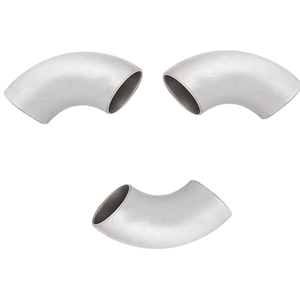
Explore our precision-machined buttweld fittings, forged flanges, threaded couplings, and sanitary elbows engineered to ASME, DIN, EN, and ISO dimensional tolerances.
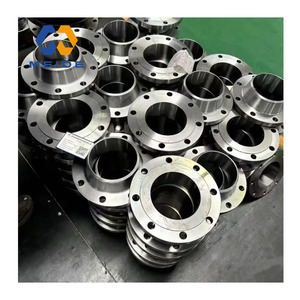
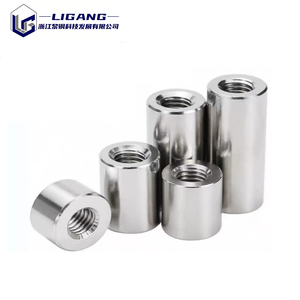
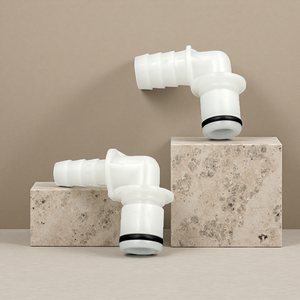
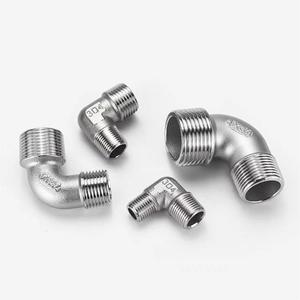
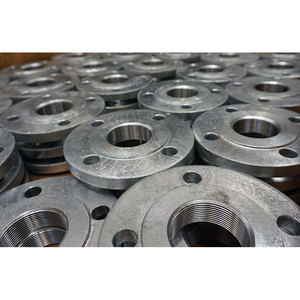
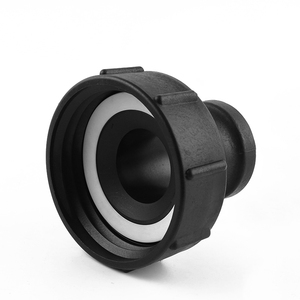
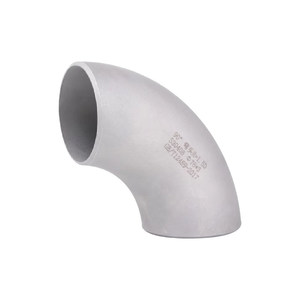
A technical analysis of stress profiles, metallurgical forming dynamics, and branch connection hydraulics in high-integrity piping systems conforming to ASME B16.9 and MSS SP-75.
In process plant design, a buttweld tee functions as the primary 90-degree branch split or converging confluence for pressurized media. Because the 90-degree intersection induces severe localized geometric discontinuity, the crotch region (the transition junction between run and branch) endures peak primary membrane and secondary bending stresses. As an industry-leading China best buttweld tee factory & exporter, our forging methodology eliminates internal notches, micro-fissures, and abrupt wall step-downs, maintaining precise wall thickness transitions to ensure uninterrupted fluid momentum and superior burst-proof margins.
For seamless equal and reducing tees up to 16 inches (DN400), our factory employs computerized cold hydraulic bulge forming. A straight seamless pipe section is cut to length, placed in an internal hydraulic die cavity, and injected with high-pressure fluid while synchronized axial hydraulic rams compress the pipe ends inward. The combined internal pressure and axial feeding force the metal outward into the die branch opening, producing a seamless tee with uniform grain flow, negligible wall thinning at the crotch, and exceptional surface finish free of circumferential weld seams.
For heavy-wall schedule branches (SCH 160 / XXS) and large diameters from 18 inches up to 60 inches (DN1500), hot extrusion or two-piece plate pressing is utilized. Calibrated induction heating softens prime ASTM/ASME plate or tubular stock to austenitizing temperatures (880°C–1050°C), allowing a hydraulic mandrel bullet to pierce and pull the branch neck without tensile tearing. Plate-formed fabricated tees undergo submerged arc welding (SAW) using automated robotic gantries, followed by 100% radiographic or phased array ultrasonic testing along weld seams.
| Component Type | Applicable Standards | Material Classifications | Size & Schedule Matrix | Inspection Protocol |
|---|---|---|---|---|
| Seamless Equal Tee | ASME B16.9, EN 10253-2, DIN 2615 | ASTM A234 WPB, WPC, A403 WP304L/316L | 1/2″ – 24″ (SCH 10S – SCH XXS) | 100% Hydrostatic, UT Wall Verification, PMI |
| Reducing Buttweld Tee | ASME B16.9, MSS SP-75 | ASTM A420 WPL6, A860 WPHY 52/60/65/70 | 3/4″×1/2″ – 48″×36″ (STD to SCH 160) | Crotch Thickness Gauge, MT Magnetic Particle |
| Fabricated Welded Tee | ASME B16.9, MSS SP-75, API 5L | ASTM A234 WP11, WP22, WP91, Inconel 625 | 26″ – 60″ (Up to 50mm Wall Thickness) | 100% Radiographic Testing (RT) / PAUT |
| Forged High-Pressure Branch | ASME B16.11, MSS SP-97 | ASTM A105N, A350 LF2, A182 F51/F53/F55 | 1/8″ – 4″ (3000#, 6000#, 9000# Class) | Liquid Penetrant (PT), Hardness Testing (NACE) |
Built upon an uncompromising foundation of verified metallurgy, comprehensive global approvals, and rigorous documentation compliance since 1991.
Our facility operates under an accredited ISO 9001:2015 quality assurance management system, supported by statutory Indian Boiler Regulations (IBR) approvals, Engineers India Limited (EIL) enlistments, and pre-qualifications for major Middle Eastern national oil companies including ADNOC project requirements.
Every single buttweld tee, elbow, reducer, and flange leaves our line with deep dot-peen or laser stamp markings specifying size, schedule, material grade, and melt heat number. Every consignment is delivered with authentic EN 10204 3.1 Mill Test Certificates detailing chemical composition, tensile tests, and Charpy impact data.
We source certified prime raw materials from tier-one steel producers in South Korea, Japan, and domestic prime mills. Billets and seamless parent pipes undergo strict incoming optical emission spectrometry (OES) analysis to verify low sulfur, controlled carbon equivalent (CE), and strict compliance with NACE MR0175/ISO 15156 sour service.
Our quality control center features 11 dedicated testing apparatuses including 1000kN universal tensile testing, sub-zero Charpy impact testing down to -196°C, digital Rockwell/Brinell hardness testers, hydrostatic test benches up to 15,000 psi, and automated ultrasonic (UT) flaw detectors.
Equipped with high-precision CNC multi-axis vertical boring and turning mills, we machine compound weld bevels (ASME B16.25 J-prep, V-prep) tailored for orbital automatic welding systems. Custom branches, special wall transitions, and non-standard outlet reductions are produced directly to client engineering drawings.
Serving major EPC contractors in Saudi Arabia, UAE, Qatar, Oman, Turkey, Egypt, Poland, Italy, USA, and Southeast Asia. All fittings are shot-blasted, rust-preventive coated, end-capped with heavy-duty polyethylene protectors, and crated in fumigated ISPM-15 wooden boxes or heavy-gauge steel crates.
How supply chain managers, EPC project heads, and piping engineers are adapting procurement workflows to meet decarbonization targets, modularization, and advanced material demands.
Demand is accelerating for Super Duplex (UNS S32750/2507) and Nickel Alloys (Inconel 625, Hastelloy C-276) in LNG bunkering, offshore carbon capture (CCUS), and hydrogen pipelines. Buyers prioritize factories capable of delivering dual-certified microstructures with pitting resistance equivalent numbers (PREN) ≥ 42.
European and American EPCs increasingly mandate Environmental Product Declarations (EPD) and Scope 1-3 carbon tracking. As a forward-thinking exporter, our sourcing strategy incorporates electric arc furnace (EAF) feedstocks with lower embodied carbon to satisfy EU Carbon Border Adjustment Mechanism requirements.
Manual paperwork is giving way to cloud-verified material passports. Each buttweld tee features etched 2D matrix QR codes linking site inspectors directly to raw heat melt logs, non-destructive test radiographs, and third-party Lloyd's or DNV sign-offs in real time.
To reduce costly on-site field welds in remote energy hubs, procurement frameworks favor vendors capable of delivering pre-welded sub-assemblies (tee-flange or tee-reducer spools) subjected to hydrostatic tests and internal epoxy or FBE coating prior to containerized dispatch.
Continuous investments in finite element simulation, servo-hydraulic cold extrusion, and phased array inspection elevate product life cycles in severe cyclic service.
Standard ASME B16.9 defines external end-to-end and center-to-end dimensions, yet grants manufacturers flexibility in internal crotch curvature. Leveraging sophisticated Finite Element Analysis (FEA), our tooling optimizes the parabolic contour of the crotch zone, mitigating hydrodynamic vortex formation, pressure drop (ΔP), and localized erosion-corrosion phenomena under high-velocity slurry and multiphase hydrocarbon flow.
Traditional gamma radiography on heavy-wall tees incurs radiation exclusion zones and environmental bottlenecks. Our manufacturing facility has transitioned to Full Matrix Capture (FMC) and Phased Array Ultrasonic Testing (PAUT) for welded and heavy forged tees. This guarantees sub-millimeter flaw detection along complex saddle curvature, delivering immediate electronic imaging data directly accessible by third-party inspectors.
Addressing critical metallurgical standards, dimensional tolerances, inspection guidelines, and export trade compliance for B2B procurement teams.
Connect with our technical sales engineers to review project datasheets, MTO line items, standard specifications, or custom forging drawings. Get direct mill pricing, certified MTC verification, and guaranteed delivery schedules.