Direct supply from audited processing lines, manufactured strictly to ASTM, ASME, EN, DIN, and ISO standards with EN 10204 3.1 certification.
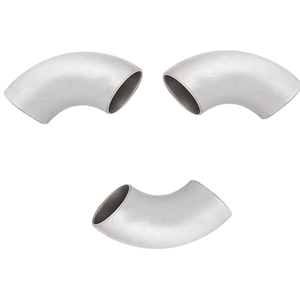
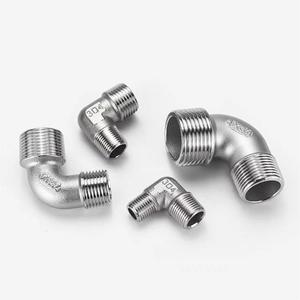
In modern industrial fluid handling, critical energy processing, and hygienic cleanrooms, materials must endure severe operating conditions without micro-structural failure. As China's premier manufacturer and exporter of ASTM A403 WP316L butt weld pipe fittings, we integrate metallurgy, automated forming, and multi-tier quality control to comply with ASME B16.9 and international pressure vessel directives.
ASTM A403 covers wrought austenitic stainless steel fittings for pressure piping systems. The "WP" designation confirms wrought grade construction produced from seamless pipes, welded pipes, or forged plates through extrusion, hot-pressing, or cold drawing. Grade WP316L fittings are segmented into distinct testing classes based on fabrication methodology:
Fabricated from seamless pipes or tubes without longitudinal welds. Primarily utilized in cyclic fatigue environments, ultra-high pressure configurations, and nuclear cooling applications where weld factor derating (E=1.0) is mandatory.
Manufactured from welded pipe or welded plate where all component and fabrication welds undergo 100% full radiographic examination (RT) or equivalent ultrasonic testing (UT), ensuring weld seam integrity matching parent metal strength.
Piping components formed from radiographically examined pipe where the fitting fabrication welds are similarly inspected per ASME Section VIII, Div 1, ensuring compliance for standard petrochemical and pipeline processing loops.
| Chemical Composition (%) | Carbon (C) | Manganese (Mn) | Silicon (Si) | Phosphorus (P) | Sulfur (S) | Chromium (Cr) | Nickel (Ni) | Molybdenum (Mo) |
|---|---|---|---|---|---|---|---|---|
| ASTM A403 WP316L Limit | ≤ 0.030 | ≤ 2.00 | ≤ 1.00 | ≤ 0.045 | ≤ 0.030 | 16.0 – 18.0 | 10.0 – 14.0 | 2.00 – 3.00 |
| Actual Inspection Mean (Our Mills) | 0.018 – 0.024 | 1.15 – 1.45 | 0.45 – 0.60 | 0.022 – 0.028 | 0.002 – 0.005 | 16.85 – 17.30 | 10.20 – 11.10 | 2.10 – 2.35 |
The procurement landscape for corrosion-resistant alloy (CRA) fittings is evolving. Global EPCs and project specifiers require manufacturing partners who offer integrated supply networks, automated validation, and resilient material sourcing.
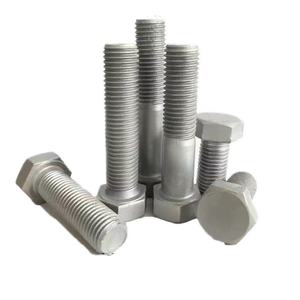
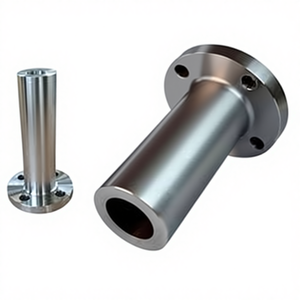
Procurement directors are shifting from piecemeal sourcing toward unified packages. Sourcing ASME B16.9 butt weld elbows, ASTM A182 forged flanges, and high-tensile ASTM A193/A194 fasteners from a single manufacturer mitigates site fit-up delays and reduces third-party expediting costs.
Hard-copy mill test reports are being replaced by direct digital traceability. Buyers now require two-dimensional QR codes laser-etched onto fitting walls, linking directly to digital EN 10204 3.1 certificates, raw ingot heat melt numbers, and Charpy impact inspection logs.
Procurement teams are looking beyond initial purchase price to consider total cost of ownership. Premature failures from substandard wall thinning in long-radius elbows cause expensive unplanned refinery shutdowns. Certified wall tolerances provide predictable operating life.
Technological investments in cold mandrels, CNC bevellers, and clean energy heat treatment are redefining the production of stainless and alloy fittings:
Modern elbow production has evolved from destructive hot-stamping to high-precision hydraulic cold/warm mandrel expansion, maintaining uniform wall thickness throughout the intrados and extrados.
Compound bevels, J-bevels, and tight-tolerance counterbores are machined via multi-axis CNC systems, ensuring mismatch-free orbital welding on automated cross-country lines.
Continuous gas-fired and electric solution annealing furnaces operate above 1040°C (1900°F), followed by rapid water quenching to re-dissolve precipitated carbides and restore corrosion resistance.
Transitioning from hazardous hydrofluoric-nitric pickling systems to closed-loop, ultrasonic citric acid and automated electro-polishing suites meets ESG criteria while yielding clean surface finishes.
Our operation is recognized internationally as an engineering-focused manufacturer and exporter of butt weld fittings, forged flanges, and industrial fasteners. Certified under ISO 9001 quality systems, our products carry project approvals from global engineering firms and conform strictly to ASME B16.5, B16.9, B16.11, B16.47, EN 1092-1, and DIN specifications.
Equipped with 11 advanced internal testing suites, including portable optical emission spectrometers (PMI), direct-reading emission spectrometers, hydrostatic test benches, ultrasonic thickness gauges, and Charpy impact testers down to -196°C.
We source prime, virgin billets and mother pipes strictly from tier-one steelmakers in China, South Korea, and Japan. We reject rerolled or scrap-derived feedstocks to ensure complete chemical homogenization and clean microstructures.
With an on-time dispatch rate exceeding 98% and client retention above 90%, we consistently supply mega-projects throughout the UAE, Saudi Arabia, Qatar, Oman, Singapore, Malaysia, Indonesia, the United States, the UK, and across Europe.
Direct technical guidance addressing common engineering queries encountered during specification and purchasing.