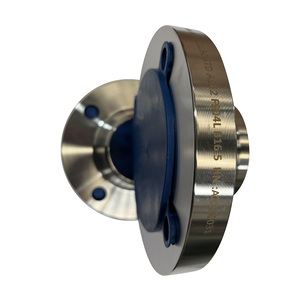

Engineered to withstand cyclic thermal shocks, sub-zero embrittlement, and sour operating environments. All components are certified with 100% heat traceability and rigorous mechanical verification.
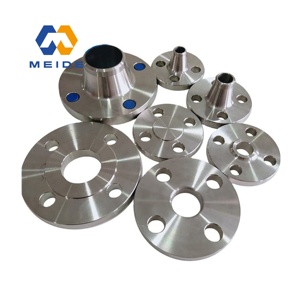
A technical examination of low-alloy chromium-molybdenum bolting engineered specifically for low-temperature, sub-sea, and cryogenic pressure retaining equipment.
In high-pressure piping assemblies and cryogenic terminal environments, fastener integrity is the paramount factor governing containment safety. The standard ASTM A320 / A320M specification establishes rigid parameters for alloy-steel and stainless-steel bolting materials intended for low-temperature service. Among these variants, Grade L7 (manufactured from liquid-quenched and tempered AISI 4140/4142 alloy steel) represents the international engineering benchmark for low-temperature pressure vessels, valves, ASME B16.5 / B16.47 flanges, and petrochemical line fittings operating down to -150°F (-101°C).
ASTM A320 L7 bars undergo controlled austenitizing followed by intensive oil or polymer agitation quenching. Rapid cooling prevents the formation of proeutectoid ferrite, securing a core microstructure comprising ≥ 90% fine tempered martensite.
Subsequent tempering is executed at a strict minimum of 1150°F (620°C), allowing complete relief of internal residual stresses while tuning toughness and yield properties.
Cryogenic toughness represents the defining technical boundary for L7. ASTM A320 mandates that a set of three longitudinal impact specimens absorb an average of not less than 20 ft-lbf (27 J), with no single specimen falling below 15 ft-lbf (20 J) at -150°F (-101°C).
Our vacuum-degassed raw material melts consistently achieve average absorption values exceeding 35–45 ft-lbf at tested temperatures, providing exceptional design safety margins.
Where cryogenic infrastructure interacts with hydrogen sulfide (H₂S) in upstream exploration, standard L7 bolting is susceptible to Sulfide Stress Cracking (SSC). In these environments, we produce the specialized ASTM A320 Grade L7M variant.
Through higher tempering regimes, Grade L7M caps hardness strictly at 235 HBW (22 HRC), fulfilling full compliance with NACE MR0175/ISO 15156 while sustaining -100°F impact performance.
| Grade Designation | Base Chemistry (AISI) | Tensile Strength min. | Yield Strength (0.2%) min. | Charpy Impact Test Temp. | Primary Industrial Sector |
|---|---|---|---|---|---|
| ASTM A320 L7 | 4140 / 4142 Cr-Mo | 125 ksi (860 MPa) | 105 ksi (725 MPa) | -150°F (-101°C) ≥ 20 ft-lbf | LNG Carriers, Arctic Valves, Cryogenics |
| ASTM A320 L7M | 4140 / 4142 Cr-Mo | 100 ksi (690 MPa) | 80 ksi (550 MPa) | -100°F (-73°C) ≥ 20 ft-lbf | Sour Gas (H2S), NACE MR0175 Subsea |
| ASTM A193 B7 | 4140 / 4142 Cr-Mo | 125 ksi (860 MPa) | 105 ksi (725 MPa) | Ambient (No impact mandate) | Standard Refining & High-Temp Steam |
| ASTM A320 B8 (Cl.2) | AISI 304 Stainless (Strain Hardened) | 125 ksi (860 MPa) | 100 ksi (690 MPa) | -325°F (-196°C) ≥ 15 ft-lbf | Liquid Nitrogen, Liquid Helium Lines |
| ASTM A320 L43 | 4340 Ni-Cr-Mo | 125 ksi (860 MPa) | 105 ksi (725 MPa) | -150°F (-101°C) [Diameters > 2.5"] | Heavy Offshore Flange Tie-Ins |
Strategic industry insights for engineering EPCs, project estimators, and supply chain directors managing capital expenditures in high-stakes energy transitions.
Global liquefaction and regasification terminals require massive volumes of standardized, fully traceable A320 L7 stud bolts to pair with ASME B16.5 and B16.47 weld neck flanges. Project owners now reject fragmented batch supplies, preferring certified single-source manufacturers capable of delivering studs, heavy hex nuts (ASTM A194 Grade 4 or Grade 7), and RTJ gaskets under synchronized heat-lot documentation.
Marine atmospheric corrosion represents the primary failure vector in offshore LNG installations. Traditional electro-galvanizing induces hydrogen embrittlement risks in high-strength fasteners. Current engineering specifications increasingly require advanced PTFE/Fluoropolymer (Xylan 1070 / 1424) systems applied over zinc-nickel or ceramic bases, guaranteeing 3,000+ hours of ASTM B117 salt spray endurance with low makeup torque variation.
Tier-1 oil and gas operators (ADNOC, Saudi Aramco, Shell, ExxonMobil) are enforcing strict digital chain-of-custody protocols. Procurement models are moving away from manual MTC review toward machine-readable, QR-coded EN 10204 3.1 digital certificates mapped directly to cold-stamped heat identifiers on every stud end. This ensures zero risk of counterfeit substitution across field construction sites.
The transition toward liquid hydrogen (LH₂) transport at -423°F (-253°C) is pushing the metallurgical frontier beyond standard ferritic and martensitic alloy steels. While ASTM A320 L7 dominates LNG down to -101°C, hybrid installations are spurring developments in precision cryogenic processing. This includes cryogenic deep-freeze stabilization (-196°C) post-quench to completely eliminate retained austenite, as well as the integration of advanced vacuum induction melting (VIM-VAR) techniques to suppress sulfur and phosphorus contaminants below 0.005%, achieving unprecedented crack initiation resistance.
Leveraging deep industrial heritage since 1991, our production lines combine precision machining, strict international compliance, and comprehensive testing infrastructure.
ISO 9001 certified operations with dedicated QA/QC laboratories. Products engineered to meet EIL, IBR, and major international EPC vendor qualifications.
Every single ASTM A320 L7 stud bolt and nut is legibly stamped with certified heat numbers and grade symbols, completely cross-referenced to EN 10204 3.1 MTCs.
Equipped with low-temperature Charpy impact chambers operating down to -196°C, optical emission spectrometers (OES), tensile benches, and micro-hardness testers.
From M12 to M100 in metric and 1/2" up to 4" UNC/8-UN thread profiles, covering full-thread stud bolts, tap-end studs, heavy hex nuts, and engineered specialty components.
In-depth technical answers addressing specification nuances, inspection criteria, and operational standards for international purchasing teams.
Direct mill pricing, verified metallurgical compliance, and global delivery execution from China's leading export authority.