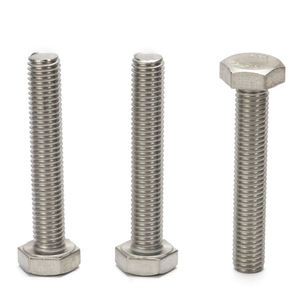
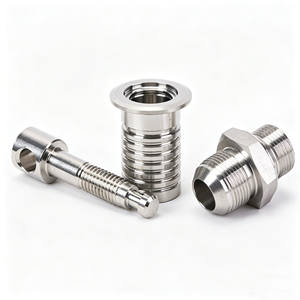
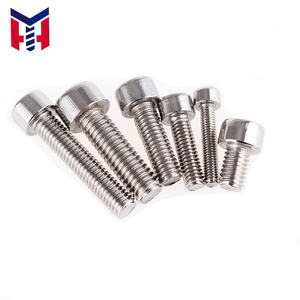
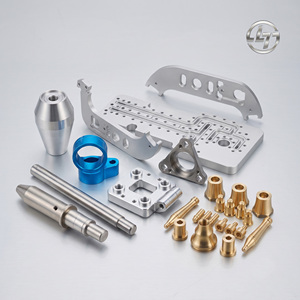
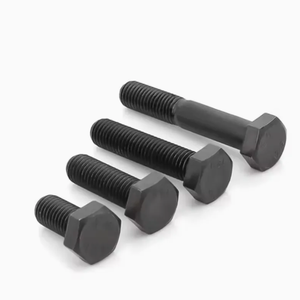
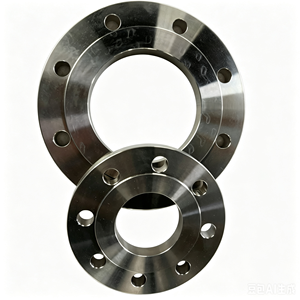
Source high-integrity chromium-molybdenum alloy steel stud bolts, precision CNC adapters, heavy hex nuts, and engineered flanges directly from verified China manufacturing facilities. Certified for high-pressure, elevated-temperature boilers, pressure vessels, and offshore oilfield piping.
ASTM A193 Grade B7 is the global industrial baseline specification for heat-treated chromium-molybdenum alloy steel bolting material intended for pressure vessels, valves, flanges, and fittings in elevated-temperature, high-pressure environments. Based metallurgically on AISI 4140/4142 alloy steel, its distinctive balance of exceptional tensile strength, creep resistance, and ductility is achieved through a closely governed induction or continuous furnace austenitizing, liquid quenching, and high-temperature tempering procedure.
To comply with rigorous international codes such as ASME Boiler and Pressure Vessel Code (BPVC) Section VIII, the minimum tempering temperature for Grade B7 must be kept strictly at or above 1100°F (593°C). This critical thermal threshold transforms brittle martensite into tempered martensite and fine bainite, providing the bolt with structural stability, notch toughness, and resistance against sudden thermal-shock failures under cyclic operations reaching up to 800°F (427°C).
| Nominal Diameter (Inches) | Tensile Strength min. (ksi / MPa) | Yield Strength 0.2% min. (ksi / MPa) | Elongation in 4D min. (%) | Reduction of Area min. (%) | Hardness Range (HRC / HBW) |
|---|---|---|---|---|---|
| Up to 2-1/2" (incl.) | 125 ksi (860 MPa) | 105 ksi (720 MPa) | 16.0% | 50.0% | HRC 35 max / 321 HBW |
| Over 2-1/2" to 4" (incl.) | 115 ksi (795 MPa) | 95 ksi (655 MPa) | 16.0% | 50.0% | HRC 35 max / 321 HBW |
| Over 4" to 7" (incl.) | 100 ksi (690 MPa) | 75 ksi (515 MPa) | 18.0% | 50.0% | HRC 35 max / 321 HBW |
Note: For sour oil and gas service (H2S environments), buyers typically cross-reference ASTM A193 Grade B7M, which imposes an absolute maximum hardness limit of 235 HBW (99 HRB) to curb sulfide stress cracking (SSC) per NACE MR0175/ISO 15156.
Industrial fastening supply chains are undergoing structural transformations driven by global sustainability mandates, severe-environment exploration, and automated plant construction.
Global environmental mandates (including EU RoHS, REACH, and domestic EPA regulations) are accelerating the phase-out of hexavalent chromium passivations and toxic cadmium platings. Advanced surface treatment protocols have transitioned to multi-layer ceramic coatings, fluoropolymer PTFE (Xylan 1424/1070), and zinc-nickel (Zn-Ni) electroplating. These modern barriers achieve over 3,000 to 5,000 hours of neutral salt spray (ASTM B117) protection without generating galling or thread binding during controlled hydraulic tensioning.
Top-tier Chinese fastener manufacturers have abandoned batch-level paperwork in favor of laser-etched QR identifiers and direct heat-code matrix markings directly on the stud end-faces. Procurement directors can instantly retrieve optical emission spectrometry (OES) chemical breakdowns, furnace heat-run time-temperature charts, and cryogenic Charpy V-notch impact values directly linked to EN 10204 Type 3.1 or 3.2 inspections.
With the exponential expansion of global LNG distribution networks, offshore floating storage units (FSRUs), and arctic terminal construction, procurement demand is increasingly bridging high-tensile A193 B7 requirements with impact-tested ASTM A320 Grade L7/L7M specifications. Modern factories now maintain synchronized continuous tempering lines configured to supply both elevated-temperature and low-temperature impact certified bolting materials (-150°F / -101°C Charpy validation).
In process plant construction, over 80% of flange joint leakages during pre-commissioning hydro-testing stem not from gasket failure alone, but from uneven bolt load dispersion, thermal expansion mismatch, and unverified nut thread clearances. ASTM A193 B7 stud bolts must continuously interface with ASTM A194 Grade 2H heavy hex nuts and precision-machined ASME B16.5 / ASME B16.47 weld neck or blind flanges.
When engineering assemblies pair certified B7 studs with standard finished hex nuts instead of heavy hex nuts, thread stripping and excessive face-bearing stresses occur under high clamping forces. Sourcing the entire package—spanning high-tensile B7/2H bolting, custom CNC machined adapters, forged pipe fittings, and blind/slip-on flanges—from a unified manufacturing partner guarantees tight tolerance controls, uniform pitch diameters (UNC 8-UN series for >1"), and fully matched metallurgical expansion coefficients.
Combining precision CNC engineering, comprehensive forge operations, and strict chemical and physical metallography under ISO 9001 certified workflows.
Certified production compliant with global pressure boundary standards, including Indian Boiler Regulations (IBR), Engineers India Limited (EIL), and ADNOC-aligned project specifications.
Thread profiles are exclusively produced via cold roll forming rather than machine cutting, yielding uninterrupted grain flow, superior fatigue life, and burnished flank surfaces.
Every single pallet is backed by authentic mill test reports including complete melt chemical composition, microstructural grain sizing, yield/tensile load curves, and hardness mapping.
Fasteners and precision fittings are oil-dipped, bagged, tagged with barcoded heat identifiers, and packed in reinforced, fumigated marine plywood crates for global container shipments.
Clear, technical answers to critical engineering, inspection, and commercial inquiries.
Direct technical consultations, comprehensive material test samples, and project-based quotation packages available within 24 business hours.