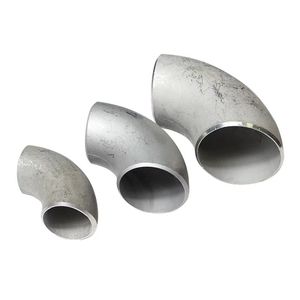

Explore our industrial-tier portfolio designed for harsh operating parameters, cyclic thermal loading, and certified pipeline construction across global energy projects.
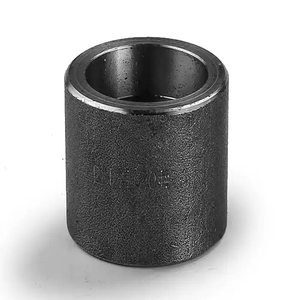
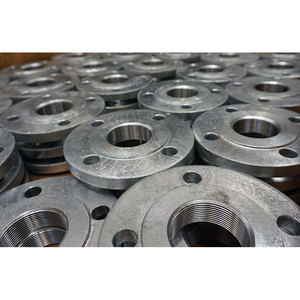
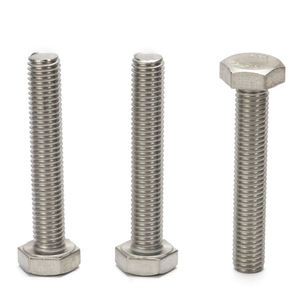
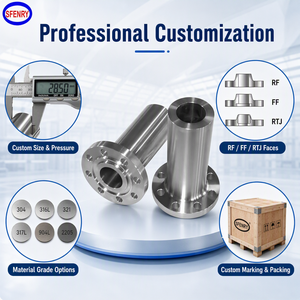
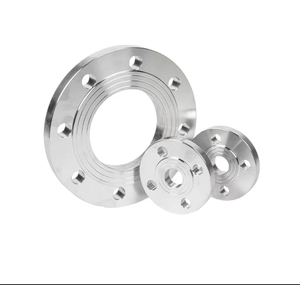
Operating as a Government Recognized Export House, we combine comprehensive metallurgical expertise with full closed-die forging capabilities to meet strict client and EPC project demands.
We source prime, vacuum-degassed ingots exclusively from certified steel mills in India, South Korea, and Japan. Clean chemical matrices prevent micro-fissures and excessive non-metallic inclusions during hot forging operations.
Components undergo closed-die forging followed by computer-monitored normalizing or solution annealing. This process yields superior Charpy V-notch toughness across severe temperature envelopes from -196°C to +550°C.
Certified under the European Pressure Equipment Directive (PED 2014/68/EU Module H), EIL (Engineers India Limited), and IBR (Indian Boiler Regulations). Each component features laser or low-stress stamping for continuous heat traceability.
Understanding internal geometry, socket clearance requirements, and stress distribution in small-bore, high-pressure piping assemblies.
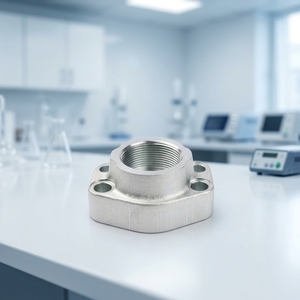
Socket weld flanges (ASME B16.5) feature a counterbore matching the pipe outside diameter (OD) and an internal bore aligning with the nominal pipe ID. A fundamental requirement during field installation is providing an approximate 1/16-inch (1.6 mm) minimum clearance between the pipe end and the socket shoulder.
This expansion gap prevents excessive residual stress concentrations across the root pass caused by uneven thermal expansion during solidification and subsequent thermal cycling. Fillet welds are inspected per ASME Section IX and ASME B31.3 criteria to prevent root cracking and uneven throat thickness.
When engineering small-bore process connections (typically NPS 1/2 through NPS 2), piping engineers routinely evaluate Socket Weld, Slip-On, and Weld Neck flange profiles:
Compared to Slip-On Flanges: Socket Weld units require only a single external fillet weld, significantly reducing assembly hours and field labor costs while preserving higher burst and fatigue resistance in Class 600 through Class 1500 lines.
Compared to Weld Neck Flanges: Socket Weld designs bypass the time-consuming edge beveling, precise back-welding alignment, and comprehensive radiography testing (RT) required on miniature buttweld joints, speeding up modular skid fabrication.
| Dimensional / Pressure Standard | Material Classifications | Available Size Envelope | Rated Working Pressure | Facing Finishes Available |
|---|---|---|---|---|
| ASME B16.5 Socket Weld | ASTM A105N, A350 LF2, A182 F316L/F304L | NPS 1/2″ to 3″ (DN15 – DN80) | Class 150, 300, 600, 1500 | RF (125-250 AARH), RTJ, Flat Face |
| EN 1092-1 Type 12 / 11 | P250GH, P280GH, 1.4404, 1.4462 Duplex | DN 10 to DN 100 | PN 16, PN 25, PN 40, PN 63, PN 100 | Type B1 (Ra 3.2-12.5), Type B2 (Ra 0.8-3.2) |
| JIS B2220 / BS 10 | SS400, SUS304, SUS316, Carbon Mild Steel | 10A to 80A / 1/2″ to 3″ | 10K, 20K, 30K / Table D, E, F, H | Raised Smooth Face, Serrated Concentric |
| Special NACE MR0175 / Sour | Alloy 625, Hastelloy C-276, Super Duplex | NPS 1/2″ to 2″ | Class 600 to 2500 | Precision RTJ Groove (ASME B16.20 Gaskets) |
Market dynamics, regulatory evolution, and material developments reshaping the supply chain for European and worldwide piping systems.
With massive investments flowing into hydrogen distribution and cryogenic liquified natural gas (LNG), pipeline specifications require lower trace sulfur, low-cobalt alloys, and tight micro-inclusion controls. Socket weld interfaces are audited with helium leak detection and sub-zero Charpy impact validation at -196°C.
Global EPC contractors and European plant operators are moving away from manual, unverified paper paperwork. Digital documentation hubs incorporating cryptographic verification, 2D DataMatrix barcode stamping, and instant mill heat mapping are becoming mandatory tender prerequisites.
Supply chain disruptions have highlighted the risks of single-region procurement. Tier-1 engineering firms prioritize manufacturers with established international distribution ties, localized consignment inventories, and flexible production schedules across both carbon and exotic alloy lines.
Technical and commercial answers addressing common engineering inquiries, inspection protocols, and material selection criteria.
Connect with our technical sales division to download complete flange dimension tables, material property charts, and receive formal bids for upcoming projects.
Get Catalog