
Manufactured under rigorous European Conformity (CE) protocols and ASME criteria, each component is calibrated for maximum seating integrity, cyclic thermal resilience, and zero-leak joint efficiency.
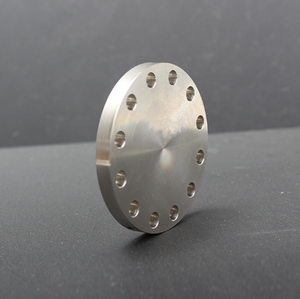
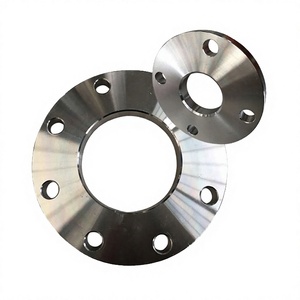
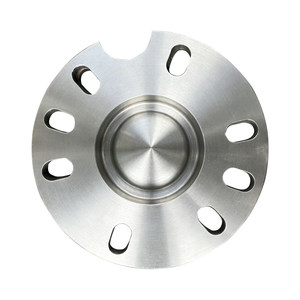
Operating as a premier Government of India Recognised Export House, our manufacturing ecosystem bridges European regulatory mandates (Pressure Equipment Directive 2014/68/EU) with ASME code enforcement. For over three decades, international engineering, procurement, and construction (EPC) conglomerates have relied on our Mumbai-based manufacturing facilities to deliver critical pressure-boundary components.
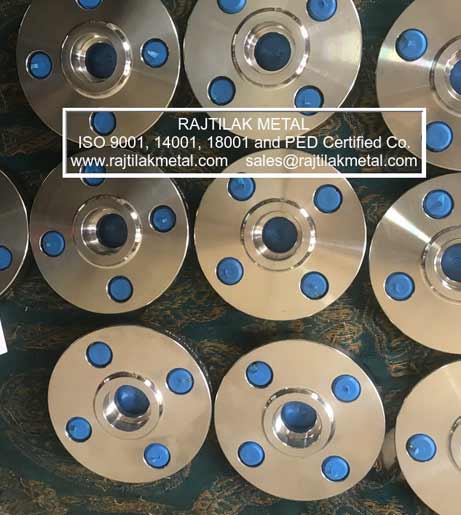
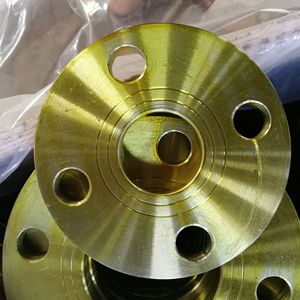
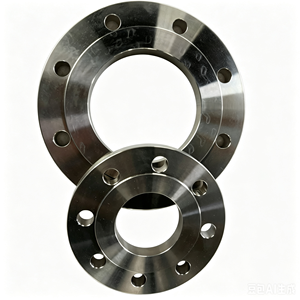
In process piping design, the plate flange (designated in Europe as EN 1092-1 Type 01 Plate Flange for Welding and in American systems as a plate-machined slip-on or flat-face ring) serves as a vital mechanical connector. Operating under the European Union's Pressure Equipment Directive (PED 2014/68/EU), plate flanges must satisfy rigorous mechanical, metallurgical, and QA conditions to carry the CE mark. Non-compliant plate flanges present hazardous failure risks, notably bolting-induced flange ring deformation, laminar shear tear under internal hydrostatic thrust, and gasket-face micro-leakage.
European design codes establish precise material specifications for plate flanges. Unlike forged hubs that benefit from omnidirectional grain compaction, plate flanges are turned directly from normalized hot-rolled heavy steel plate (EN 10028-2/3) or forged bar disks. This structural difference requires specific testing across the transverse and thickness directions:
| Standard / Type | Material Specification | Pressure Class / PN | Permissible Applications | Critical Test Criteria |
|---|---|---|---|---|
| EN 1092-1 Type 01 (Plate) | P235GH, P265GH, P280GH, 1.4404, 1.4307 | PN 2.5, PN 6, PN 10, PN 16, PN 25, PN 40 | Low-to-medium pressure process loops, utility, water, district cooling | Ultrasonic lamination scanning (EN 10160), Charpy V-notch at 0°C / -20°C |
| EN 1092-1 Type 02 (Loose Plate) | S235JR, P245GH, 1.4301 | PN 6 to PN 40 | Used with Type 32/33 welded lap ends, modular skid piping | Bending moment tolerance, bore alignment concentricity |
| EN 1092-1 Type 05 (Blank / Blind) | P250GH, P355NH, 1.4462 Duplex | PN 6 to PN 100 | Vessel closures, piping isolation, hydrostatic testing manifolds | Hydrostatic burst margins, transverse ductility verification |
| ASME B16.5 Slip-On Machined | ASTM A105, A516 Gr 70, A182 F304L/F316L | Class 150, Class 300 | Hydrocarbon process manifolds, cooling water, HVAC secondary loops | Tension tests, hardness limit ≤ 187 HBW (NACE MR0175 compliant) |
| JIS B2220 Plate (SOP) | SS400, SUS304, SUS316 | JIS 5K, 10K, 16K | Marine piping, boiler plant auxiliaries, Asian OEM machinery | Parallelism checking, gasket face finish Ra 3.2 to 6.3 μm |
To qualify for CE conformity marking, plate flange manufacturers must establish a certified Quality Management System according to PED 2014/68/EU Annex I, Section 4.3, verified by a designated European Notified Body (such as TÜV, Lloyd's Register, or Bureau Veritas). The manufacturer must enforce:
1. Laminar Integrity Assurance: Hot-rolled heavy steel plates intended for Type 01 or Type 05 fabrication must undergo automated ultrasonic scanning in accordance with EN 10160 Class S1/E1 or ASTM A578 Level B. This guarantees the core plate material is free from subsurface inclusions, laminations, and non-metallic segregations that could sheer under longitudinal piping bending moments.
2. Specified Chemical & Impact Resilience: Carbon steel plate materials like P265GH must feature a maximum Carbon Equivalent Value (CEV ≤ 0.45) to ensure field weldability without preheat cracking. Austenitic grades (1.4404 / 316L) require Solution Annealing at 1050°C followed by rapid water quenching to completely dissolve chromium carbides and prevent intergranular stress corrosion along heat-affected zones (HAZ).
3. Serrated Sealing Finishes: According to EN 1092-1, sealing face geometries must adhere to Type A (Flat Face) or Type B1 (Raised Face: Ra 3.2 to 12.5 μm concentric or spiral phonographic serration) to ensure consistent gasket crush dynamics under moderate bolt torques.
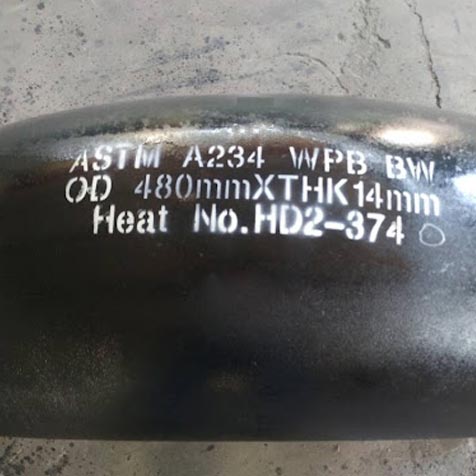
In high-pressure and toxic media handling systems, uncertified components present unacceptable operational and environmental liabilities. At Rajtilak Metal, our quality assurance protocols ensure every single plate flange is permanently hard-stamped with its unique heat identity, dimensional standard, nominal bore, pressure rating, and material melt code.
Each delivery is paired with an authentic EN 10204 Type 3.1 inspection certificate issued directly from our in-house metallurgical testing center, detailing true ladle chemical analysis, tensile yield, elongation values, and Charpy impact joules. For offshore critical pipelines, we facilitate EN 10204 Type 3.2 independent third-party certification witness through DNV, BV, SGS, or TÜV.
As global supply chains adjust to carbon taxation, green energy shifts, and automated logistics, enterprise procurement officers and EPC lead buyers face emerging commercial and compliance variables. Sourcing plate flanges can no longer be approached as a generic bulk buy; it demands proactive alignment with the following market dynamics:
The European Union's Carbon Border Adjustment Mechanism (CBAM) requires international steel importers to disclose precise embedded direct and indirect CO2 emissions. Global manufacturers operating energy-efficient electric arc furnaces (EAF) or clean forging operations now hold a substantial cost and tariff advantage over carbon-intensive blast furnace producers.
Paper-based test reports are rapidly being replaced by encrypted, QR-coded Digital Product Passports (DPP). Sourcing teams can scan flange hubs on delivery to retrieve instant spectroscopic chemistry, mechanical heat logs, and third-party inspection sign-offs, significantly reducing receiving inspection bottlenecks.
Advanced nesting algorithms utilizing multi-kilowatt fiber laser systems achieve raw material yields over 88%, reducing scrap generation compared to traditional oxy-fuel cutting. Buyers benefit from lower piece costs, superior perimeter smoothness, and reduced machining allowances on outer circumferences.
The technical demands placed on plate flanges continue to evolve beyond standard mild steel water distribution. Emerging industrial processes require higher resistance to cyclic temperatures, mechanical fatigue, and chemical attack:
To reduce capital expenditure in corrosive hydrogen sulfide (H2S) environments, manufacturers are turning to explosively clad or roll-bonded plate materials: backing structural plates of P265GH or ASTM A516 with an impervious 3mm layer of Inconel 625, Hastelloy C276, or 904L super austenitic stainless.
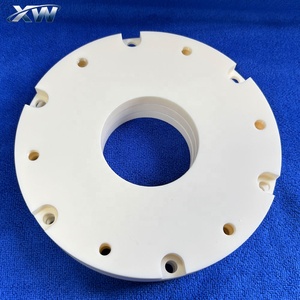
For specialized semiconductor etch lines, glass furnace exhausts, and abrasive slurry applications where metallic materials undergo rapid galvanic or erosion breakdown, perforated 99% Alumina ceramic flange plates serve as wear-resistant, electrically isolating barrier rings.
Multi-spindle vertical machining centers (VMC) driven by CAD/CAM models eliminate pitch circle diameter (PCD) drilling deviations. Positional hole tolerances are held within ±0.2mm, preventing field bolt binding and ensuring uniform gasket compression during cross-pattern bolting torques.
The table below provides dimensional, bolting, and maximum allowable operating pressure comparisons across common European (EN 1092-1 Type 01) and ANSI plate flange designations to assist project engineering teams with line class specifications:
| Nominal Size (DN / NPS) | Normative Standard | Flange OD (mm) | Pitch Circle (PCD) | Bolt Holes x Dia | Recommended Stud Size | Tightening Torque (Nm) |
|---|---|---|---|---|---|---|
| DN 50 (2 Inch) | EN 1092-1 PN16 | 165 mm | 125 mm | 4 x 18 mm | M16 x 65 | 85 – 110 Nm |
| DN 80 (3 Inch) | EN 1092-1 PN16 | 200 mm | 160 mm | 8 x 18 mm | M16 x 70 | 90 – 115 Nm |
| DN 100 (4 Inch) | EN 1092-1 PN16 | 220 mm | 180 mm | 8 x 18 mm | M16 x 75 | 100 – 130 Nm |
| DN 150 (6 Inch) | EN 1092-1 PN16 | 285 mm | 240 mm | 8 x 22 mm | M20 x 85 | 175 – 220 Nm |
| DN 200 (8 Inch) | EN 1092-1 PN16 | 340 mm | 295 mm | 12 x 22 mm | M20 x 90 | 190 – 240 Nm |
| DN 300 (12 Inch) | EN 1092-1 PN16 | 460 mm | 410 mm | 12 x 26 mm | M24 x 105 | 340 – 410 Nm |
| 2 Inch Class 150 | ASME B16.5 Plate SO | 152.4 mm (6.0″) | 120.6 mm (4.75″) | 4 x 19.0 mm | 5/8″ UNC x 3.0″ | 95 – 120 Nm |
| 4 Inch Class 150 | ASME B16.5 Plate SO | 228.6 mm (9.0″) | 190.5 mm (7.50″) | 8 x 19.0 mm | 5/8″ UNC x 3.5″ | 110 – 140 Nm |
| 6 Inch Class 150 | ASME B16.5 Plate SO | 279.4 mm (11.0″) | 241.3 mm (9.50″) | 8 x 22.2 mm | 3/4″ UNC x 4.0″ | 180 – 230 Nm |
| 8 Inch Class 150 | ASME B16.5 Plate SO | 342.9 mm (13.5″) | 298.4 mm (11.75″) | 8 x 22.2 mm | 3/4″ UNC x 4.25″ | 200 – 260 Nm |
Addressing essential compliance considerations, weld prep standards, and delivery terms directly relevant to EPC managers, inspection agencies, and supply chain directors.
An EN 1092-1 Type 01 plate flange is a flat ring slipped over the pipe end and secured using two fillet welds (one internal, one external). It lacks a forged tapered hub, meaning stress concentrations under pipe bending moments are concentrated at the fillet welds. Type 01 flanges are cost-effective and suited for low-to-moderate pressures (up to PN 40 max, commonly PN 10/16) and non-hazardous media. In contrast, Type 11 Weld Neck flanges feature a gradual tapered hub that is butt-welded to the pipe, offering superior stress distribution for high-pressure, cryogenic, high-temperature, or cyclic fatigue duties.
Flanges are classified as piping components under the Pressure Equipment Directive (PED). Component manufacturers must operate a certified Quality Management System complying with PED Annex I, Section 4.3, verified by an accredited European Notified Body. The material producer must issue an EN 10204 Type 3.1 certificate verifying chemical analysis, tensile testing, Charpy V-notch impact values, and confirmation that the material satisfies PED ductility standards (minimum elongation after fracture ≥ 14% and impact energy ≥ 27 Joules at specified design temperatures).
ASME B16.5 allows blind flanges (BL) to be machined directly from plate material (e.g., ASTM A516 Gr 70). However, for through-bore configurations like Slip-On (SO) or Threaded (TH), ASME B16.5 specifically mandates forged or cast production (e.g., ASTM A105, A182). When clients request "plate-machined slip-on flanges," they are typically manufactured to ASME B16.47 Series A/B, custom engineering drawings, or AWWA C207 waterworks standards. Always check whether the line specification permits plate-cut components or strictly requires forgings.
Heavy steel plates used for flange rings undergo ultrasonic examination to detect subsurface laminar defects. European fabrications follow EN 10160 (Class S1/E1 or S2/E2), while American projects adhere to ASTM A578 (Level A or Level B) or ASTM A435. Scanning is performed across a 100mm grid, with 100% boundary scanning along the machined bore and perimeter to ensure zero laminar defects at the critical weld preparation interfaces.
EN 1092-1 classifies sealing face finishes by type. Type A is a flat face with a standard finish. Type B1 is a raised face featuring a phonographic spiral or concentric serration with a surface roughness of Ra 3.2 to 12.5 μm (Rz 12.5 to 50 μm), designed for standard fiber and graphite gaskets. For high-integrity spiral-wound or metallic gaskets, customers can specify Type B2, which requires a finer turned finish of Ra 0.8 to 3.2 μm (Rz 3.2 to 12.5 μm).
Every flange undergoes anti-rust treatment (clear rust preventive oil, black bitumen varnish, or yellow zinc chromate primer). Sealing faces are protected with plastic caps, heavy corrugated board, or wooden disc covers. Flanges are then packed into heavy-duty ISPM 15 heat-treated, fumigated seaworthy wooden boxes or steel-banded euro-pallets with internal vapor-corrosion inhibitor (VCI) plastic liners to prevent salt-air oxidation during ocean freight.
Connect with Rajtilak Metal's engineering and sales specialists in Mumbai. We provide rapid commercial proposals, full material certification packs, and customized dimensional machining tailored to your project datasheets.