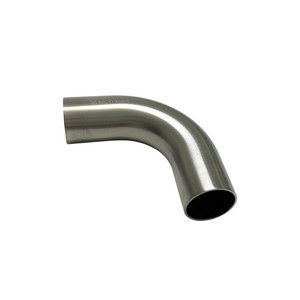

Engineered for upstream petrochemical, refining, offshore gas, and power boiler applications under extreme pressure differentials and thermal stress.
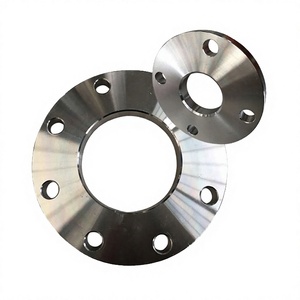
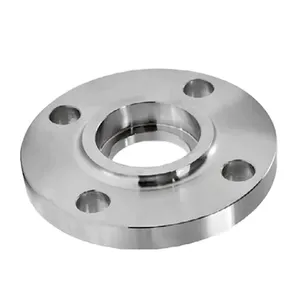
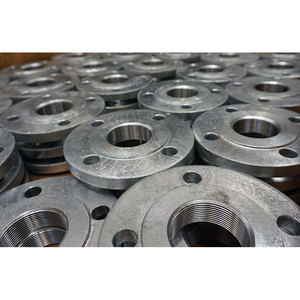
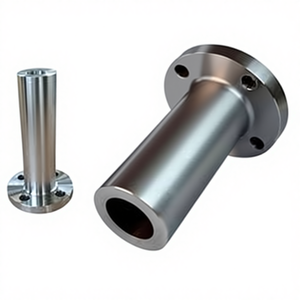
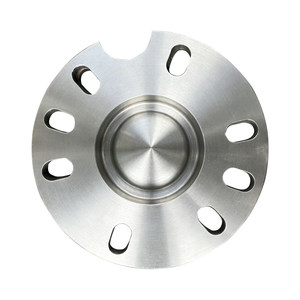
Deep engineering analysis on carbon steel forging mechanics, heat treatment conditions, and compliance with the Pressure Equipment Directive (2014/68/EU).
While standard ASTM A105 allows as-forged conditions for Class 150 and Class 300 flanges, ASTM A105N requires post-forge normalizing heat treatment. Heating the forged component to 880–920°C followed by controlled still-air cooling refines the austenitic grain structure into uniform ferrite-pearlite matrix, drastically improving Charpy V-Notch impact toughness down to -29°C.
To distribute pressure-retaining components inside the European Economic Area, ASTM A105 manufacturers must hold an audited Certificate of Conformity under PED 2014/68/EU Module H or Module A2. This mandate enforces essential safety requirements (ESR), verified raw materials, verified mechanical test bars, and strict control of Carbon Equivalent (CE ≤ 0.45) to guarantee on-site weldability.
High-integrity pipeline applications demand controlled grain flow. Closed-die precision hot forging contours the continuous metal grain paths alongside the flange neck, transition radius, and bolt circle. This continuous grain boundary orientation resists high cyclical fatigue, pressure pulsings, and pipe line bending moments better than plate-cut flanges.
| Specification Metric | ASTM A105 (Standard) | ASTM A105N (Normalized) | EN 1092-1 / P250GH (EU Equivalent) |
|---|---|---|---|
| Heat Treatment | Optional (Classes ≤ 300); Required (> Class 300) | Mandatory Full Normalization (880°C – 920°C) | Normalized / Quenched + Tempered |
| Tensile Strength (MPa) | 485 MPa Min. (70 ksi) | 485 – 655 MPa | 410 – 540 MPa |
| Yield Strength (MPa) | 250 MPa Min. (36 ksi) | 250 MPa Min. | 250 MPa Min. (at ambient temperature) |
| Minimum Service Temp | -20°F (-29°C) | -20°F (-29°C) tested to Charpy V-notch | -10°C to -20°C per EN impact standard |
| PED 2014/68/EU Eligibility | Requires PMA (Particular Material Appraisal) | Accepted with PMA & Impact verification | Harmonized standard – Direct compliance |
Government of India Recognized Export House supplying ASME, ANSI, EN, DIN, BS, and JIS forged fittings and flanges across 5 continents since 1991.
Operating under strict ISO 9001 quality management, our forgings carry formal accreditations from Engineers India Limited (EIL), Indian Boiler Regulations (IBR), and satisfy the rigorous pre-qualification parameters of ADNOC and Aramco project standards.
Every flange leaving our shop-floor features clear physical micro-stamping indicating manufacturer monogram, ASTM grade, heat number, nominal size, and rating. Chemical composition and mechanical testing tie seamlessly back to prime ingots from India, Japan, or South Korea.
Equipped with multi-axis vertical turret lathes and CNC machining centers, we produce serrated spiral concentric face finishes (Ra 3.2 to 6.3 μm) in Class 150 to Class 2500, ensuring maximum gasket retention across critical flanged joints.
Regular consignments delivered seamlessly to the UAE, Saudi Arabia, Qatar, Oman, Turkey, Malaysia, Singapore, Poland, Italy, the UK, and the USA with specialized seaworthy timber packing and rapid sea-freight clearances.
How evolving EPC project demands, hydrogen infrastructure, and automated procurement platforms are reshaping ASTM A105 sourcing.
International environmental regulations like the European CBAM (Carbon Border Adjustment Mechanism) require EPCs to audit the embodied carbon footprint of piping flanges. Electric Arc Furnace (EAF) billet production utilizing green energy is progressively replacing blast furnace ingots, establishing lower-emission ASTM A105 piping components.
With natural gas extraction expanding in sour environments, traditional A105 carbon steel is undergoing stricter micro-alloying controls. Sourcing protocols increasingly request SSC (Sulfide Stress Cracking) and HIC (Hydrogen-Induced Cracking) testing, constraining sulfur content (≤0.005%) and limiting raw forging hardness below 22 HRC.
The era of forged mill test paper trails is transitioning. Major operators mandate digital MTRs verified by cryptographic hash or QR codes embedded directly onto the flange rim. Material chemical breakdown, ultrasonic examination results, and ladle heat records can now be instantly reviewed via on-site smart scanning devices.
Frequently raised engineering and commercial questions from pipeline contractors, mechanical consultants, and global supply managers.
Yes. While ASTM A105 is not an EN harmonized standard material, it is approved under PED via a Particular Material Appraisal (PMA). The manufacturer must demonstrate verified chemical limits (CE ≤ 0.45%), impact test results at the design temperature, and hold an ISO 9001/PED Module H approval by an accredited European Notified Body.
The essential difference is low-temperature impact service. ASTM A105 is rated down to -29°C (-20°F) without impact testing under standard conditions. In contrast, ASTM A350 LF2 Class 1 is specifically engineered, normalized, and Charpy V-notch tested down to -46°C (-50°F), making it the mandatory standard for arctic pipeline service and LNG handling.
We supply standard Raised Face (RF) with a phonographic spiral serration of 125–250 μin (3.2–6.3 μm Ra) for general industrial gasket compliance, Flat Face (FF) for fragile equipment mating, and Ring Type Joint (RTJ) with octagonal or oval groove profiles for high-pressure Class 600 to Class 2500 applications.
Unless electro-galvanized or black phosphated per buyer project specs, our carbon steel flanges are coated with clear anti-rust oil, yellow oil, or industrial black paint. Flange faces are fitted with high-density polyethylene (HDPE) end protectors, strapped onto heat-treated wooden pallets, and packaged inside fumigated seaworthy wooden crates.
Direct mill pricing, complete EN 10204 3.1 documentation, prompt worldwide delivery, and full dimensional verification from Mumbai’s premier forged components manufacturing hub since 1991.
Send an Inquiry