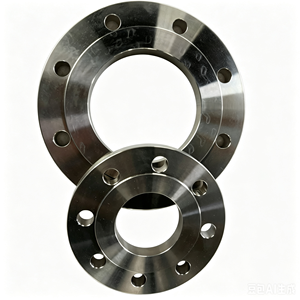
PL Type Plate Flat Welding Flange (Carbon & Stainless Steel)
Engineered for low-to-medium utility circuits, circulating cooling systems, and structural industrial plumbing lines.
Certified precision engineering solutions manufactured under ISO 9001, EIL, and IBR approvals with complete EN 10204 3.1 trace integrity, engineered to exceed demanding Chubu industrial standards.
Engineered for low-to-medium utility circuits, circulating cooling systems, and structural industrial plumbing lines.
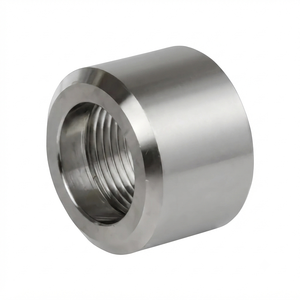
ASME B16.11 compliant branch connections and instrument take-offs for Chita refinery manifold systems.
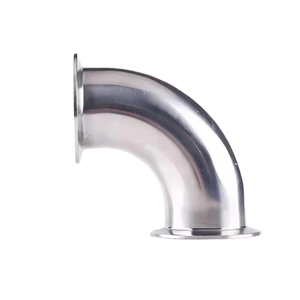
Electro-polished internal finishes (Ra ≤ 0.4μm) for Aichi biopharma and beverage fermentation applications.
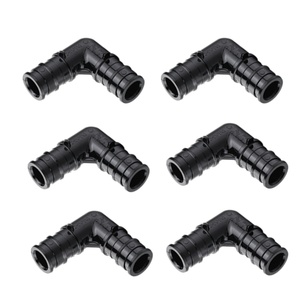
Hydrolysis-resistant polymer engineered for precision cleanroom temperature stabilization circuits.
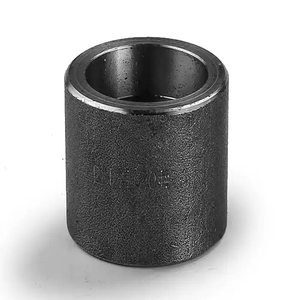
ASTM A105 / A350 LF2 forgings for heavy automotive hydraulic presses and high-torque machinery.
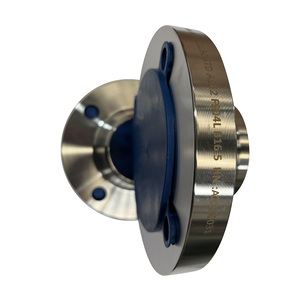
Full-penetration buttweld flanges configured for severe thermal cycling in Port of Nagoya chemical tankers.
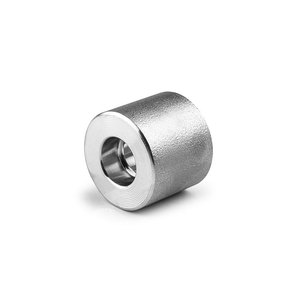
Ultra-dense grain forged 316/316L fittings for high-pressure cryogenic liquid gas skids.
Controlled sulfur chemistry (0.005% - 0.017%) optimized for high-purity orbital welding systems.
Stainless steel slip on flanges (SOP / SOH under JIS B2220; SORF under ASME B16.5) represent one of the most versatile, mechanically dependable, and cost-efficient piping joint technologies deployed across modern industrial plants. Unlike weld neck (WN) flanges that necessitate precise V-bevel matching and radiographed butt welds, a slip on flange slides smoothly over the external circumference of the pipe. Structural sealing is achieved through a synchronized fillet weld located at both the flange hub exterior and the internal bore face.
For procurement engineers and pipeline designers throughout Nagoya's heavy industrial basin, slip on flanges deliver substantial assembly cost reductions. Alignment tolerances are significantly more forgiving on site, making them the preferred connection standard for low-to-medium pressure utility conduits, water-cooling towers, chemical discharge headers, and industrial gas distribution matrices.
A quick reference specification index enabling engineering teams to select appropriate flange standards for cross-border machinery integration.
| Dimensional / Mechanical Parameter | JIS B2220 (Japanese Industrial Standards) | ASME B16.5 (American Process Standard) | EN 1092-1 Type 12 (European Hubbed Slip On) |
|---|---|---|---|
| Nominal Pressure Designation | 5K, 10K, 16K, 20K, 30K, 40K, 63K | Class 150, 300, 600, 900, 1500, 2500 | PN 6, PN 10, PN 16, PN 25, PN 40, PN 100 |
| Nominal Bore Sizing Range | 10A up to 1500A (Metric mm basis) | 1/2" NPS up to 24" (Metric conversion available) | DN 10 up to DN 1200 (Metric mm basis) |
| Facing Geometry Options | Flat Face (FF), Raised Face (RF), Groove & Tongue | Raised Face (RF 0.06" or 0.25"), RTJ, Flat Face (FF) | Type A (Flat), Type B (RF), Type C/D (Tongue/Groove) |
| Standard Gasket Surface Roughness | Concentric or spiral grooves: Ra 3.2 to 6.3 μm | 125 to 250 AARH (Smooth phonographic spiral) | Ra 3.2 to 12.5 μm (EN standard finish) |
| Austenitic Material Specs | JIS G4303 / G3214 SUS304, SUS316, SUS316L | ASTM A182 Grade F304, F304L, F316, F316L, F321 | EN 10088-3 1.4301, 1.4401, 1.4404, 1.4541 |
| Inspection Certification | Mill Test Report (JIS Q 9001 audit framework) | EN 10204 3.1 or 3.2 Inspection Certificate | EN 10204 3.1 with PED 2014/68/EU Module H |
As the core economic engine of Japan's Chubu region, Nagoya is encircled by world-class manufacturing zones that demand uncompromising reliability in stainless piping infrastructure.
Within Aichi's tier-1 automotive manufacturing plants, stainless steel slip on flanges connect critical cooling manifolds on automated stamping presses, robotic welding cell chilled water lines, and phosphate electro-deposition dip tanks. Dual-grade SUS304/304L slip on flanges eliminate pitting corrosion from high-purity rinse waters while tolerating recurring pressure shocks from rapid hydraulic switching.
The vast coastal petrochemical refineries of Chita rely heavily on ASTM A182 F316L and Duplex 2205 slip on flanges for condensate lines, caustic wash systems, and aromatic hydrocarbon transfer headers. The molybdenum addition in 316L provides superior resistance to chlorides carried by the marine mist of Ise Bay, ensuring decades of zero-leak containment.
As one of Japan's highest cargo volume trade gateways, the Port of Nagoya houses massive energy terminals. Our low-temperature impact-tested stainless slip on flanges serve LNG regasification auxiliary skids, ballast line treatment headers, and marine fuel bunkering manifolds where thermal contraction demands ductile, crack-resistant metallurgy.
With Aichi leading Japan's hydrogen mobility transition, specialized high-cleanliness 316L slip on flanges with precision micro-serrated gasket faces are utilized across hydrogen refueling stations, electrolysis prototype systems, and carbon-capture pipeline networks that operate under strict non-destructive testing requirements.
Nagoya produces major structural sections for commercial aircraft. Autoclave heating pipelines and nitrogen purging matrices rely on our high-temperature SUS310S and SUS321 slip on flanges to sustain prolonged 600°C+ carbon-fiber composite curing cycles without grain boundary carbide precipitation.
Procurement departments across Greater Nagoya—spanning specialized trading houses (shoshas), plant contractors, and EPC conglomerates—are managing unprecedented structural shifts. As Japan balances aggressive GX (Green Transformation) mandates against cost pressures, traditional single-source domestic flange procurement is transitioning to a dual-track strategy.
1. Dual Specification Normalization (JIS & ASME): As Japanese engineering firms construct export-oriented plants in the Middle East, Southeast Asia, and North America, their designs increasingly integrate ASME B16.5 flanges alongside traditional JIS B2220 standards. Sourcing from a manufacturer with unified cross-standard forging tooling is now paramount.
2. Mandatory Traceability & Digital MTCs: Major Japanese plant owners now enforce complete EN 10204 3.1 traceability back to prime ingots, rejecting non-traceable stock. Direct spectrometer PMI testing and digitized certifications prevent substitution risks.
3. Decarbonization & Hydrogen Blending Readiness: Coastal utilities in Mie and Aichi are blending ammonia and hydrogen into natural gas turbines, necessitating ultra-low-carbon stainless steels (C ≤ 0.030%) that resist hydrogen embrittlement at flanged connections.
Three decades of metallurgical mastery, certified supply compliance, and audited quality assurance recognized across the global energy and manufacturing sector.
Accredited by the Ministry of Commerce & Industry, Rajtilak Metal is an approved global vendor for major energy operators including Engineers India Limited (EIL), Indian Boiler Regulations (IBR), and ADNOC approved projects.
We exclusively forge from certified prime billet origins including Nippon Steel, POSCO, and premier Indian mills. Every heatsheet undergoes verification to guarantee clean metallurgy without non-metallic inclusions.
Our Mumbai facility features 11 dedicated testing apparatuses including portable optical emission spectrometers (PMI), hydraulic test benches up to 10,000 PSI, Charpy V-notch impact testers, and Brinell hardness machines.
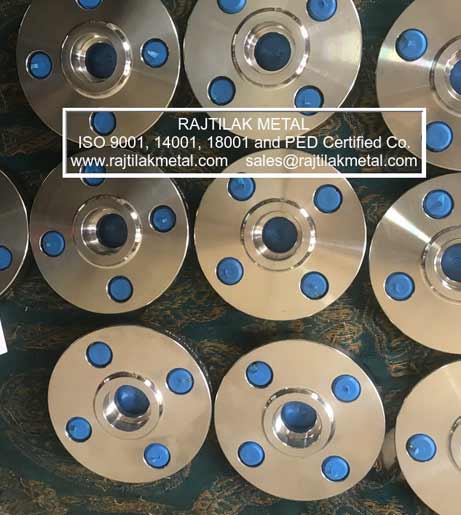
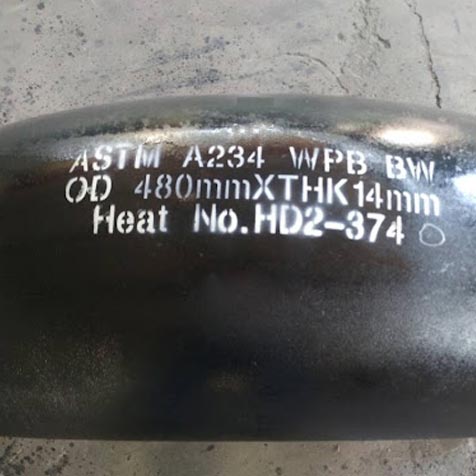
Procurement departments in Japan maintain strict standards for component documentation. At Rajtilak Metal, every individual slip on flange is deeply hard-stamped on the outer rim with our registered trademark, exact nominal diameter, pressure class, material designation, and unique melt heat number.
This identification links directly to the accompanying EN 10204 3.1 Inspection Certificate. Our digital quality archives ensure chemical and mechanical test records can be retrieved instantly at any stage of plant operation.
Direct technical answers addressing standards compliance, metallurgical testing, logistical timelines, and commercial execution for Nagoya engineers.
Collaborate with Rajtilak Metal's engineering sales division for immediate pricing, mill test certificate samples, and CAD/BIM dimensional prints tailored to your Nagoya projects.