Direct factory supply of forged flanges, high-pressure fittings, and precision hardware adhering to strict JIS, JPI, and ASME standards with heat-to-melt certification.
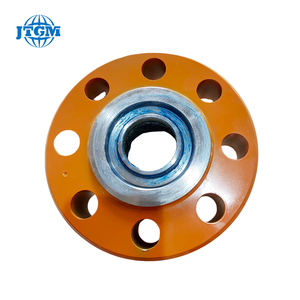
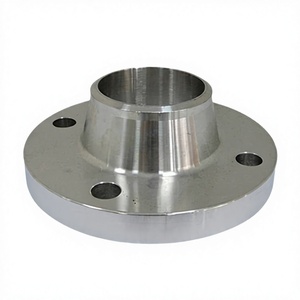
In high-hazard chemical complexes, liquefied natural gas (LNG) regasification terminals, and offshore processing hubs throughout the Japanese archipelago—from Tokyo Bay's Keiyo Industrial Zone to the Seto Inland Sea refining belt—absolute positive isolation in pressurized piping systems is mandatory. A Spectacle Blind Flange (often referenced as a figure-8 blank under ASME B16.48 and JIS B2220) serves as the primary visual, foolproof safety interlock during routine plant turnaround (Shuri-Koji), equipment overhaul, and toxic line maintenance.
Unlike standard blind flanges, which require complete removal from the flange gap—risking misalignment, gasket seating surface scratching, and hazardous media exposure—a spectacle blind remains permanently anchored between mating pipe flanges by a pivot bolt. Composed of an interconnected solid disk and open spacer ring, it permits swift, undeniable confirmation of whether a process pipeline is open to flow or blanked shut. Japanese plant engineering teams (EPCs) demand rigorous dimensional tolerances, pristine sealing serrations, and uncompromising structural integrity to fulfill stringent High Pressure Gas Safety Act (Koatsu Gasu Hoan Ho) specifications.
Sealing faces are CNC-machined with concentric or continuous spiral grooves matching JIS B2220 and ASME Class 150–2500 expectations, ensuring zero leakage across thermal cycles when paired with spiral wound graphite or PTFE gaskets.
Every forging undergoes strict ladle analysis, automated ultrasonic testing (UT), and PMI inspection. Each blank is die-stamped with its unique melt heat number, linked directly to an unalterable EN 10204 3.1 mill test certificate.
Manufactured using low-carbon austenitic stainless steels (SUS304L, SUS316L) and nickel alloys, our blanks retain exceptional Charpy V-notch impact toughness below -196°C, essential for LNG and liquid hydrogen containment.
| Nominal Pipe Size (JIS / ASME) | Pressure Class Rating | Material Specification | Web Thickness ± Tol. | Sealing Face Standard | Primary Japanese Industrial Application |
|---|---|---|---|---|---|
| 15A – 300A (1/2" – 12") | JIS 10K / ASME Class 150 | SUS304 / ASTM A182 F304L | According to JIS B2220 / B16.48 | RF (Serrated 125-250 AARH) | Fine Chemicals, Demineralized Water, Food Grade Systems |
| 25A – 600A (1" – 24") | JIS 20K / 30K / ASME 300# | A105 Carbon / SUS316L | Precision CNC Machined | Raised Face / Smooth Machined | Refinery Crude Units, High-Pressure Steam Lines |
| 50A – 400A (2" – 16") | JIS 63K / ASME 600# to 1500# | ASTM A350 LF2 / Duplex 2205 | Forged Solid Web Blank | RTJ (Octagonal Ring Groove) | LNG Cryogenic Unloading, Offshore Oil & Gas Platforms |
| 15A – 200A (1/2" – 8") | ASME Class 900# / 2500# | Inconel 625 / Hastelloy C276 | Heavy Duty High Pressure Web | Ring Type Joint (RTJ / Octagonal) | High-Temperature Hydrogen Cracking, Acid Scrubber Towers |
The operational landscape across Japan presents unique operational hazards governed by stringent domestic legislation, seismic mitigation mandates, and exposure to maritime salt-fog atmospheres. Our line blanks and spectacle blind flanges are custom-calibrated for key Japanese infrastructure nodes:
Operating in coastal corridors such as Kawasaki, Chiba, and Yokkaichi, process lines face continuous airborne marine chlorides. Our duplex stainless steel and SUS316L spectacle blinds resist pitting and stress corrosion cracking (SCC) while enabling swift line blanking during preventative shutdowns.
Receiving terminals in Osaka Bay, Nagoya, and Kitakyushu demand materials that avoid low-temperature ductile-to-brittle transitions. Our ASTM A350 LF2 and solution-annealed SUS304L blanks undergo cryogenic Charpy V-notch impact validation to deliver zero-leakage security under extreme thermal shocks.
In pilot combined-cycle turbines and ammonia co-firing facilities across Aichi and Fukushima, our nickel alloy and chrome-moly (F11/F22) blanks prevent hydrogen embrittlement and high-temperature hydrogen attack (HTHA), conforming strictly to METI energy safety charters.
Japan’s commitment to achieving net-zero greenhouse gas emissions by 2050 is rapidly reshaping procurement priorities among Japanese heavy engineering conglomerates. As conventional oil refineries convert crackers into bio-naphtha reactors and develop Carbon Capture, Utilization, and Storage (CCUS) projects, pipeline components face shifting chemical environments:
1. Supercritical CO2 Transport: Supercritical carbon dioxide extraction systems demand spectacle blanks designed to withstand high pressure drops without explosive decompression of sealing materials. We supply specialized Ring Type Joint (RTJ) spectacle blinds manufactured with ultra-clean forged matrices that eliminate micro-porosity.
2. Digital Asset Tagging & QR Heat Tracking: In line with Japanese EPC initiatives toward smart plant maintenance, our manufacturing facility offers laser-etched QR code matrix markings directly onto the connecting web of the spectacle blind. Plant operators can scan the blank in the field to retrieve the original Mill Test Certificate, chemical melt breakdown, and installation torque specs directly from their cloud asset manager.
Established as a premier forging and pipe component authority since 1991, our production complex brings decades of heavy manufacturing rigor to international procurement specialists. Recognized globally for unyielding compliance with international engineering codes, our capabilities directly solve typical pain points experienced by Japanese trading companies (Sogo Shosha) and EPC buyers:
Our forging workshops utilize heavy hydraulic forging presses and precision closed dies, ensuring optimal grain flow across the entire web of the spectacle blind. This structural density prevents stress concentrations at the junction between the blanking disk and spacer ring.
Holding comprehensive ISO 9001 certifications alongside premier engineering approvals (such as EIL and IBR), our production systems satisfy stringent quality audits. Every manufacturing batch conforms fully to ASME B16.48, ASME B16.5, MSS SP-97, and JIS specifications.
We maintain an extensive, prime raw-material reserve comprising carbon steel (A105, A350 LF2), stainless steels (SUS304L, SUS316L, 904L), duplex alloys (2205, 2507), chrome-moly (F11, F22), and specialty super-alloys (Inconel 625, Hastelloy C276, Titanium Gr. 2).
We regularly coordinate factory acceptance testing (FAT) with international inspection agencies including DNV, Lloyd's Register, BV, and SGS. Components are sealed in moisture-barrier film and packed in seaworthy, fumigated timber cases engineered for maritime transit to Yokohama, Kobe, and Nagoya ports.
Direct technical clarifications regarding manufacturing tolerances, regulatory certifications, and engineering compatibility for the Japan market.
Send your project datasheets, MTO (Material Take-Off) schedules, or custom fabrication drawings to our technical engineering desk. Receive an itemized technical proposal and compliance audit within 24 hours.