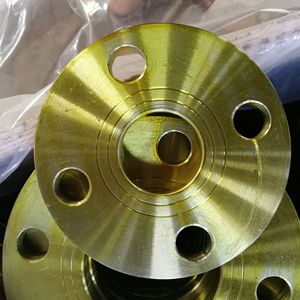

Explore our export-ready components manufactured in conformance with DIN EN 10204 3.1 verification, engineered specifically for high-stress applications across Central European manufacturing plants.
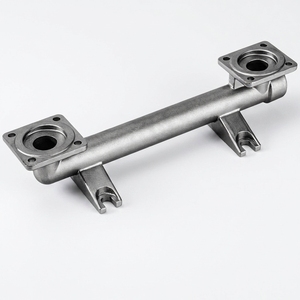
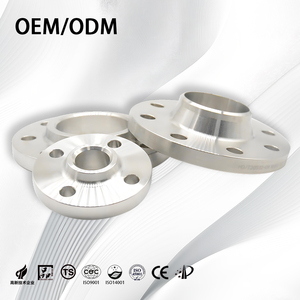
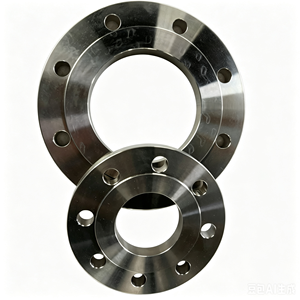
The industrial architecture of the Czech Republic represents a nexus of advanced chemical synthesis, centralized district heating networks, heavy automotive fabrication, and high-efficiency power generation. From the expansive petrochemical refining infrastructures located along the Elbe river corridor in Litvínov and Kralupy nad Vltavou to the pharmaceutical manufacturing centers of Prague and Pardubice, the demand for mechanically reliable and cost-effective flanged joints has continually elevated the Slip On Flange (hubbed and plate-type slip-on) into a preferred engineering component.
Unlike weld neck flanges that necessitate full-penetration butt-welding and high precision bevelling, a Slip On Flange slides directly over the outer diameter of the run pipe. It is secured via dual fillet welds—one externally at the flange hub shoulder and one internally near the flange face recess. For project engineers across the Ústí, Central Bohemian, and Moravian-Silesian regions, this operational geometry significantly reduces edge-preparation expenses, simplifies pipe cut length tolerances, and expedites pipeline assembly in congested utility galleries.
The Czech heating sector (Centrální zásobování teplem - CZT), traditionally powered by coal-fired cogeneration, is rapidly undergoing decarbonization toward natural gas combined cycle and biomass boilers in Brno, Ostrava, and Pilsen. Our ASTM A105 and P235GH / P250GH Slip On Flanges are extensively deployed in municipal hot water distribution loops (temperatures up to 180°C, PN 16/25/40), where moderate cyclic thermal loads require reliable structural strength without escalating initial construction capital expenditures.
Facilities handling aggressive hydro-processing, ammonia production, and polymers require corrosion-immune piping networks. For facilities operating across Neratovice and Lovosice, we provide ASTM A182 F316L and F304L stainless steel slip on flanges engineered with phonographic spiral serrated Raised Faces (Ra 3.2–6.3 µm) conforming to EN 1092-1 Type 12 Form B1, eliminating intergranular corrosion susceptibility across nitric acid and polyolefin carrier systems.
The Czech automotive backbone (Mladá Boleslav, Kvasiny, Kolín) demands relentless hydraulic consistency, cooling loops, and high-volume compressed air reticulation. Our precision-bored carbon steel slip-on flanges provide smooth flow transitions and high bolt-hole concentricity, making them ideal for machine-tool fabrication assemblies, cooling towers, and pneumatic distribution headers requiring fast mechanical bolt-up cycles.
European and American engineering contracts within the Czech Republic frequently specify dual-certified piping materials to satisfy both global EPC design practices and mandatory EU Directives. Below is our standard manufacturing cross-reference matrix:
| Dimensional / Design Standard | Equivalent European Standard | Material Specification | Pressure Class / PN Rating | Common Czech Industry Application |
|---|---|---|---|---|
| ASME B16.5 Slip On (SORF) | EN 1092-1 Type 12 (Hubbed Slip On) | ASTM A105 / P250GH | Class 150, Class 300 / PN 16, PN 25, PN 40 | District Heating Primary Lines, Refinery Offsites |
| ASME B16.5 Stainless SO | EN 1092-1 Type 01 (Plate Slip On) | ASTM A182 F316L / 1.4404 | Class 150 / PN 10, PN 16 | Pardubice Fine Chemicals, Pharma Process Lines |
| ASME B16.5 Low Temp SO | EN 1092-1 Type 12 Hubbed | ASTM A350 LF2 Class 1 | Class 300, Class 600 / PN 63, PN 100 | Industrial Gas Storage, Cryogenic LPG Terminals |
| DIN / ČSN EN 1092-1 Type 12 | ČSN 13 1205 (National Historical) | P235GH / 1.0345 (Boiler Quality) | PN 16 to PN 40 | Power Plant Auxiliary Steam, ČEZ Energy Infrastructure |
| ASME B16.47 Series A / B | EN 1092-1 Large Diameter SO | ASTM A105 / A516 Gr. 70 | Class 150 / PN 6 to PN 25 | Water Treatment Works (Želivka Reservoir Pipelines) |
A comprehensive assessment of regulatory paradigms, modernization projects, and sustainable material trajectories influencing piping procurement across Czechia through 2030.
All flanged components imported into the Czech territory must satisfy the statutory safety requirements of European Pressure Equipment Directive (PED). Czech auditing agencies (such as ITI Praha or notified bodies like TÜV SÜD Czech) mandate transparent material test reports (EN 10204 3.1) with verifiable yield and Charpy V-notch impact thresholds.
With national energy policies incentivizing nuclear expansion at Dukovany and Temelín alongside regional hydrogen-ready transmission pipelines, slip on flanges must endure stringent stress-corrosion cracking tests. High-purity stainless alloys (316L, 904L, Duplex 2205) are increasingly displacing conventional bare carbon materials.
Czech machinery engineering companies (strojírenství) are global exporters of containerized process skids, water desalination packages, and industrial chilling modules. Slip on flanges provide the compact radial envelope and rapid bolt-hole alignment needed for restricted-space, containerized configurations.
Just-in-Time assembly lines throughout Central Europe cannot absorb maritime bottlenecks. Czech purchasers are establishing long-term frame agreements with high-capacity forging manufacturers holding vast raw billet stocks, guaranteeing standardized batch production with fast air or multimodal sea-rail routing via Hamburg or Koper.
Operating since 1991 as an internationally acknowledged forging institution and recognized Export House, we combine comprehensive metallurgical pedigree with precision European compliance.
Established in 1991 in Mumbai, Rajtilak Metal has grown into a world-class manufacturing hub supplying precision pipe fittings, forged flanges, closed-die forgings, and high-tensile bolting. Serving critical applications across European, Middle Eastern, and Asian geographies, our infrastructure is certified under ISO 9001, endorsed by premier engineering bodies including EIL and IBR, and recognized as a designated Government of India Export House.
Our dedicated technical sales division coordinates closely with regional European partners—including established distribution and representative channels in Poland, Italy, and the UK—facilitating seamless logistical execution directly to Czech industrial centers such as Prague, Brno, Ostrava, and Pilsen.
Every single flange, from a DN 15 small-bore Class 150 hubbed slip on to a 48-inch PN 40 plate flange, is hot forged from pristine, vacuum-degassed billets sourced from reputable steel producers in South Korea, Japan, and premier Indian domestic mills. We completely reject the use of substandard scrap melts or uncontrolled re-rolling mills.
Manufacturing Heritage
In-House Testing Machines
Inspected with 3.1 MTC
On-Time Delivery Performance
Direct technical answers addressing standards compliance, welding clearances, pressure-temperature ratings, and logistical pathways into the Czech Republic.
While both designs share the functional characteristic of sliding over the pipe end for dual fillet welding, their dimensional geometries and rating systems differ considerably. ASME B16.5 Slip On (SORF) flanges operate under Class 150, 300, 600, etc., with dimensions governed in imperial fractions, conforming to inch-nominal pipe schedules. EN 1092-1 Type 12 (hubbed slip on for welding) is designed in metric units (DN 10 through DN 1200) calibrated against nominal pressure stages (PN 6, PN 10, PN 16, PN 25, PN 40, up to PN 100).
Furthermore, the inner bore clearance of an EN 1092-1 Type 12 flange is calibrated strictly against ISO metric pipe dimensions (Series 1 or Series 2), whereas ASME flanges follow ANSI/ASME B36.10M / B36.19M. In Czech projects involving multinational engineering consortia, our engineering office verifies piping schedules and outer pipe diameters prior to machining to ensure seamless fit-up.
According to ASME Section VIII and ASME B31.3 piping codes, the pipe end must be set back from the flange face by approximately the wall thickness of the pipe plus 1.6 mm (1/16 inch) to 3 mm. This setback prevents damaging the gasket seating face during internal welding and avoids excessive thermal stress concentrations at the root. Two welds are required: an external structural fillet weld around the hub shoulder, and an internal sealing/strength fillet weld inside the bore recess. Radiographic inspection (RT) cannot be performed directly on a slip on fillet weld; therefore, Magnetic Particle Inspection (MPI) or Liquid Penetrant Inspection (DPI) is typically applied in accordance with Czech technical specifications.
Yes. All materials exported to the European Union, including the Czech Republic, fully satisfy the essential safety directives of PED 2014/68/EU Annex I, Section 4.3. Every consignment is accompanied by an authentic EN 10204 3.1 Inspection Certificate that details the actual heat chemical analysis (spectrometric verification of C, Mn, Si, P, S, Cr, Ni, Mo, N), mechanical tensile properties, proof stress (Rp0.2), elongation, and Charpy V-notch impact testing at designated design temperatures (e.g., -20°C for standard carbon, -46°C for A350 LF2, -196°C for austenitic stainless grades). Third-party inspection (EN 10204 3.2) by independent surveyors such as Bureau Veritas, DNV, SGS, or TÜV is routinely facilitated upon buyer designation.
Engineering standards normally discourage or prohibit slip on flanges in severe cyclic fatigue environments, extreme bending moments, or high-pressure steam distribution headers (above Class 600 or PN 63) where Weld Neck Flanges (EN 1092-1 Type 11) are preferred due to the stress-relieving tapered neck. However, for auxiliary steam service, condensate returns, and cooling water circuits within modern thermal and combined heat and power plants, Class 150/300 or PN 16/25/40 slip on flanges forged from P250GH or ASTM A105 are exceptionally cost-efficient and provide decades of reliable performance when assembled with matched high-tensile stud bolts (e.g., ASTM A193 B7 / A194 2H).
From our export consolidation hub in Mumbai, goods are routed via sea freight to major European container hubs—primarily Hamburg or Rotterdam for northern Czech industrial regions (Prague, Liberec, Ústí nad Labem) or Koper / Trieste for southern and eastern territories (Brno, Ostrava). Transit typically spans 24 to 28 days on water. For urgent shutdown or turnaround needs, air-cargo dispatch directly into Prague Václav Havel Airport (PRG) or Vienna (VIE) is available. All shipments feature complete EUR1 customs documentation, commercial invoices, HS-code alignment (730721, 730791), and packaging compliant with ISPM-15 timber mandates.
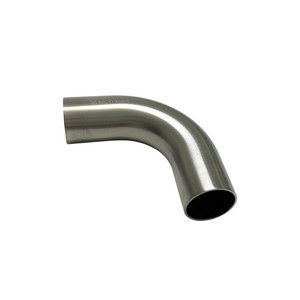
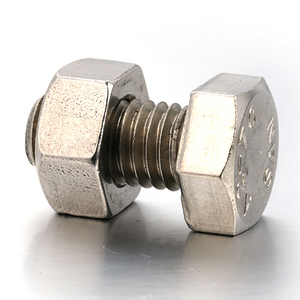
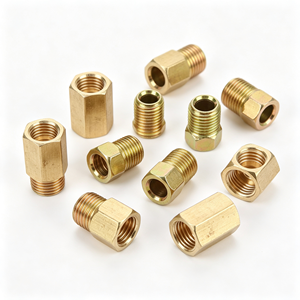
Absolutely. As an integrated manufacturer established since 1991, we provide complete, engineered piping packages. In addition to slip on and plate welding flanges, we manufacture ASME B16.9 and EN 10253 buttweld fittings (elbows, tees, reducers, caps), ASME B16.11 forged threaded and socket weld fittings (couplings, unions, hex nipples), and high-tensile fastener sets (ASTM A193 B7/B8/B8M studs paired with ASTM A194 2H/8/8M heavy hex nuts or metric property classes 8.8, 10.9, and 12.9). Sourcing the entire connection package from a single manufacturer guarantees unified metallurgy, matched bolt clearances, and coordinated documentation.
Connect with our metallurgical engineering desk to obtain comprehensive dimensional datasheets, material compliance records, and competitive project quotations tailored for the Czech Republic market.
Send an Inquiry