Direct supply from Rajtilak Metal's forging & CNC machining facility. Fully certified to ASME B16.5, DIN, and EN specifications with complete 3.1 material traceability for Norwegian industrial projects.
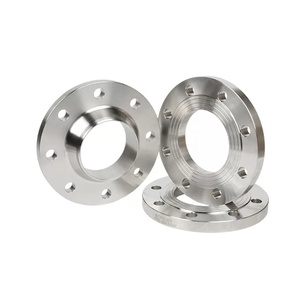
In the Norwegian Continental Shelf (NCS) and coastal marine sectors, flange connections face severe saline atmospheric corrosion, cyclical hydrodynamic stress, sub-zero ambient temperatures down to -40°C, and stringent environmental compliance under the Petroleum Safety Authority (Havindustritilsynet). As a premier OEM manufacturer established in 1991, Rajtilak Metal designs and manufactures custom ASME B16.5, ASME B16.47, and EN 1092-1 Type 12 Stainless Steel Slip On (SO) Flanges crafted specifically to exceed Norwegian offshore, process, and maritime engineering guidelines.
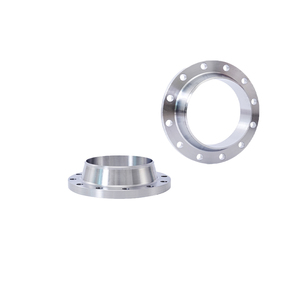
Slip On Flanges (SORF / SOFF) manufactured by Rajtilak Metal offer distinct mechanical advantages for piping engineers across Bergen, Stavanger, Kristiansand, and Tromsø. Slip on flanges slide directly over the outer diameter of the process pipe and are fillet welded both on the flange hub exterior and inside the pipe bore. This design provides exceptional alignment tolerance during modular skid fabrication, eliminates complex weld beveling operations, and ensures exceptional structural rigidity against vibration and low-to-medium cyclical pressure lines.
Standard grade 304/304L is inadequate for Norwegian marine immersion or offshore atmospheric exposure where chloride levels trigger localized pitting and crevice corrosion. Rajtilak Metal equips procurement teams and mechanical contractors across Norway with specialized alloy selection:
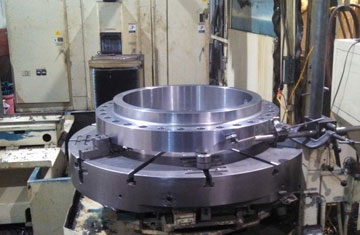
Our computer-controlled forged blanks and CNC multi-axis turning lathes ensure exact adherence to international dimensional tolerances, raised face serration standards (spiral or concentric serrated 3.2 to 6.3 μm Ra finish), and RTJ groove geometries designed for zero-leakage elastomeric and octagonal metallic ring gaskets.
| Flange Classification | Governing Standard | Size Range | Nominal Pressure Classes | Face Machining Finish | Applicable Material Grades |
|---|---|---|---|---|---|
| ASME Slip On (SORF/SOFF) | ASME B16.5 / B16.47 Series A & B | 1/2" to 48" (DN15 - DN1200) | Class 150, 300, 600, 900, 1500 | Stock Serrated (125-250 AARH) / Smooth / RTJ | F316L 2205 2507 254SMO |
| EN Slip On (Type 12) | EN 1092-1 / DIN 2573, 2576 | DN 10 to DN 2000 | PN 6, PN 10, PN 16, PN 25, PN 40, PN 63 | Type B1 (Ra 3.2-12.5μm), Type B2 (Ra 0.8-3.2μm) | 1.4404 1.4462 1.4547 1.4571 |
| Subsea Heavy Wall Slip On | API 6A / ISO 13628-7 / Custom OEM | 1" to 24" Custom Bore | API 2000, 3000, 5000 PSI | Ring Type Joint (BX / R Groove Inlay Available) | Inconel 625 Clad UNS S32760 |
| Marine Reduced Hub Slip On | JIS B2220 / BS 10 Table D, E | 15A to 600A | 5K, 10K, 16K, 20K | Flat Face (FF) / Smooth Machined Raised Face | 316L Cu-Ni 90/10 Titanium Gr.2 |
Norwegian engineering operators maintain strict technical requirements governed by NORSOK, DNV-GL, and Equinor Technical Requirements (TR). Our slip on flanges are engineered to withstand the exact operational dynamics of Norway's marine ecosystem.
Installed across topside production skids, utility water systems, diesel bunkering manifolds, and drainage piping. F316L and Duplex 2205 Slip On Flanges provide rapid alignment on compact offshore deck modules where hot work welding windows are restricted, and structural fatigue from Arctic wave motions is continuous.
Norway's world-leading salmon farming sector (Vestland, Trøndelag, and Nordland) requires massive recirculating aquaculture systems (RAS) and wellboat sea-lice treatment piping. Our 254SMO and 316L slip on flanges resist ozone, hydrogen peroxide, and turbulent high-salinity seawater streams without microbiological-induced corrosion (MIC).
Norway's landmark Longship CCS project requires fluid handling under cryogenic pressurized liquid CO2 conditions (-30°C to -50°C at >15 bar). Rajtilak Metal supplies low-temperature impact-tested ASTM A350 LF2 and 316L stainless slip on flanges validated with Charpy V-Notch testing down to -101°C to prevent brittle fracture.
Modern hybrid-electric catamarans, zero-emission ferries in the Western Norwegian fjords, and dual-fuel vessels require specialized bunkering stations. We fabricate lightweight, reduced-hub custom OEM stainless flanges designed for LNG cryogenic piping (-162°C) and zero-leakage anhydrous ammonia transfer lines.
Equinor and Aker BP satellite subsea tie-backs demand custom forged Super Duplex 2507 slip on flanges with special tolerance bores to match heavy-wall seamless pipe. Rajtilak Metal incorporates specialized weld prep overlays, ring type joint grooves (BX-150 to BX-172), and third-party witness inspection (DNV/Lloyd's).
Process refineries such as Mongstad require custom alloy flanges that combine thermal creep resistance with high chemical passivity. We provide seamless transitions from carbon steel F11/F22 to austenitic stainless steel piping assemblies with certified thermal expansion matching.
The procurement landscape in Norway is undergoing profound shifts driven by tightening safety standards and the European Union's Carbon Border Adjustment Mechanism (CBAM). When Norwegian EPC contractors (such as Aker Solutions, Moreld Apply, and Rosenberg Worley) select international forging partners, technical validation supersedes basic price competition:
Norwegian projects increasingly mandate that manufacturer foundries and forging shops satisfy the principles of NORSOK M-650 (Qualification of manufacturers of special materials). This ensures that critical microstructure requirements—such as a 40/60 ferrite-austenite balance in Duplex 2205 without harmful intermetallic phases (sigma σ, chi χ)—are rigorously validated via ASTM A923 Method C ferric chloride pitting tests.
Norwegian safety rules forbid blind substitution. Every Rajtilak Metal slip on flange delivered to Stavanger or Haugesund features deep-stamped heat numbers, foundry logos, dimensional ratings, and grade designations directly cross-referenced to original melt chemistry, mechanical tensile curves, yield tests, and 100% positive material identification (PMI) charts.
With Norway targeting a 55% emissions reduction by 2030, operating companies require certified Environmental Product Declarations (EPD). Rajtilak Metal utilizes clean electric induction furnaces, scrap-recycled raw billets from prime Indian, Japanese, and Korean mills, and optimized logistics routing directly to Scandinavian seaports to minimize Scope 3 embodied carbon.
A Government of India Recognised Export House, ISO 9001 certified, and approved by prestigious bodies including Engineers India Limited (EIL) and the Indian Boiler Regulations (IBR). Supplying global Tier-1 EPC contractors for over 34 years.
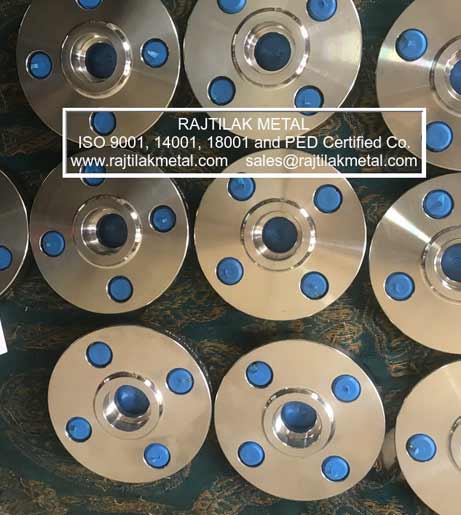
Unlike trading intermediaries, Rajtilak Metal manages complete end-to-end production under one roof in Mumbai, Maharashtra. Our integrated production ecosystem guarantees complete manufacturing oversight:
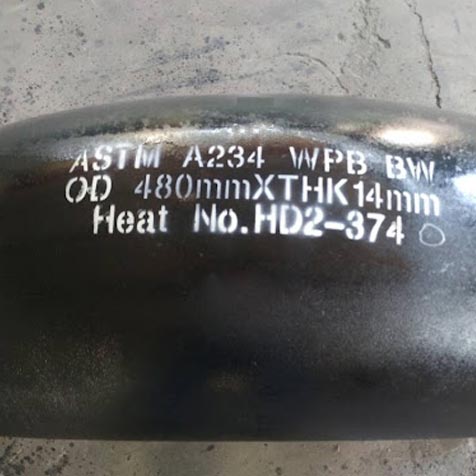
Our products have been vetted on demanding onshore and offshore projects worldwide, including ADNOC approved projects in the Middle East, high-pressure steam power plants across Europe, and marine shipbuilding in Scandinavia.
All packaging follows strict seaworthy export specifications: flanges are coated with rust-preventative oil, protected with heavy-duty end caps, and crated in treated, heat-fumigated ISPM-15 wooden boxes for damage-free transit to Oslo, Stavanger, or Bergen ports.
A frequent technical inquiry from piping design teams in Oslo and Trondheim involves balancing cost versus fatigue performance between Slip On and Weld Neck flanges. The table below delineates the optimal selection envelope for Norwegian offshore and marine fabrication:
| Evaluation Parameter | Stainless Steel Slip On Flange (SORF) | Stainless Steel Weld Neck Flange (WN) | Engineering Recommendation |
|---|---|---|---|
| Initial Component Cost | Lower: Reduced forging raw material weight and simplified machining. | Higher: Extended tapered hub requires larger initial forging billet. | Slip On reduces capital expenditure on large utility headers. |
| Welding & Assembly Cost | Double fillet weld required (inner bore + outer hub). Fast alignment without pipe beveling. | Single butt weld required. Demands precise pipe end beveling and fit-up alignment. | Slip On drastically reduces shop fabrication time on modular frames. |
| Fatigue Resistance (Calculated) | Approximately 1/3 the fatigue life of a weld neck joint under cyclical bending stress. | Maximum resistance: Smooth tapered transition distributes stress away from the weld. | Specify Weld Neck for severe slug flow or high vibration pumps; Slip On for steady process loops. |
| Pressure Rating Envelope | Optimally suited for Class 150, Class 300, and Class 600 applications. | Suitable for all classes from Class 150 up to Class 2500 & API 15,000 PSI. | Slip On is ideal for Class 150-600 marine, cooling, and water utility networks. |
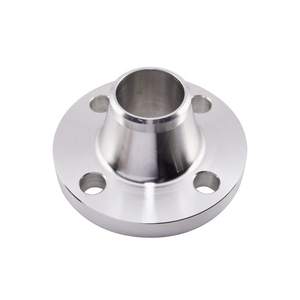
| Radiographic NDT Inspection | Fillet welds cannot be inspected easily by full radiography (RT); relies on PT/MPI. | Full 100% volumetric radiographic (RT) or ultrasonic (UT) testing is straightforward. | Select Weld Neck if project specifications mandate 100% radiographic inspection of all joints. |
Clear, direct answers regarding quality verification, NORSOK compliance, DNV inspection, and export logistics to Norway.
Yes. Every order shipped from our Mumbai factory is accompanied by an authentic EN 10204 Type 3.1 Mill Test Certificate (MTC). The MTC documents ladle chemical analysis, product analysis, heat treatment condition (solution annealing temperatures and quenching media), tensile yield and elongation values, Charpy V-notch impact values, hardness test results, and microscopic ferrite percentage (for duplex grades). When required by Equinor or DNV-GL project datasheets, we routinely accommodate third-party inspection agencies (such as DNV, Bureau Veritas, TÜV, or Lloyd's Register) to issue EN 10204 Type 3.2 inspection certificates with physical witness testing and stamping.
Our raw material qualification and forging heating protocols align with NORSOK M-650 requirements. For NORSOK M-630 MDS (Material Data Sheet) compliance—such as MDS S01 for F316L, MDS D44 for Duplex 2205, and MDS D54 for Super Duplex 2507—we enforce strict metallurgical controls: carbon content controlled below 0.030%, PREn ≥ 35 for 2205 and ≥ 42 for 2507, 100% ultrasonic examination of forged billets to prevent internal voids, and ASTM A923 Method C corrosion testing to guarantee zero continuous grain boundary intermetallic precipitation.
For urgent maintenance shutdowns (revisjonsstans) on the Norwegian Continental Shelf, we provide priority air cargo dispatch from Mumbai International Airport (BOM) to Oslo Gardermoen (OSL) or Stavanger Sola (SVG) within 4 to 7 working days. For bulk project orders, containerized ocean shipments depart Nhava Sheva (JNPT) directly to Rotterdam or Hamburg with dedicated feeder connectivity to Oslo, Brevik, Stavanger, and Bergen, with total sea transit averaging 28 to 36 calendar days. All documentation is prepared strictly according to Norwegian customs guidelines (Norwegian Tollvesenet).
Yes. Custom OEM fabrication is a primary operational strength. We routinely machine non-standard internal bores to accommodate specialized schedule pipes (Schedule 5S, 10S, 80S, 160, or non-standard metric ODs), extended neck hubs for insulation clearance, reduced flanges for tight space envelopes, and multi-bolt drilling patterns tailored to custom pump casings and heat exchanger shells. Detailed CAD manufacturing drawings are submitted for customer engineering approval prior to forging and CNC machining.
We supply raised face (RF), flat face (FF), ring type joint (RTJ), and tongue-and-groove (TG) configurations. In accordance with ASME B16.5 Clause 6.4.5, our standard raised face finish is machine-cut with a continuous spiral or concentric serration having an average surface roughness (Ra) of 3.2 to 6.3 μm (125 to 250 μin AARH). For elastomeric O-ring or high-vacuum applications, smooth finishes down to 0.8 to 1.6 μm Ra are precision-turned on our CNC lathes.
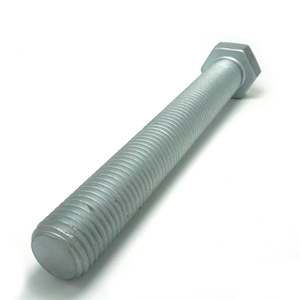
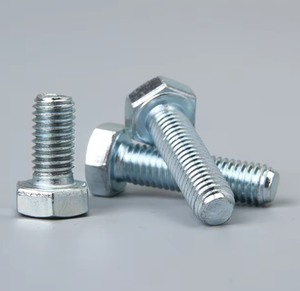
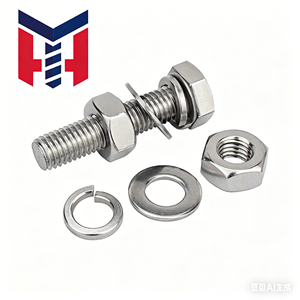
Yes. Rajtilak Metal is a comprehensive industrial fastener manufacturer. We supply full-thread stud bolts and heavy hex nuts matching your flange metallurgical class: ASTM A193 Grade B8 (304), B8M (316), ASTM A193 Grade B7 / A194 2H alloy steel with fluoropolymer (Xylan / PTFE) or zinc flake anti-corrosion coatings for subsea saltwater splash zones, as well as UNS S31803 / S32750 duplex fasteners engineered for galvanic compatibility.