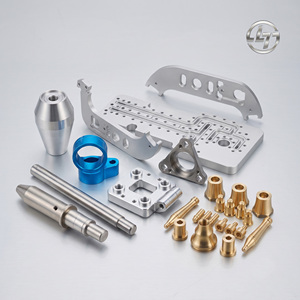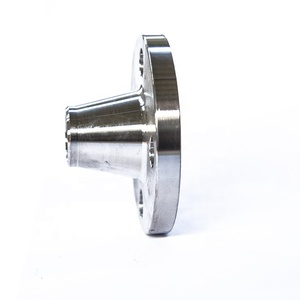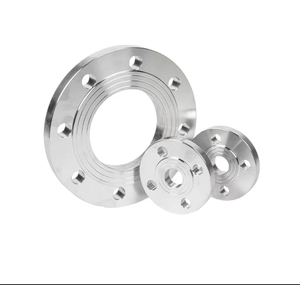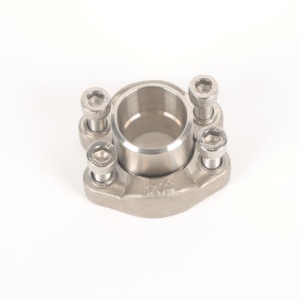
Explore our certified flow-transition fittings, precision machined flanges, and high-pressure connectors manufactured to DIN, EN, and ASME dimensions for mission-critical alpine installations.
In modern industrial hydraulic systems and continuous process engineering across the Republic of Austria (Republik Österreich), piping components are governed by rigorous performance parameters. A concentric reducer serves as a critical axis-symmetrical inline fitting designed to join two collinear pipe runs with distinct nominal diameters. Its primary operational function is to smoothly accelerate or decelerate fluid velocities while preserving uniform velocity profiles along the pipeline centerline. Unlike eccentric reducers—which feature an offset flat side specifically engineered to prevent vapor accumulation in horizontal centrifugal pump suction lines—concentric reducers are predominantly deployed in vertical fluid columns, high-pressure steam distribution headers, compressor discharge stages, and manifold balancing networks where symmetry is paramount to prevent uneven turbulent vortex generation and excessive localized shear stress.
For procurement managers, structural pipeline engineers, and EPC contractors operating within industrial hubs like Linz, Vienna (Wien), Schwechat, Graz, and Villach, sourcing concentric reducers demands total compliance with harmonized European standards. In Austria, pressure equipment installation is legally regulated under the Austrian Pressure Vessel Act (Druckgeräteverordnung - DGVO) enacting the mandatory European Pressure Equipment Directive (PED 2014/68/EU). Under this legislative framework, reducers cannot be treated as commoditized pipe fittings; they must be verified for wall-thinning margins induced during cold or hot forming, certified with absolute melt-to-mill chemical traceability, and manufactured strictly in accord with EN 10253-2 (for non-alloy and alloy ferritic steels with specific test requirements) and EN 10253-4 (for austenitic and austenitic-ferritic duplex stainless steels).
Rajtilak Metal, operating continuously since 1991 as an ISO 9001 certified manufacturing powerhouse and a Government of India recognized export house, provides comprehensive engineering capability across the dual matrix of ASME (ASME B16.9 / ASTM A234 WPB, ASTM A403 WP304L/316L) and Euronorm (EN 10253 / P235GH, P265GH, 16Mo3, 1.4301, 1.4404, 1.4462 Duplex) specifications. Our production ecosystem ensures that Austrian engineers receive concentric reducers possessing optimized transition cone tapers—minimizing head loss ($h_f$) and counteracting cavitation phenomena across sensitive fluid dynamics loops.
The fluid mechanical performance of a concentric reducer is heavily dictated by the half-angle of the conical convergence or divergence ($\alpha$). Excessive taper angles exceeding $30^\circ$ provoke severe boundary layer separation, recirculating eddy currents, elevated pressure drop coefficients ($\zeta$), and localized erosion-corrosion. Rajtilak Metal designs and manufactures butt-weld concentric reducers with gradual taper transitions, maintaining continuous internal bore concentricity within strict ASME B16.9 and EN 10253 tolerances.
| Nominal Size (DN / NPS) | European Grade (EN 10253) | American Equivalent (ASTM / ASME) | Design Pressure Rating | Standard Cone Length (L - mm) | Key Testing & Approval Protocols |
|---|---|---|---|---|---|
| DN 25 × DN 15 (1″ × ½″) | P235GH / 1.0345 (Type A/B) | ASTM A234 WPB / ASME B16.9 | PN 16 to PN 100 / Class 150-600 | 50 mm | PMI, Charpy V-Notch at -20°C, EN 10204 3.1 |
| DN 50 × DN 25 (2″ × 1″) | 1.4404 / X2CrNiMo17-12-2 | ASTM A403 WP316L | PN 16 to PN 160 / Class 150-900 | 76 mm | Intergranular Corrosion (ASTM A262 Prac E), 3.1 MTC |
| DN 100 × DN 50 (4″ × 2″) | 16Mo3 / 1.5415 (Cr-Mo Alloy) | ASTM A234 WP11 Cl. 2 | PN 40 to PN 250 / Class 300-1500 | 102 mm | Hot Tensile Test at +400°C, Full Ultrasonic (UT) |
| DN 150 × DN 100 (6″ × 4″) | 1.4462 / X2CrNiMoN22-5-3 | ASTM A815 S31803 (Duplex 2205) | PN 25 to PN 250 / Class 150-1500 | 140 mm | Ferrite Count 40-60%, Micrographic Phase Analysis |
| DN 250 × DN 150 (10″ × 6″) | P265GH / 1.0425 (High Temp) | ASTM A234 WPB / WPC | PN 16 to PN 100 / Class 150-600 | 178 mm | 100% Radiographic Weld Seam (RT) + Magnetic Particle |
| DN 400 × DN 300 (16″ × 12″) | 1.4541 / X6CrNiTi18-10 | ASTM A403 WP321 (Titanium Stab.) | PN 10 to PN 64 / Class 150-300 | 356 mm | Solution Annealed + Stabilized, Hardness Inspection |
| DN 600 × DN 400 (24″ × 16″) | 1.4571 / X6CrNiMoTi17-12-2 | ASTM A403 WP316Ti | PN 10 to PN 40 / Class 150 | 508 mm | Hydrostatic Proof, Wall Thickness Mapping via CNC Probe |
Type A vs. Type B Design in EN 10253: In the Austrian engineering sector, specifying the distinction between EN 10253-2 Type A and Type B is mandatory on all bill of materials (BOMs). Type A reducers share the same wall thickness at the welding ends as seamless mating pipes with reduced pressure-resistance capacity at the conical knuckle. Conversely, Type B concentric reducers are engineered with increased wall thickness across the entire body of the fitting, designed to withstand the identical full internal design pressure as straight connecting pipes of matching design conditions. Rajtilak Metal specializes in both hot-formed Type B heavy-wall reducers and cold-pressed Type A configurations, providing Austrian mechanical fabricators with verified structural calculations conforming to EN 13480-3 Chapter 8.
Austria's heavy industry stands as a model of ultra-clean, high-efficiency manufacturing. The nation's geographic location along the Danube trade axis and its dense cluster of specialized industrial regions present varied operating environments that dictate bespoke pipe fitting metallurgy. Below are the core sectors where Rajtilak Metal's concentric reducers deliver operational longevity:
Municipal district heating networks in Vienna, Graz, and Linz transport superheated water and medium-pressure steam over hundreds of kilometers. Our P235GH and 16Mo3 concentric reducers ensure zero-leakage butt-weld connections, enduring relentless thermal cycling, thermal expansion stress, and pulsed hydraulic pressures up to PN 40 without metallurgical fatigue.
The OMV Schwechat refinery, situated southeast of Vienna, represents one of Europe's largest inland refining complexes. Concentric reducers installed in hydrocrackers, sulfur recovery units (SRU), and ethylene cracker lines demand NACE MR0175/ISO 15156 resistance. We supply ASTM A234 WP22 / WP91 and austenitic 316L fittings certified against hydrogen embrittlement and sulfide stress cracking.
In the mountainous provinces of Tyrol, Salzburg, and Carinthia (Kärnten), hydro operators utilize high-head penstocks and high-output turbine systems. Rajtilak Metal supplies thick-wall forged carbon steel and low-temperature alloy (ASTM A420 WPL6 / EN 10253 P355NL1) reducers engineered to absorb water hammer shockwaves, velocity variations, and cold mountain water conditions down to -50°C.
Austrian cellulose producers like Mondi, Heinzel Group, and Sappi operate extensive chemical recovery loops involving chlorine dioxide, black liquor, and caustic washing agents. Our concentric reducers in Duplex 1.4462 (2205) and Super Duplex 1.4410 (2507) deliver high Critical Pitting Temperature (CPT) performance, halting erosive slurry wear in digesting and bleaching columns.
Centered around Voestalpine’s world-class facilities in Upper Austria and Styria, steelmaking relies on vast cryogenic oxygen injection, blast furnace off-gas scrubbers, and water cooling manifolds. We supply stainless 1.4307 (304L) and chrome-moly fittings capable of enduring intense thermal shocks, flue gas abrasion, and cyclic vibration.
With Austria's national push for climate neutrality by 2040, flagship hydrogen plants are proliferating near Enns and Graz. Hydrogen piping demands high-cleanliness stainless steel (1.4404 / 316L) with internal mirror-smooth surfaces ($Ra \le 0.4\,\mu\text{m}$) and tight carbon control to prevent micro-leakages under 300-bar differential compression stages.
The Austrian industrial procurement landscape is experiencing profound structural transformations driven by strict European Union ecological directives, national decarbonization laws, and stringent supply chain due diligence:
1. Carbon Border Adjustment Mechanism (CBAM) & Green Steel Mandates: Austrian industrial clients are increasingly prioritizing low-embodied-carbon components. Rajtilak Metal tracks Scope 1, 2, and 3 emissions across our hot-forming and forging workshops, providing Austrian buyers with comprehensive CBAM declarations that simplify customs clearance under EU Regulation 2023/956. Our ability to supply reducers wrought from electric-arc-furnace (EAF) melted prime billets from certified global partners drastically reduces embedded emissions compared to traditional blast-furnace routes.
2. H2-Readiness Standards: The modernization of Austria's gas grid (led by operators like Gas Connect Austria and Energienetze Steiermark) mandates that replacement fittings must qualify as "H2-ready." This requires concentric reducers to demonstrate high notch toughness at low temperatures (tested at -40°C or -50°C), tight limitation on carbon equivalents ($CE \le 0.41\%$), and ultra-low sulfur levels ($S \le 0.005\%$) to minimize hydrogen entrapment sites.
3. Rigorous Digital Documentation & Material Traceability: Austrian plant managers will reject deliveries if documentation contains ambiguous heat numbers or illegible test certificates. Every single concentric reducer exported by Rajtilak Metal is laser-stamped or deep hard-die stamped with the manufacturer trademark, nominal size, schedule/wall thickness, alloy grade, melt heat number, and PED CE mark. Mill Test Certificates conforming to EN 10204 3.1 accompany every crate, fully indexed with optical QR codes for immediate verification during Austrian site intake inspections.
Established in 1991, Rajtilak Metal has evolved into a premier Government of India recognized export house and ISO 9001 certified manufacturer, supplying pipe fittings, forged flanges, and high-tensile bolting to major infrastructure projects across Europe, the Middle East, and the Americas. For Austrian engineering contractors, partnering with Rajtilak Metal provides distinct operational advantages:
Our manufacturing facilities are fully accredited under ISO 9001:2015, Engineers India Limited (EIL), and Indian Boiler Regulations (IBR). Production of pressure fittings conforms strictly to PED 2014/68/EU Annex I Section 4.3 and AD 2000-Merkblatt W0.
Quality is guaranteed through our 11 testing machines, including Optical Emission Spectrometers (OES), Computerized Universal Tensile Machines (UTM), Charpy Impact Testers (-196°C to room temp), Brinell/Rockwell Hardness testers, Hydrostatic test beds, and Ultrasonic (UT) thickness gauges.
We process exclusively prime, fully killed, clean-melt steel stock sourced from world-class primary mills in India, South Korea, and Japan. Every raw billet undergoes complete Positive Material Identification (PMI) prior to forging or hot extrusion.
Fitting ends feature custom weld preparations according to DIN 2559 (Shape 21/22) or ASME B16.25 (compound bevels). Automated CNC lathes guarantee absolute roundness, tight end squareness, and exact transitional landing faces that accelerate automated orbital TIG welding on Austrian job sites.
Essential technical and logistical answers regarding importing concentric reducers into Austria.
Partner with a premier Indian export house with over 33 years of certified manufacturing precision. Contact our engineering desk for project bidding assistance, MTC samples, and comprehensive catalog documentation.