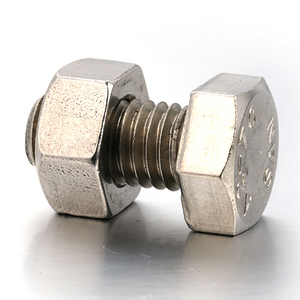
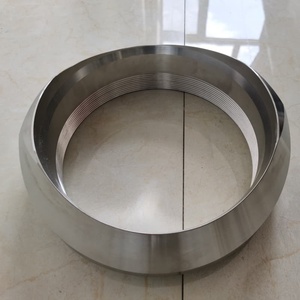
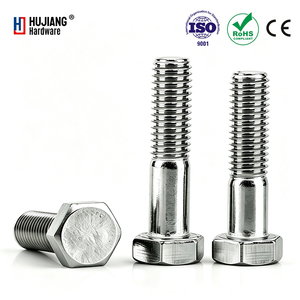
Direct supply portfolio featuring certified ASME/ASTM fittings, pressure vessel flanges, and high-tensile structural hardware designed for severe service applications.
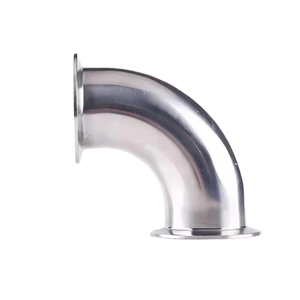
In-depth technical analysis for process engineers, pipeline designers, and naval architects managing pressure drops, boundary layer turbulence, and cavitation in critical flow transformations.
In process piping networks, the transition between nominal pipe sizes (NPS) governs energy efficiency, laminar-to-turbulent velocity profiles, and mechanical stress accumulation. A concentric reducer maintains a common centerline across upstream and downstream segments, ensuring balanced symmetrical velocity distribution. Conforming rigorously to ASME B16.9 and ASTM A234 WPB / ASTM A403 WP316L, concentric reducers are engineered to manage fluid acceleration without inducing localized boundary wall erosion.
Unlike eccentric reducers—which feature an offset flat side to prevent vapor entrapment in horizontal pump suction lines—concentric configurations represent the industry benchmark for vertical pipelines, compressor discharge runs, and high-velocity fluid mixing manifolds throughout Seattle's advanced maritime and process engineering clusters.
| Dimensional Standard | Material Specifications | Wall Thickness Range | NDT / Hydrostatic Testing | Primary Industrial Use Case |
|---|---|---|---|---|
| ASME B16.9 / MSS SP-43 | ASTM A234 WPB, WPC; A420 WPL6 | SCH 10 to SCH XXS | 100% Radiographic / Ultrasonic Exam | Steam Headers, Refinery Hydrocrackers |
| ASTM A403 / ASME SA403 | WP304/304L, WP316/316L, WP321 | SCH 5S to SCH 80S | PMI Spectrometry & Intergranular Corrosion | Bellingham Petrochemical, Pulp & Paper |
| ASTM A815 / DIN EN 10253 | UNS S31803 (2205), S32750 (2507) | SCH 40S to SCH 160 | Charpy V-Notch Impact (-46°C), Ferrite Check | Puget Sound Maritime, Subsea Spools |
| ASTM B366 / ASME SB366 | Inconel 625, Hastelloy C276, Monel 400 | Custom / Heavy Wall | Hydrostatic Proof, Dye Penetrant (PT) | Aerospace Bleed-Air, Desalination Plants |
Examining how high-performance concentric reducers support the Northwest Seaport Alliance infrastructure, maritime conversions, aerospace composites, and sustainable energy projects.
Seattle, Bremerton, and Tacoma shipyards require severe-duty marine piping. Our concentric reducers in CuNi 90/10 and Duplex 2205 form the backbone of seawater cooling circuits, ballast water management systems (BWMS), and high-pressure bilge discharge lines where turbulent swirl must be eliminated to prevent internal cavitation.
Supporting the Boeing aerospace corridor in Renton and Everett, chemical surface finishing and autoclaving lines rely on concentric reducers fabricated from ASTM A403 WP316L and Hastelloy C276. These maintain cleanability, zero cross-contamination, and uniform velocity transitions in anodizing and passivating acid distribution loops.
As the Pacific Northwest leads green hydrogen and sustainable aviation fuel (SAF) refining initiatives, vertical high-pressure catalytic reactors demand high-yield concentric reducers (ASTM A860 WPHY 60/65 and ASTM A182 F11/F22) engineered to withstand high temperatures and prevent hydrogen embrittlement.
Strategic transformations reshaping how engineering, procurement, and construction (EPC) contractors in Washington State source butt-weld reducers and piping hardware.
Procurement teams along Elliott Bay require full digital heat tracing linked to EN 10204 3.1 MTCs directly at port warehousing, reducing inspection bottlenecks before field installation.
Regional terminal modernization mandates strict sulfide stress cracking resistance for all carbon and alloy reducers, demanding low-hardness control and controlled carbon equivalents (CE ≤ 0.42%).
Shift towards SCH 160 and XXS concentric reducers in hydraulic fracturing skid assemblies, subsea umbilical pull-tubes, and marine offshore drilling rigs operating off the Alaskan-Seattle shipping line.
Integration of real-time mill progress tracking, pre-cleared customs manifests via the Northwest Seaport Alliance, and direct jobsite staging in Kent Valley and Everett.
Operating as a certified Indian manufacturer and recognized Export House since 1991, delivering metallurgical consistency to Tier-1 infrastructure, refineries, and shipyards globally.
Fully certified to ISO 9001 Quality Management Systems, with product approvals from Engineers India Limited (EIL), Indian Boiler Regulations (IBR), and audited field performance for ADNOC-standard energy projects.
Every concentric reducer undergoes rigorous chemical verification via PMI spectrometry, wall thickness tolerance verification to ASME B16.9, and permanent mechanical heat number stamping linked to EN 10204 3.1 Mill Test Certificates.
Active sales representatives in the United States, United Kingdom, Poland, Italy, UAE, Saudi Arabia, and Singapore. Direct break-bulk, FCL, and consolidated container handling through Seattle and Tacoma terminals.
Detailed engineering and logistics answers addressing standards compliance, metallurgical testing, lead times, and customs clearance for industrial piping projects.
Concentric reducers maintain an exact common centerline, which forces equal fluid shear stress across the internal circumference. In vertical runs, this geometric symmetry prevents erratic vortex formation, preserves laminar flow transitions, and prevents the gas or vapor pockets typical of asymmetrical profiles.
Every consignment arrives with full EN 10204 3.1 Mill Test Certification containing chemical composition (ladle and product analysis), mechanical properties (tensile, yield, elongation), heat treatment records, and hardness testing results. Third-party inspection (DNV, Lloyd's, ABS) is routinely provided.
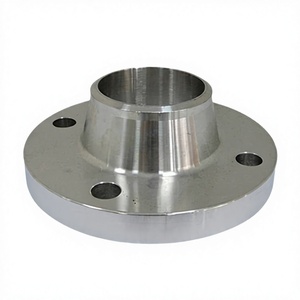
Yes. Our ASME B16.9 butt-weld concentric reducers feature standardized beveled ends (37.5° ± 2.5° with a 1.6mm root face) designed for seamless full-penetration butt-welding to matching schedule ASME B16.5 weld neck flanges or process pipe spools.
For raw seawater cooling, ballast discharge, and marine deck lines, we recommend Duplex 2205 (UNS S31803) or Super Duplex 2507 (UNS S32750), along with 90/10 Copper-Nickel. For process water or non-saline deck machinery, low-carbon ASTM A403 WP316L provides exceptional pitting resistance.
Standard carbon steel (A234 WPB) and stainless steel (WP304L/316L) stock reducers up to 24 inches can be delivered rapidly via sea-freight into the Northwest Seaport Alliance terminals. Custom high-pressure alloy forgings (e.g., F11, F22, Inconel) take approximately 4 to 6 weeks for production.
Our components comply with international ASME, ASTM, and API specifications. For municipal water or transit projects with domestic sourcing mandates, we provide dual-certified materials and full origin declarations to verify compatibility with EPC project criteria.
Connect directly with our engineering team for sizing schedules, material test certificates, or firm CIF Seattle port pricing for your next project.