Girgaon, Mumbai, Maharashtra 400004, India [email protected] +91 9869506920

China Wholesale ASTM A182 Flanges Manufacturer & Exporters in the Argentina Market

Precision-Forged Stainless, Alloy & Chrome-Moly Piping Solutions Engineered for Vaca Muerta Unconventional Shales, Downstream Petrochemical Refineries, and High-Altitude Andean Lithium Processing.

100%
PMI & Spectro Inspection
11+
In-House Metallurgical Labs
35+
Years International Forging Exp
98.6%
On-Time LatAm Vessel Dispatch
Industrial Specification Deep-Dive

Engineered for High-Pressure Hydrocarbon & Brine Containment

ASTM A182 designates forged or rolled alloy and stainless steel pipe flanges, forged fittings, valves, and components for high-temperature and high-pressure service. In critical international operations like Argentina's dynamic energy and mining sectors, compliance with ASTM A182 is not merely a dimensional formality; it governs mechanical durability, fracture mechanics under dynamic pressure cycles, and microstructural resistance against hydrogen-induced cracking.

Our manufacturing facility applies vacuum degassed billets, multi-directional closed-die forging, and precise computer-controlled solution annealing or normalizing. This eliminates grain coarsening and intergranular carbide precipitation, guaranteeing that every flange withstands the rigorous testing regimens mandated by Argentine operators such as YPF, Pan American Energy, Tecpetrol, and Pampa Energía.

NACE MR0175 / ISO 15156 Sour Service Compliance: Flanges delivered to Argentine fields undergo strict controlled chemistry checks (low Carbon, controlled HRC hardness ≤ 22) to prevent Sulfide Stress Cracking (SSC) in sour gas extraction.

Grade (ASTM A182) Structure Tensile (MPa) Yield (MPa)
F304 / F304L Austenitic ≥ 485 / 485 ≥ 205 / 170
F316 / F316L Austenitic (Mo 2.0-3.0%) ≥ 515 / 485 ≥ 205 / 170
F11 Cl. 2 (1.25Cr-0.5Mo) Low-Alloy Ferritic ≥ 485 ≥ 275
F22 Cl. 3 (2.25Cr-1Mo) Low-Alloy Ferritic ≥ 515 ≥ 310
F51 (Duplex 2205) Austenitic-Ferritic ≥ 620 ≥ 450
F53 (Super Duplex 2507) Dual Phase (PREN ≥ 42) ≥ 750 ≥ 550
Field Applications

Localized Engineering Deployment Across Argentina

From the arid, high-altitude salt flats of the Puna de Atacama to the sub-zero operational corridors of Tierra del Fuego, our ASTM A182 flanges meet the exact operational stress profiles of Argentine heavy industry.

Vaca Muerta Unconventional Megaproject

The Neuquén Basin's shale play demands ultra-high-pressure manifold systems capable of handling continuous hydraulic fracturing cycles and abrasive multiphase fluid flows.

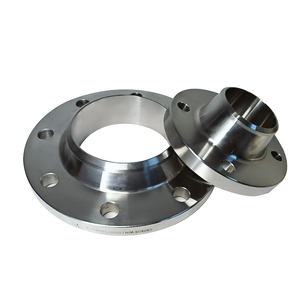
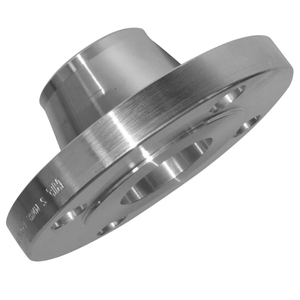
  • Wellhead Tie-ins: Class 1500 & 2500 RTJ (Ring Type Joint) Weld Neck flanges in F11/F22 alloy.
  • Gas Treatment Plants: Separation trains, amine sweetening units requiring ASTM A182 F316L to resist high partial pressures of CO2 and wet H2S.
  • Flowline Gathering: Heavy-wall sch160 and XXS custom machined connections tested for cyclic fatigue.

Lithium Triangle (Jujuy, Salta & Catamarca)

Brine extraction and processing plants at 4,000 meters above sea level operate in extremely corrosive, chloride-dense environments requiring elite metallurgy.

  • Direct Lithium Extraction (DLE): Evaporation pipelines and reactor autoclaves utilizing Duplex F51 and Super Duplex F53 flanges.
  • Reagent Transfer Lines: Handling concentrated hydrochloric and sulfuric acids where standard austenitic grades pit or suffer stress corrosion cracking.
  • Thermal Extremes: Operating through day-night temperature swings from +35°C to -15°C without flange gasket relaxation.

Downstream Refining & Petrochemical Hubs

Petrochemical corridors in Bahía Blanca, Campana, and Ensenada depend on high-temperature chrome-moly flanges for continuous operation.

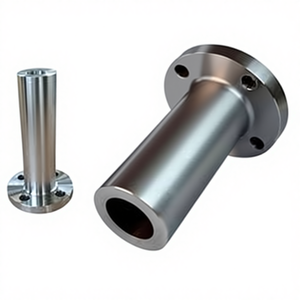
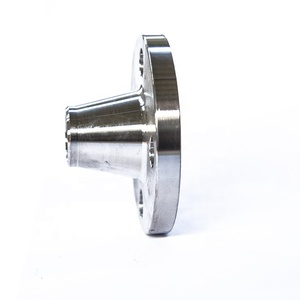
  • Fluid Catalytic Cracking (FCC): High-pressure, elevated-temperature steam headers utilizing ASTM A182 F11 and F22 Long Weld Neck flanges.
  • LNG Export Terminals: Deep cryogenic service (-196°C) using impact-tested F304L/F316L flanges for liquefaction manifolds.
  • Hydrocracker Piping: High-pressure hydrogen containment preventing high-temperature hydrogen attack (HTHA).
Future Outlook 2025–2030

Macro Trends Transforming Argentine Pipeline Procurement

A strategic alignment of regulatory reforms, infrastructure expansions, and international supply chain diversification is reshaping how EPCs source piping components.

Regulatory Framework

RIGI Investment Acceleration

Argentina's Régimen de Incentivo para Grandes Inversiones (RIGI) provides long-term tax stability and customs duty exemptions for multi-hundred-million-dollar energy ventures. This framework has accelerated project execution schedules for major LNG export plants, massive cross-country trunklines, and mining infrastructure, demanding large-volume, rapidly exportable ASTM A182 flange inventories from high-capacity Chinese manufacturers.

Midstream Infrastructure

Expansion of Trunk Gas Pipelines

With projects like the Gasoducto Perito Francisco Pascasio Moreno (formerly Néstor Kirchner pipeline) expansions and the Vaca Muerta Sur oil pipeline linking Neuquén to Punta Colorada (Río Negro), midstream specifications now prioritize ASME B16.47 Series A & B large-diameter flanges (up to 48") engineered in forged alloy steel to accommodate high-volume transport pressures.

Quality Sovereignty

Transition to Direct Mill Certification

Argentine procurement directors are increasingly moving away from third-party trading intermediaries to establish direct factory connections with accredited Chinese forging mills. Direct procurement allows complete transparency over EN 10204 3.1 chemical verification, Charpy impact test logs at sub-zero temperatures, and ensures full adherence to Argentine IRAM and international ASME standards.

Precision Manufacturing

Why South American EPCs Partner With Our Chinese Forging Foundries

Operating across 45,000 m² of modern manufacturing floor space, our plants merge German forging automation with rigorous metallurgical tracking.

Full Heat Traceability

Every flange is hard-stamped with melt heat numbers, class, schedule, and grade, seamlessly linking to 3.1 MTCs from raw ingot to final shipment.

CNC Serration Machining

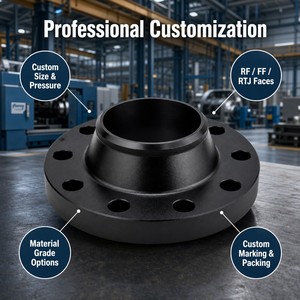
Critical gasket mating faces (RF, FF, RTJ) machined to precise RMS 125-250 serration finishes, ensuring zero fugitive emissions in sour gas setups.

Rigorous In-House Testing

Equipped with 11 advanced testing units: Optical Emission Spectrometers, 300J Charpy impact testers, ultrasonic flaw detectors, and PMI analysers.

Ocean Export Preservation

Specially coated with rust-preventative black paint, vanish, or peelable plastic, crated in ISPM-15 export-fumigated seaworthy wooden boxes.

Procurement Intelligence

Frequently Asked Questions by Argentine Importers

Addressing import logistics, compliance protocols, and metallurgical standards essential for supply chain managers in Buenos Aires, Neuquén, and Bahía Blanca.

How do you navigate Argentine customs clearance under SEDI?
We provide full export clearance documentation strictly formatted to comply with Argentina's Sistema de Estadísticas de Importación (SEDI) and AFIP customs regulations. We issue verified commercial invoices, packing lists with clean NCM codes (specifically 7307.21 and 7307.91), Certificates of Origin, and complete bill of lading consignee specifications. Our logistics team regularly arranges CFR/CIF shipments into the Port of Buenos Aires (Puerto Nuevo / Exolgan) or Bahía Blanca (Ingeniero White).
Are your ASTM A182 flanges certified to NACE MR0175 / ISO 15156?
Yes. For sour gas and tight oil extractions in Vaca Muerta, all alloy and stainless flanges can be ordered to full NACE MR0175/ISO 15156 compliance. We strictly enforce maximum hardness thresholds (HRC ≤ 22 for carbon/low-alloy and specific limits for duplex alloys) verified by Brinell or Rockwell testing, coupled with controlled chemistry to mitigate sulfide stress corrosion cracking.
What impact testing criteria are applied for cold Patagonian operations?
To withstand winter temperatures in southern Argentina (Santa Cruz, Chubut, Tierra del Fuego), our low-temperature carbon steel and alloy flanges (e.g., ASTM A350 LF2, ASTM A182 F11/F22) undergo Charpy V-notch impact testing at -46°C or customer-stipulated test temperatures. Minimum absorbed energy values consistently exceed 27J average / 20J minimum per test coupon.
Can third-party inspectors (SGS, Bureau Veritas, DNV) verify goods before shipment?
Absolutely. We routinely host third-party inspection agencies appointed by Argentine buyers. Inspectors are given full access to witness dimensional checks via CMM, hydrostatic pressure tests, ultrasonic and magnetic particle examinations, positive material identification (PMI), and raw heat treatment chart verifications prior to container sealing.
What anti-corrosion protection is used for transit across equatorial waters?
Ocean shipments from Chinese ports to Buenos Aires take approximately 35 to 45 days. Carbon and low-alloy flanges receive electro-spray anti-rust black paint, yellow protective oil, or hot dip galvanizing. Flange faces are coated with high-tack rust inhibitor grease and covered with hard plastic bevel caps to protect raised faces and gasket grooves against maritime salt fog.
Do you manufacture non-standard flanges to project drawings?
Yes. Alongside standardized ASME B16.5 and B16.47 Series A & B flanges, our CNC workshops manufacture custom Long Weld Necks (LWN), heavy barrel flanges, orifice flanges with pressure taps (ASME B16.36), studding outlets, and anchor flanges designed for pipeline river crossings and thrust block restraints across Argentina's pipeline network.

Request an Engineered Flange Quotation for Your Argentine Project

Whether you are procuring Class 1500 weld neck flanges for Neuquén shales or Duplex F51 flanges for Puna lithium extraction, our engineering team is ready to review your line lists, datasheets, and material requisitions with competitive mill-direct export pricing.