Manufactured under ISO 9001 quality systems with complete EN 10204 3.1 material traceability, heat batch serialization, and third-party NATA testing compatibility.
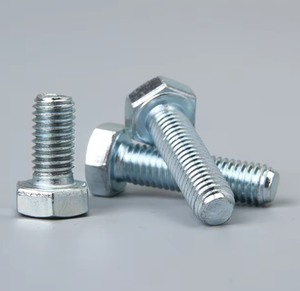
Hastelloy C276 is recognized globally as the quintessential nickel-molybdenum-chromium superalloy engineered specifically for severe operational resistance against pitting, crevice corrosion, and stress corrosion cracking (SCC). When securing mission-critical flanged joints across Australian processing infrastructure, fasteners fabricated from conventional austenitic stainless steels (such as AISI 316L or 904L) often fail prematurely under elevated temperatures, hypersaline conditions, and acidic oxidizers. As a verified Chinese manufacturing leader supplying the Australian mining, chemical, and offshore energy sectors, we process vacuum induction melted (VIM) and electroslag remelted (ESR) ingots to yield precision-threaded hex head bolts conformant to ASTM B574, ASTM F468, and ASME SB-574.
The alloy matrix contains approximately 57% Nickel, 16% Molybdenum, 15.5% Chromium, and 3.5% Tungsten, with strictly capped Carbon (≤ 0.010%) and Silicon (≤ 0.08%) thresholds. The substantial molybdenum and tungsten concentration confers outstanding resistance to localized chloride pitting, while chromium ensures passivity in oxidizing environments. Our manufacturing facilities utilize controlled cold working, warm heading, and single-point CNC threading coupled with high-temperature solution annealing at 1121°C (2050°F) followed by immediate water quenching. This rigorous heat treatment eliminates intergranular grain-boundary carbide precipitation and μ-phase formations, guaranteeing maximum ductility, uniform tensile yield, and predictable tightening torque values under Australian AS/NZS bolting protocols.
| Element / Property | UNS N10276 Standard Range (%) | Typical Heat Melt Batch Results | Australian Impact & Engineering Relevance |
|---|---|---|---|
| Nickel (Ni) | Balance (54.0 - 58.0%) | 57.20% | Fundamental austenitic matrix; suppresses chloride-induced stress corrosion cracking (SCC) in marine environments. |
| Molybdenum (Mo) | 15.0 - 17.0% | 16.25% | Provides superior resistance to localized pitting and crevice corrosion attack in reducing sulfuric and hydrochloric acids. |
| Chromium (Cr) | 14.5 - 16.5% | 15.65% | Establishes rapid passive oxide film restoration under aggressive oxidizing agents, wet chlorine, and hypochlorites. |
| Tungsten (W) | 3.0 - 4.5% | 3.45% | Synergistically reinforces molybdenum to counteract intergranular localized attack under high-temperature leach conditions. |
| Iron (Fe) | 4.0 - 7.0% | 5.30% | Controlled low proportion prevents precipitation of secondary embrittling intermetallic phases during service thermal spikes. |
| Carbon (C) | ≤ 0.010% Max | 0.005% | Ultra-low carbon prevents weld-decay sensitization and grain-boundary carbide precipitation in welded structural bolting. |
| Tensile Strength (Rm) | ≥ 690 MPa (100 ksi) | 785 MPa | Guarantees structural clamp-force retention across heavy flanged assemblies operating under surging cyclic pressure. |
| Yield Strength (0.2%) | ≥ 283 MPa (41 ksi) | 375 MPa | Eliminates bolt necking and thread yielding during heavy torque application via pneumatic or hydraulic tensioners. |
| Elongation in 2 in. (4D) | ≥ 40% | 52% | Exceptional plastic reserve prevents catastrophic brittle cleavage failure under sudden thermal shocks and seismic tremors. |
For high-vibration Australian offshore and mining applications, our factory incorporates cold-rolled threads instead of machined single-point cutting. Thread rolling forces the grain boundaries to contour smoothly along the root and crest radii, work-hardening the root region and creating compressive residual stresses that increase fatigue life by over 300% under cyclic mechanical stress.
From Western Australia's red dust autoclave operations to Queensland's chemical corridors, our Hastelloy C276 hex bolts ensure continuous plant availability.
The nickel and battery-precursor refineries of Western Australia (Goldfields and Ravensthorpe districts) rely on titanium and nickel-alloy autoclaves operating at 250°C with concentrated sulfuric acid. Hastelloy C276 hex head bolts secure flash vessel nozzles, slurry line flanges, and agitator shaft couplings where high chloride content and hot acid destroy standard super duplex 2507 fasteners.
Subsea tie-ins, riser hang-offs, and topside glycol dehydration units in the Pilbara and Carnarvon Basins face sour gas ($H_2S$/$CO_2$) streams coupled with hypersaline, warm ocean sprays. Our C276 fasteners satisfy NACE MR0175/ISO 15156 hardness restrictions (maximum 35 HRC) to eliminate sulfide stress cracking and catastrophic hydrogen-assisted embrittlement.
Major desalination assets serving Perth, Adelaide, Melbourne, and Sydney run continuous high-pressure reverse osmosis pumps generating brine streams with chloride concentrations exceeding 45,000 ppm. Hastelloy C276 hex bolts protect high-pressure membrane housings, energy recovery devices, and intake hypochlorite dosing lines against aggressive crevice corrosion.
Industrial chemical plants in Kwinana and Gladstone producing chlorine, bleach, and hydrochloric acid require wet chlorine gas handling fasteners. Hastelloy C276 is one of the few structural materials capable of withstanding wet chlorine gas, hypochlorite hypochlorous acid reactions, and high-shear brine recirculation loops without intergranular micro-fissuring.
Processing plants in the Northern Territory and South Australia extract critical metals using intense ferric chloride, hydrochloric, and nitric acid leaching. Hastelloy C276 structural bolts anchor valve manifolds, acid mist scrubber towers, and filter press frames where mixed acid chemistry rapidly attacks standard nickel alloys.
Effluent neutralization plants in regional Victoria and Tasmania manage variable pH waste streams containing aggressive sulfides, fluorides, and chlorine dioxide. C276 hex bolts deliver zero-leak joint security in flanged fiberglass-reinforced plastic (FRP) and lined carbon steel piping systems where bolt failure risks environmental contamination.
How the green transition, critical mineral processing, and statutory compliance are redefining asset life-cycle standards across the continent.
With Australia positioning to become a global green hydrogen superpower, mega-scale electrolyzers (both alkaline and PEM) require high-pressure piping manifolds resistant to high-purity caustic potash (KOH) and hot oxygen. C276 fasteners eliminate stress embrittlement across electrolysis cell stacks.
Australian Tier-1 mining companies are replacing 316L and Duplex 2205 fasteners with Hastelloy C276 during planned turnarounds. The minor upfront alloy premium avoids multimillion-dollar unscheduled plant shutdowns caused by localized crevice failure beneath flange gaskets.
Procurement teams now enforce verified Mill Test Certificates to EN 10204 3.1, coupled with independent NATA laboratory PMI re-checks upon port arrival. Traceability from melt heat number to final CNC thread chamfer has transitioned from an option to a mandatory tender condition.
Australia's Safeguard Mechanism penalizes industrial greenhouse and volatile organic chemical leaks. Precision-machined Hastelloy C276 bolts maintain calculated torque clamping force without creep relaxation, preventing flanged fugitive leaks across harsh acid lines.
Drawing on decades of precision metallurgical engineering, our production plant integrates advanced vacuum melting, hot and cold forging, precision multiaxis threading, and non-destructive examination. We directly solve the common supply-chain hurdles Australian EPCs face: exorbitant domestic stocking lead times, ambiguous raw material pedigree, and substandard thread dimensional compliance.
We source prime raw material ingots exclusively from Tier-1 certified mills. Every batch undergoes double-vacuum remelting to strip away gaseous inclusions and trace tramp elements, ensuring consistent mechanical tensile integrity and zero segregation lines inside forged bolt heads.
Equipped with high-precision CNC multi-spindle lathes and dedicated thread rollers, we produce Class 6g and Class 2A/3A thread fits complying with AS 1111, ASME B18.2.1, and DIN 933/931 standards. Radius runouts are kept smooth to eliminate micro-notch stress raisers.
Each individual bolt head is permanently stamped with our trademark, alloy designation ("C276" or "N10276"), and the specific melt heat number. Every shipment arrives complete with original EN 10204 3.1 inspection certificates detailing exact chemical and mechanical test numbers.
Addressing standards interchangeability, corrosion mechanisms, logistics, and documentation requirements for imports into Australia.
Speak directly with our superalloy fastening specialists. Receive complete engineering datasheets, dimensional drawings, EN 10204 3.1 material certificates, and landed pricing tailored for your Australian project site.
Send an Inquiry