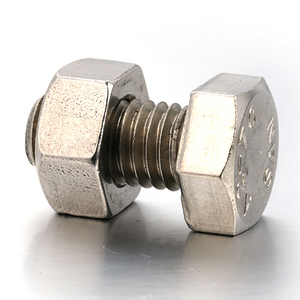

Seamlessly bridging Chinese superalloy metallurgical precision with India's extensive EPC infrastructure projects across Jamnagar, Mumbai Offshore, and Paradip industrial corridors.
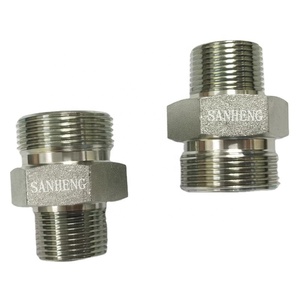
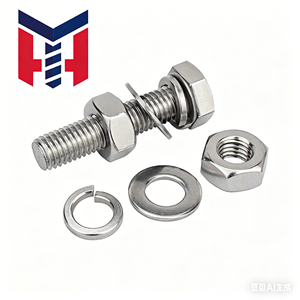
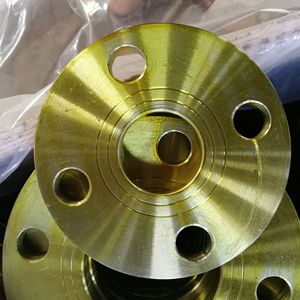
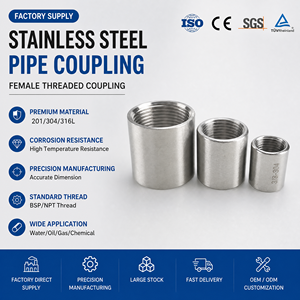
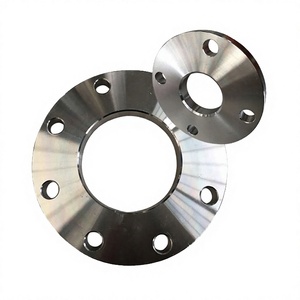
Inconel 625 is an austenitic nickel-chromium-molybdenum-niobium superalloy renowned for its phenomenal resistance to localized degradation, such as pitting and crevice corrosion, across aggressively sour environments. The combination of molybdenum (8.0% to 10.0%) and niobium (3.15% to 4.15%) within the nickel-chromium matrix provides solid-solution hardening without the absolute reliance on precipitation hardening heat treatments. As Chinese manufacturers exporting heavily to Indian industrial EPC projects, our production processes deploy high-purity vacuum induction melting (VIM) followed by electroslag remelting (ESR). This process eliminates harmful non-metallic inclusions, ensures isotropic grain orientation, and minimizes microsegregation, guaranteeing optimum fatigue endurance under cryogenic through elevated temperature regimes (up to 982°C / 1800°F).
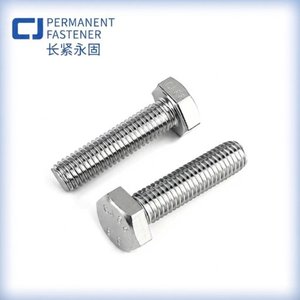
For piping engineers, mechanical project consultants, and technical procurement directors across Maharashtra, Gujarat, and Tamil Nadu, fastening systems produced to ASTM B446 Grade 1 (annealed) and Grade 2 (solution treated) meet rigorous crack-arrest criteria. Under cyclic loading conditions present in subsea flowlines and deep-well downhole sour crude extractions, our Inconel 625 heavy hex bolts, stud bolts (ASTM A193 Gr. B8M/Inco alternatives), and matching ASTM A194 heavy nuts deliver ultimate tensile strengths beyond 830 MPa and minimum yield figures of 415 MPa with Charpy V-notch impact toughness that outclasses typical austenitic 316L and Duplex 2205 alternatives by orders of magnitude.
| Elemental Component | Composition Limits (ASTM B446 / Inconel 625) | Technical Function & Phase Advantage |
|---|---|---|
| Nickel (Ni) | Min. 58.0% | Stabilizes FCC austenitic structure; prevents chloride stress corrosion cracking (SCC). |
| Chromium (Cr) | 20.0% – 23.0% | Forms self-passivating chromia (Cr2O3) protective layer against severe oxidizers. |
| Molybdenum (Mo) | 8.0% – 10.0% | Exceptional resistance to pitting and crevice attack in high-chloride saline conditions. |
| Niobium + Tantalum (Nb+Ta) | 3.15% – 4.15% | Acts with Mo to distort crystal lattice; produces high strength up to 650°C without aging. |
| Iron (Fe) | Max. 5.0% | Maintains microstructural purity and phase matrix stability against Laves phase formation. |
Addressing the specific sour environment, corrosive shoreline exposure, and deep chemical processing stresses native to Indian industrial mega-clusters.
Deployed in subsea manifold fasteners, Christmas tree assemblies, and risers exposed to deep Arabian Sea waters and Bay of Bengal high-salinity zones. Resists chloride-induced crevice attack, sour H2S cracking, and microbially influenced corrosion (MIC) without protective coatings.
In hydrocracker decompression units, crude distillation units (CDU), and catalytic reforming sections running high-TAN crudes. Inconel 625 studs and hex nuts eliminate polythionic acid stress cracking (PASCC) during turnaround cooldowns and cyclic shutdowns.
India's thermal power mandate requires Flue Gas Desulfurization (FGD) wet limestone scrubbing. The extreme chlorine concentrations (up to 80,000 ppm) and sulfuric condensates corrode lower-tier stainless quickly. Alloy 625 fasteners secure slurry circulation nozzles and absorber tower shells.
Nuclear reactors and indigenous submarine manufacturing programs in Visakhapatnam and Kalpakkam require verified materials that sustain high neutron irradiation resistance, low thermal expansion, and non-magnetic permeability across extended decades of operation.
India’s emerging National Green Hydrogen Mission and massive fertilizer complexes (IFFCO, NFL) utilize Inconel 625 hardware within high-pressure PEM/Alkaline electrolyzers and hot ammonium nitrate autothermal reforming towers to prevent hydrogen embrittlement.
Handling wet chlorine gas, chlorosulfonic acids, and brominated intermediates where exotic materials like Hastelloy C276, Monel 400, and Inconel 625 are standard engineering specifications to avoid catastrophically rapid joint failures.
India’s heavy process industry is undergoing a structural transformation. With major downstream upgrades such as BS-VI fuel emission norms and continuous refinery expansions by IOCL, BPCL, HPCL, and Reliance Industries, operational conditions have escalated past the performance envelope of conventional 300-series stainless steels. Furthermore, project timelines in India operate under strict lead-time compressions where local tier-1 stockists face long mill delivery horizons for raw superalloy forgings.
To mitigate these domestic bottlenecks, Indian EPC majors increasingly leverage strategic partnerships with certified Chinese manufacturing facilities. As an established export entity possessing raw ingots, hot forging capacity, precision cold-heading equipment, and integrated thread-rolling lines, our facilities bridge the supply deficit. Key trends shaping procurement include:
Combining primary-melt traceability, state-of-the-art forging lines, and multi-tier global inspection compliance.
Established manufacturing foundations matching EIL and IBR frameworks, ISO 9001 quality management, and extensive project experience servicing major energy infrastructure operators across Asia and the Middle East.
11 state-of-the-art testing stations executing 100% PMI spectrographic checks, tensile yield testing, Charpy V-notch impact down to -196°C, intergranular corrosion testing (ASTM G28), and eddy-current non-destructive testing.
Capable of cold heading and hot forging heavy hex bolts, socket cap screws, all-thread studs, and tie-rods from M8 to M72 in metric dimensions, and 1/4" up to 3-1/2" in UNC/UNF/8UN profiles with high thread engagement precision.
Heavy-duty, seaworthy wooden box crating, thread protection sleeves, vapor corrosion inhibitor (VCI) wrap, and palletized load structures configured specifically for transit through Nhava Sheva (JNPT), Mundra, and Chennai ports.
Direct answers addressing documentation, customs compliance, testing standards, and logistics for shipments into Indian territory.
Connect with our metallurgical engineering team. Submit your line item schedules, drawing tolerances, or bill of materials (BOM) to receive a transparent technical quote and comprehensive documentation package.
Inquire Now