Explore our heavy-duty industrial pipe fittings, ASME flanges, and precision-forged components engineered for seamless field welding, extreme pressures, and corrosive environments.
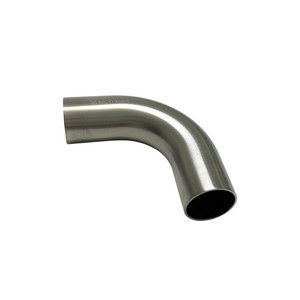
A buttweld concentric reducer is an indispensable hydrodynamic pipe fitting engineered to smoothly transition fluid or gas between two differing nominal pipe diameters along a shared central longitudinal axis. Unlike cast or mechanical joinery, buttweld concentric reducers manufactured to ASME B16.9 and MSS SP-75 standards become fully welded, integral parts of the pressure boundary, offering exceptional structural integrity, continuous flow velocity transitions, and minimal pressure drops across high-velocity networks.
Our direct Chinese manufacturing facility operates heavy cold-forming and hot-induction pushing equipment alongside precision CNC edge beveling stations. We control wall thickness variations along the reduction cone to avoid thin-wall stress concentrators during cyclic thermal loading and high pulsation operations.
Dimensional tolerances conform rigorously to ASME B16.9, eliminating out-of-roundness and step-offsets during root-pass GTAW/SMAW orbital field welding.
Engineered standard bevels (37.5° ± 2.5° with a 1.6mm root face) as well as compound bevels for wall thicknesses exceeding 22mm per ASME B16.25 standards.
Seamless and 100% X-ray / RT inspected welded reducers with ultrasonic wall thickness verification and full heat treatment (Normalizing/Solution Annealing).
Canadian piping designs operate under strict provincial regulations guided by CSA and ASME codes. Below is our engineering manufacturing matrix for carbon, low-temperature, alloy, and stainless buttweld concentric reducers delivered directly to Canadian ports and fabricators.
| Material Classification | Standard ASTM / ASME Grades | Canadian / CSA Alignment | Size Matrix | Schedule / Rating Range |
|---|---|---|---|---|
| Low-Temp Carbon Steel | ASTM A420 WPL6 / WPL3 | CSA Z245.11 Category II (-45°C / -50°C) | 1/2" to 48" (DN15 - DN1200) | SCH 40, SCH 80, SCH 160, XXS |
| High-Yield Carbon Steel | ASTM A860 WPHY 52 / 60 / 65 / 70 | CSA Z245.11 Grade 359 / 414 / 448 | 2" to 60" (DN50 - DN1500) | Custom heavy-wall according to line spec |
| Standard Carbon Steel | ASTM A234 WPB / WPC | ASME B31.1 & B31.3 Standard Plant Piping | 1/2" to 64" (DN15 - DN1600) | SCH 10 through SCH XXS |
| Stainless & Austenitic | ASTM A403 WP304/304L, WP316/316L | Corrosive Sour Service / Chemical Processing | 1/2" to 36" (DN15 - DN900) | SCH 5S, 10S, 40S, 80S |
| Duplex & Super Duplex | ASTM A815 S31803 / S32205 / S32750 | Offshore & Marine Hydrocarbon Extraction | 1/2" to 24" (DN15 - DN600) | SCH 10S to SCH 80S / Custom Bores |
| Chrome-Moly Alloy | ASTM A234 WP11, WP22, WP91 | High-Pressure Steam & SAGD Steam Distribution | 1/2" to 30" (DN15 - DN750) | SCH 80, SCH 160, XXS |
Canada features some of the world's most demanding climatic and structural operating environments. From sub-zero winter temperatures in Northern Alberta to saline coastal atmospheres in British Columbia, our buttweld concentric reducers are engineered specifically to overcome severe localized conditions:
Steam-Assisted Gravity Drainage (SAGD) facilities in Fort McMurray and Cold Lake rely heavily on ASTM A420 WPL6 and ASTM A234 WP11/WP22 buttweld reducers. These systems demand exceptional resistance to high-pressure thermal shock, erosive bitumen slurry, and high-temperature steam circulation, backed by fully documented Charpy impact testing at -45°C.
The LNG Canada terminal in Kitimat and associated gas gathering networks in the Montney Play require ASTM A333 Grade 6 and austenitic stainless (WP316/316L) concentric reducers. Engineered to maintain impact toughness at -196°C, these components support vertical compressor headers and vapor-handling liquefaction modules without micro-fissuring.
Refineries in Sarnia and bio-chemical processing facilities across southern Ontario demand high-integrity concentric reducers conforming to NACE MR0175/ISO 15156 for wet H2S sour service. Controlled chemical equivalent values (CE ≤ 0.42%) prevent sulfide stress corrosion cracking and hydrogen-induced blistering in continuous refining circuits.
Large-diameter cross-country natural gas mainlines demand high-strength CSA Z245.11 Grade 448 (WPHY 65) concentric reducers. Sourced to maintain dimensional roundness during automatic welding passes on pipeline compressor tie-ins, they guarantee uninhibited throughput under variable seasonal pressure fluctuations.
The Canadian mechanical and process piping landscape is undergoing accelerated modernization driven by emissions accountability, cold-weather resilience, and energy transition projects:
Major carbon capture hubs (such as the Alberta Carbon Grid) demand dense-phase CO2 handling. Our concentric reducers are engineered with micro-alloyed metallurgical purity to prevent ductile fracture propagation under supercritical pressures.
Provincial safety authorities (ABSA, TSSA, BC Safety Authority) require strict CRN documentation for all pressure piping fittings. Sourcing directly from verified Chinese manufacturers equipped with validated finite element calculations accelerates Canadian engineering sign-off.
Canadian EPCs and major mechanical distributors are increasingly bypassing third-party trading intermediaries, establishing direct manufacturer agreements with Tier-1 Chinese forging mills to secure competitive unit costs, certified mill test reports (MTCs), and scheduled bulk shipments.
With an established presence as an industrial pipe fittings and flange manufacturer, our factory brings decades of metallurgical expertise, state-of-the-art production machinery, and strict adherence to global engineering standards:
ISO 9001 certified quality control, EIL and IBR approved facilities, with full traceability back to prime raw material heats.
High-precision CNC edge bevellers guarantee seamless matching to schedule tolerances, eliminating field re-bevelling expenses.
Every lot is shipped with EN 10204 3.1 MTCs, heat treat charts, Charpy impact test logs, and third-party inspection (TUV, DNV, SGS).
FCL/LCL ocean freight lanes connecting Shanghai and Ningbo directly to Vancouver, Prince Rupert, Montreal, and Halifax.
Connect with our technical sales engineers today for custom quotes, CRN compliance reviews, MTC samples, and comprehensive project pricing.